
 Wildlife
of China
Sichuan and the Tibetan Plateau Birding Tour Trip Report 2017
Trip report by Tropical Birding · June 2017
A Tropical Birding SET DEPARTURE tour
CHINA: Sichuan and the Tibetan Plateau
1st - 17th June 2017
Tropical Birding Tour Leaders: Sam Woods and Charley Hesse
Assisted by Xaio Nong Yang throughout (Report by Sam Woods/ all photos by Charley Hesse unless stated)
INTRODUCTION:
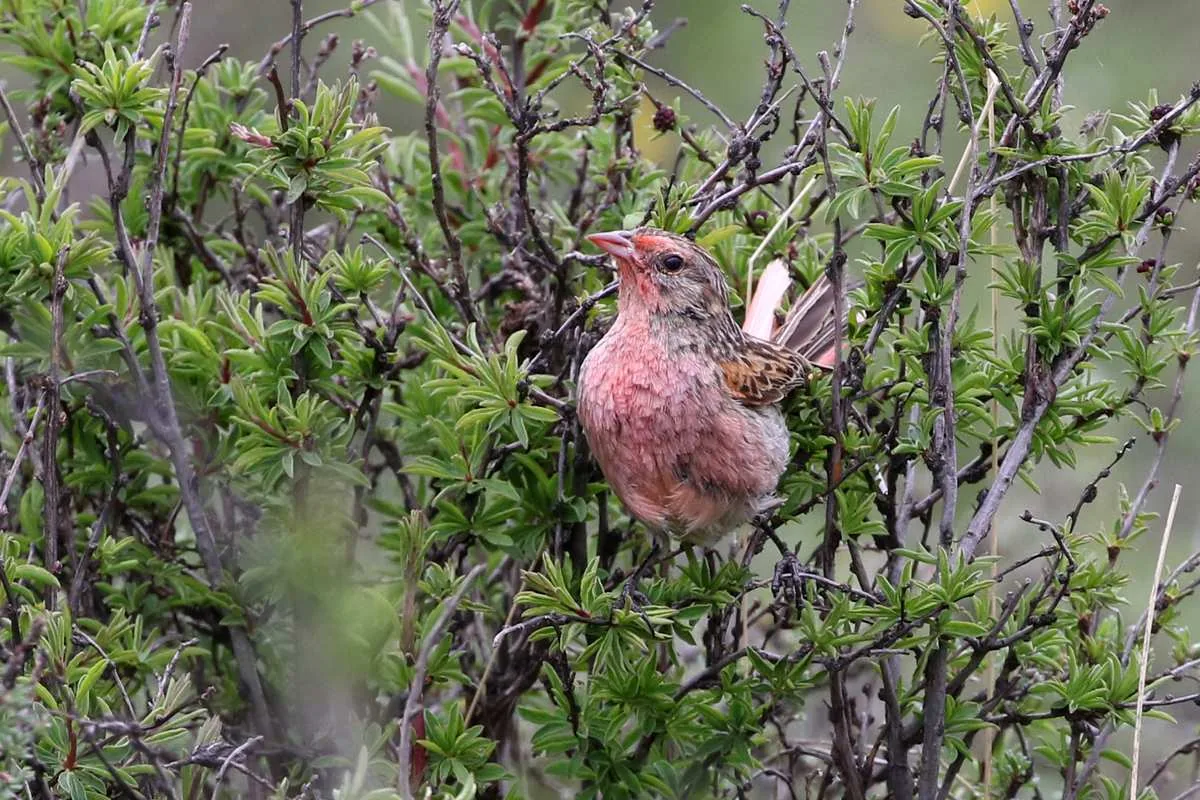
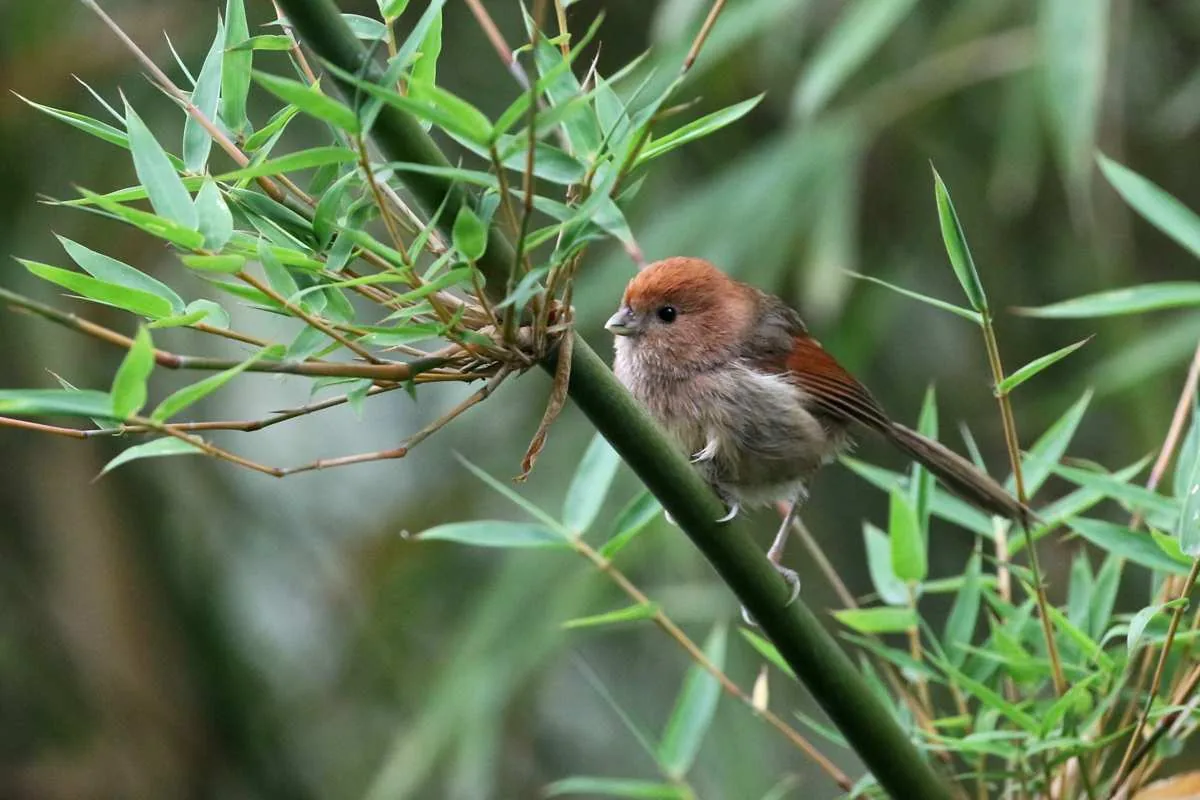
Sichuan is often the first region of China birders choose to visit; and it not hard to see why. Many regional endemics are present and some standout families like pheasants, parrotbills, and recently too, a key monotypic family, Przevalski’s Rosefinch. This is complemented by the fascinating Sichuan cuisine, and a starkly different culture to much of the world. We got to experience all of this first hand. Parrotbills virtually opened the tour, with the usual Vinous-throated Parrotbills around the spotless city of Chengdu. Other standouts from this particular family included, both Great and Three-toed Parrotbills at Loncanggou, a place where we also sampled our first pheasant in the form of Temminck´s Tragopan. Other pheasants included Chinese Monal, White Eared-Pheasant, and Tibetan Snowcock amongst the impressive rugged scenery of Balang Shan, and Lady Amherst’s Pheasant at Erlangshan. The bold Blue Eared- Pheasant in the tall spruce forests of the Baxi Valley was also memorable, and following such sterling views, unsurprisingly made it into the hallowed top five birds of the tour. We birded a range of habitats, mostly at elevation, as we worked the dramatic mountain landscapes of the region, with spruce forests, complimented by the mixed subtropical deciduous forests of Longcanggou, and also the starkly different, open, yak-coated grasslands and wetlands of the Tibetan Plateau. Indeed, it was the latter area that provided one of the overall trip highlights, as one of the ultimate pressure birds resides there; Przevalski’s Rosefinch (variously called Pink-tailed Bunting or Przevalski’s Pinktail, while considered neither a bunting or a rosefinch, but a single species family that was new to all). However, in spite of regional endemics sprinkled through the trip list, gorgeous birds like Grandala, and rarities like Golden-fronted Fulvetta featuring, it was surprisingly a more widespread species that got an overwhelming vote for the bird of the tour for the first time: Black Woodpecker. Of course, though, it is a striking species, being one of the largest woodpeckers in Asia and was high on the wish list for many of the group at the tour start. The fact that it was seen so well, aggressively pecking at a local chipmunk that was getting a little too close to the nest hole that we discovered added something a little extra to this sighting too. The final selection for the top five birds of the tour is given below, but the following list of the other species that were also considered for it, illustrates well the quality of birds experienced on this tour: White Eared-Pheasant, Lady Amherst’s Pheasant, Black-necked Crane, Saker, Grandala, Golden Bush-Robin, Golden- breasted Fulvetta, Eurasian Eagle-Owl, Przevalski’s Nuthatch, and Crested Tit-Warbler.
TOP FIVE BIRDS OF THE TOUR 1 Black Woodpecker Mengbishan 2 Przevalski’s Rosefinch Tibetan Plateau 3 Pere David’s Owl Gonggangling 4 Blue Eared-Pheasant Baxi Valley 5 Chinese Cupwing Erlangshan
TOUR SUMMARY:
Day 1: Arrival in Chengdu; Panda Breeding Centre
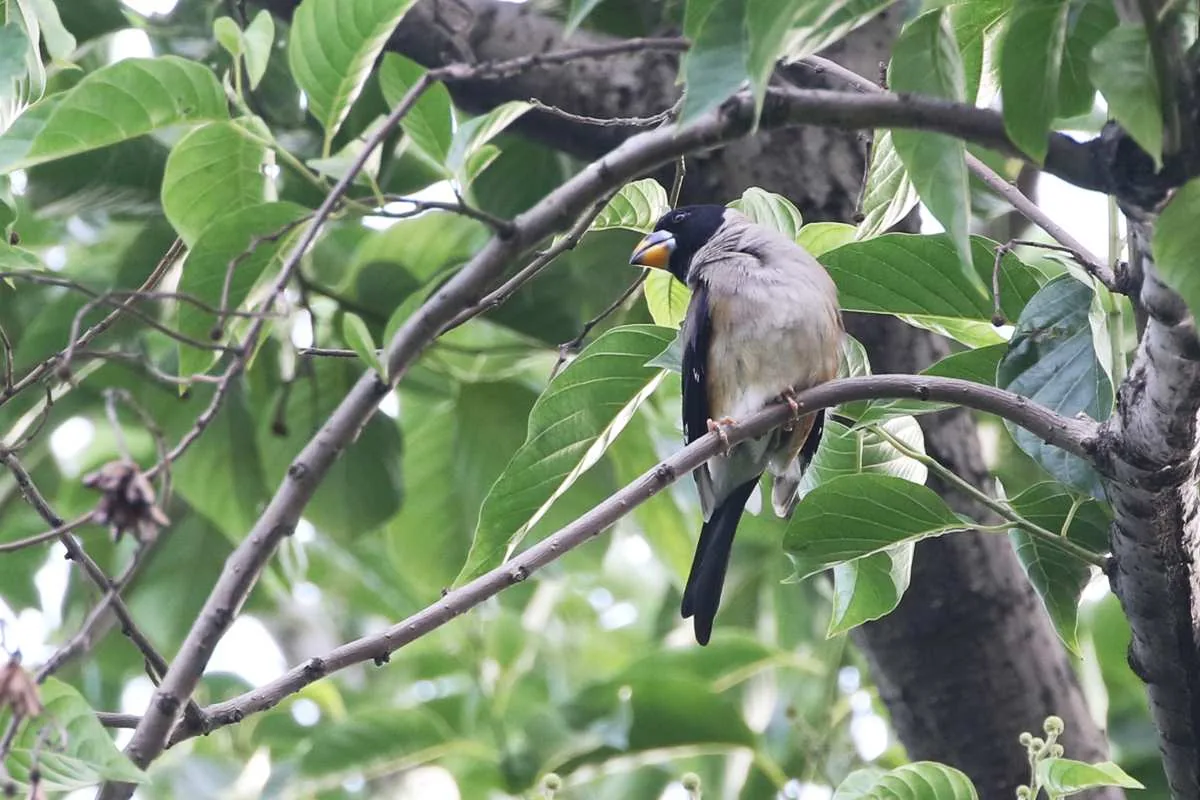
By lunchtime, barring a few inconvenient, unforeseen delays, most of the group had assembled for some late afternoon birding in Chengdu’s Giant Panda Breeding Centre. This popular attraction for Chinese tourists was typically swarming with people, but their numbers had been swelled further by a special event occurring that day. In spite of the masses, the Chengdu birds we were seeking were largely all found; pride of place going to something more unexpected there, a pair of confiding Speckled Piculets that worked through the bamboo. Other species, like Vinous-throated Parrotbill (photo page before), boisterous White-browed Laughingthrushes, a tame Collared Finchbill regular Light-vented Bulbuls, Red-rumped Swallows, and Oriental Greenfinches were all much more the norm for this site. Other sightings included a very showy Rufous- capped Babbler, a super Rufous-faced Warbler giving its tinkling song from the swathes of bamboo that carpet the grounds, and a pair of White-rumped Munias. Black-crowned Night-Heron, and Common Kingfisher were also seen around the lake there. Our first Red-billed Leiothrixes were also popular alongside the Giant Panda enclosures, and we did get our first, if brief, Streak-breasted Scimitar-Babbler of the tour, which was later eclipsed by the much better later sighting in Longcanggou. In the late afternoon, we returned to our culture hotel in Chengdu and spent a short period birding the local park, where both David’s Fulvetta and Yellow-billed (Chinese) Grosbeak (photo above) were new additions too, and Chinese Blackbird and Black-throated Tit were also seen, to close out our first day in China.
Day 2: Chengdu to Yujia and Longcanggou
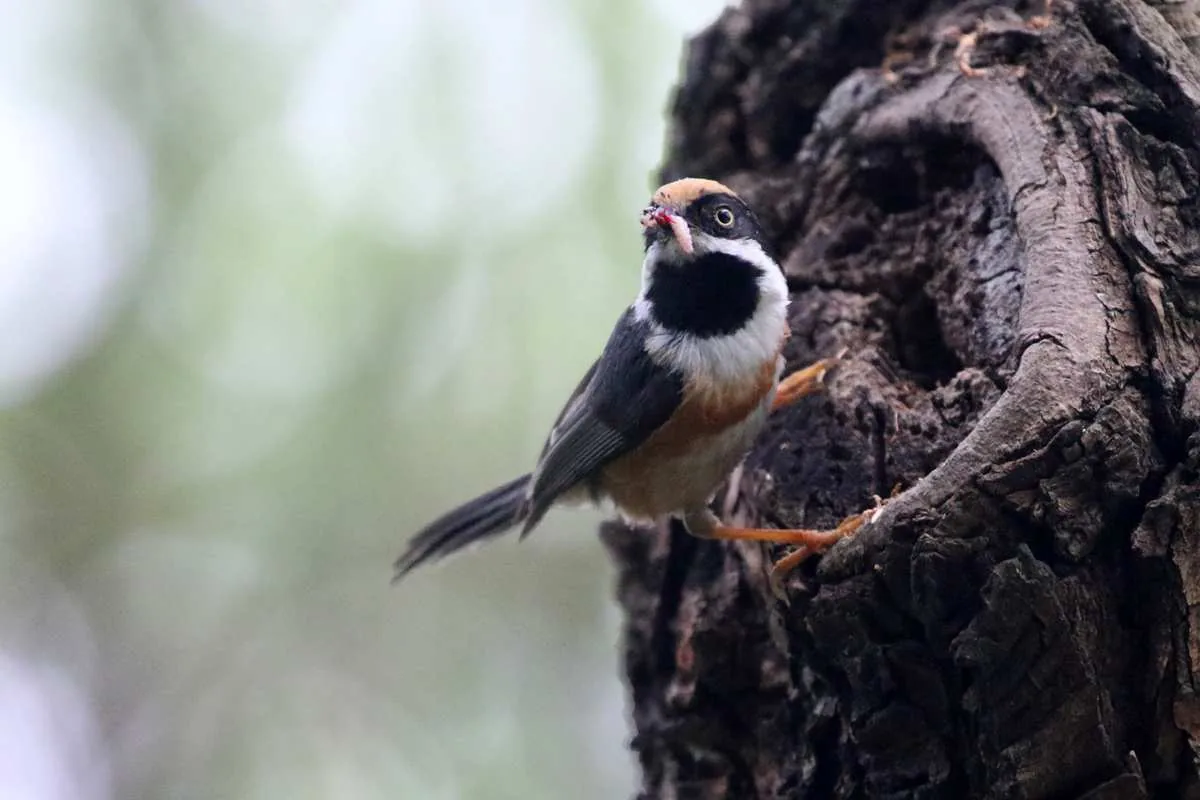
Our final trip participant, Bill, finally got into Chengdu later than expected the night before, and was finally united with the rest of the group. Luckily, a visit to a local Chengdu park picked up most of the birds he’d missed as a result of his delay, such as Rufous-faced Warbler, Light-vented Bulbul, Black-throated Tit (photo next page), Vinous-throated Parrotbill, White-browed Laughingthrush, and Chinese Blackbird. However, the perched Red-billed Starling was new for all.
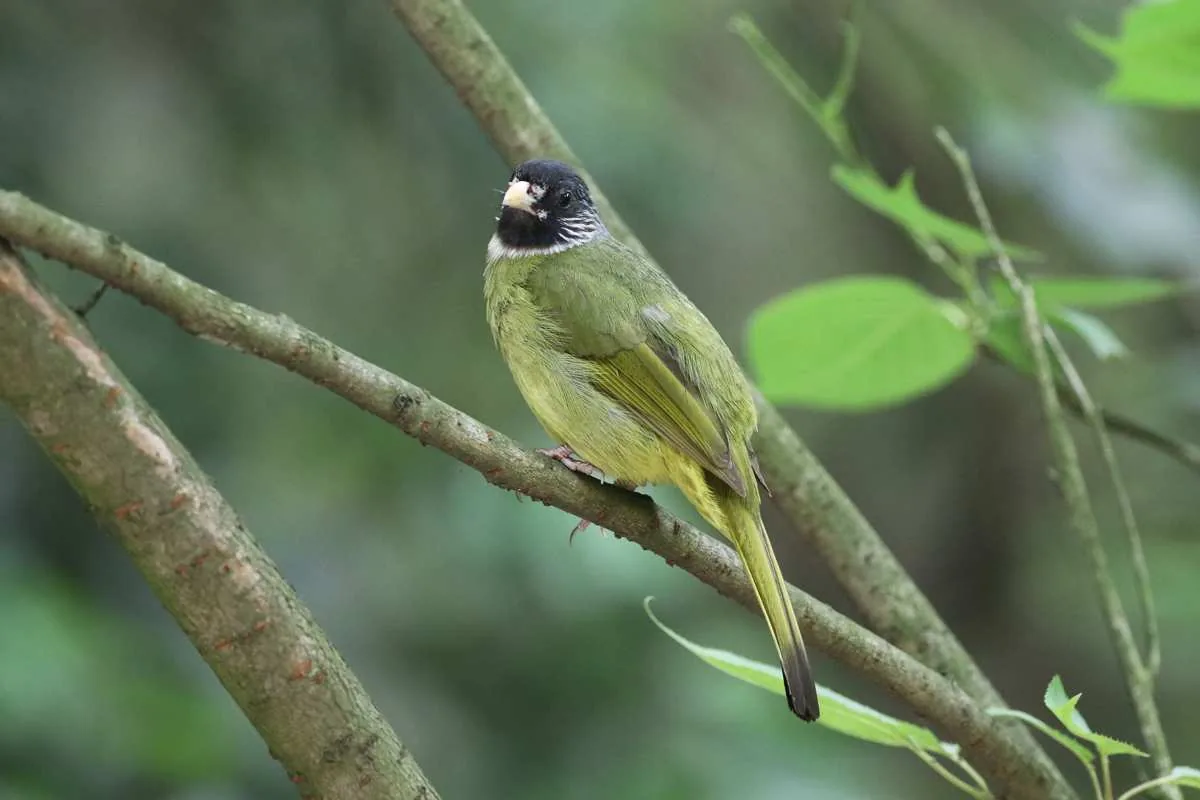
Our destination following breakfast back at the hotel, and checkout, was Yujia village, en-route to our final destination of Longcanggou. After lunch nearby, (and some of our first Plumbeous Redstarts of the tour), we explored a trail that runs through this rural area, where Charley quickly located a Forest Wagtail perched on a windowsill. Moving our way along this narrow-wooded creek, our experienced local guide Parus, locked on to a roosting Asian Barred Owl, a most unexpected surprise for the tour, and a worthy write in. It did not take too long to locate our main target, Brown-rumped (Swinhoe’s) Minivet, as well as several Korean Flycatchers too. Other notable birds in this area, included Brownish-flanked Bush-Warbler, another Rufous-faced Warbler, a flyover Chinese Sparrowhawk, and a typically confiding group of chattering Ashy- throated Parrotbills. Several more Collared Finchbills (photo below) featured again too.
By late afternoon we had driven the final few hours to Longcanggou, and raked in a few extra birds before the day was over: Sichuan Bush-Warbler was not very showy, but was seen by most; a Brown Bullfinch lingered on an overhead cable for all, white-headed Black Bulbuls were characteristically conspicuous, several Gray Bushchats perched in the open areas, and a Kloss’s Leaf-Warbler was seen, with identification aided by its distinctive song. Some were gifted a Wedge- tailed Pigeon perched alongside our lodging as we were checking in too. A late showing from both Red-billed Blue Magpie and a statuesque Large Hawk-Cuckoo brought our daytime birding to a close. A walk along the road at night led us to hear two nightbirds, Oriental Scops-Owl and Himalayan Owl, both of which remained considerably off the road and out of our reach. Finally, we returned to the hotel, where the Chinese police were waiting for us to register our visit to the site!
Days 3-4: Longcanggou
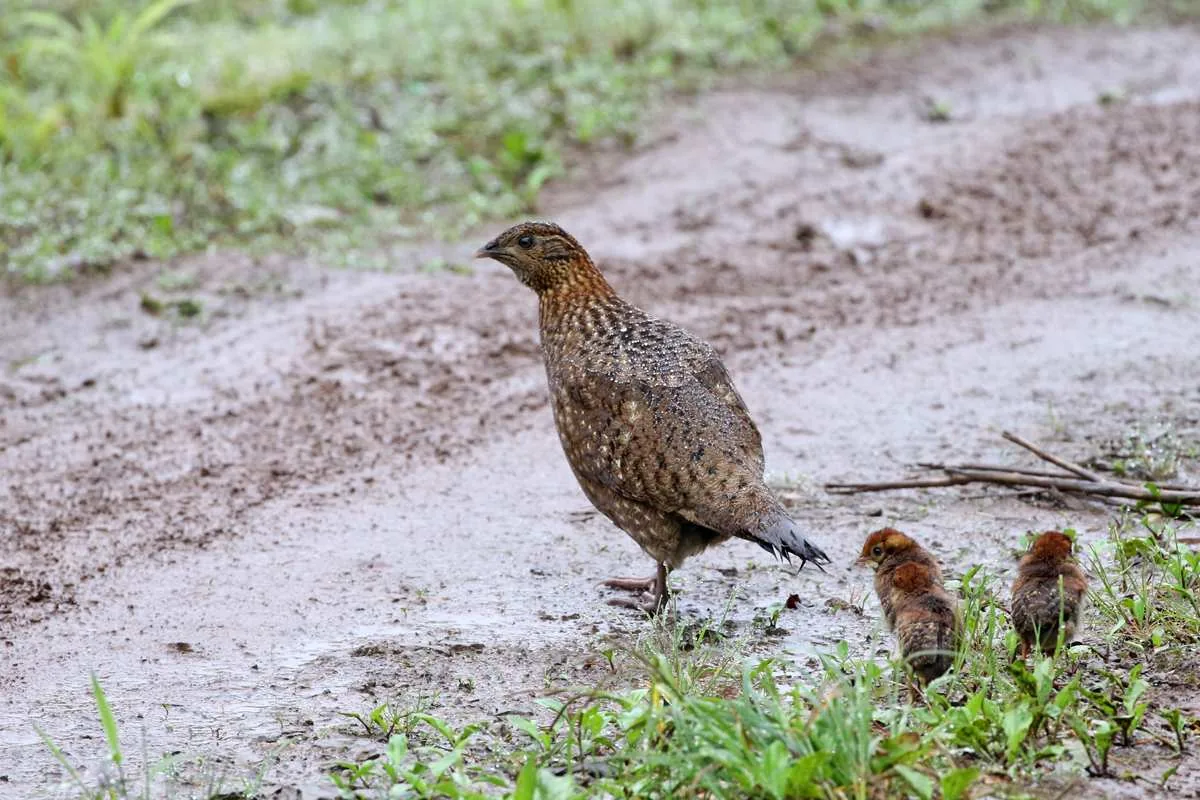
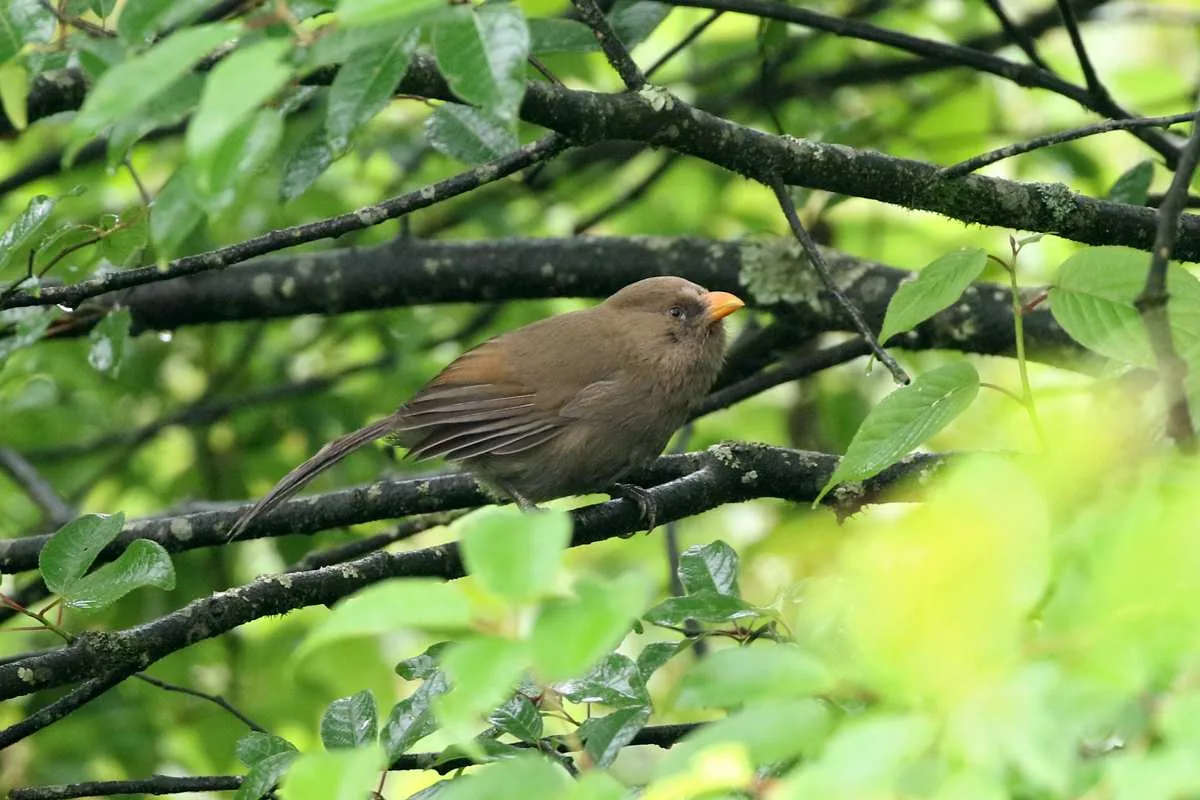
Two full days were spent dipping into various altitudes in this forest park (up to around 9845ft/3,000m). We did several drives up and down the heavily potholed mountain road, which led to several close sightings of Temminck’s Tragopan (photo above), although all of these involved females with chicks, rather than the males we craved most. In the higher areas of the mountain, where trees turned to alpine scrub and bamboo, we managed to track down Three-toed, Gray-hooded, and Great Parrotbills (photo next page), following an extended search of these areas, in difficult, often misty and drizzling conditions. A little lower down, other bamboo stands added the unbelievably cute Golden Parrotbill (photo left) to the list too, and the strikingly gorgeous Golden-breasted
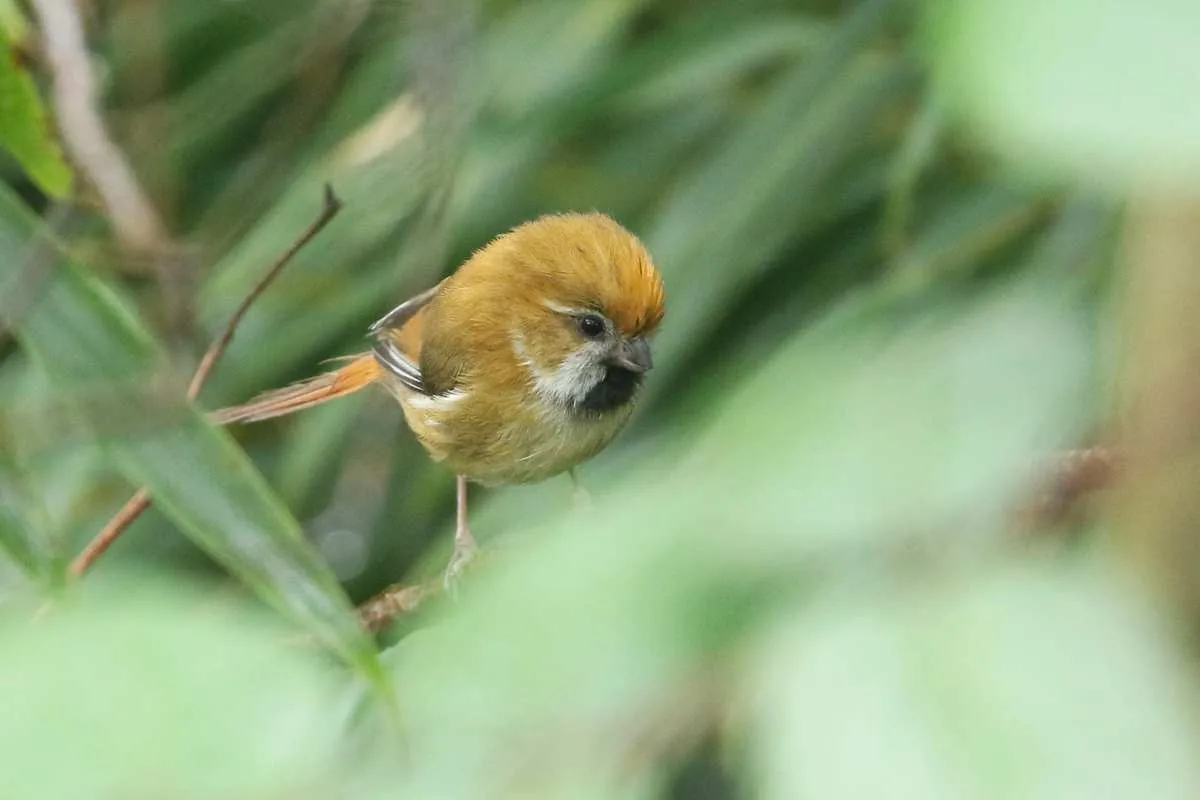
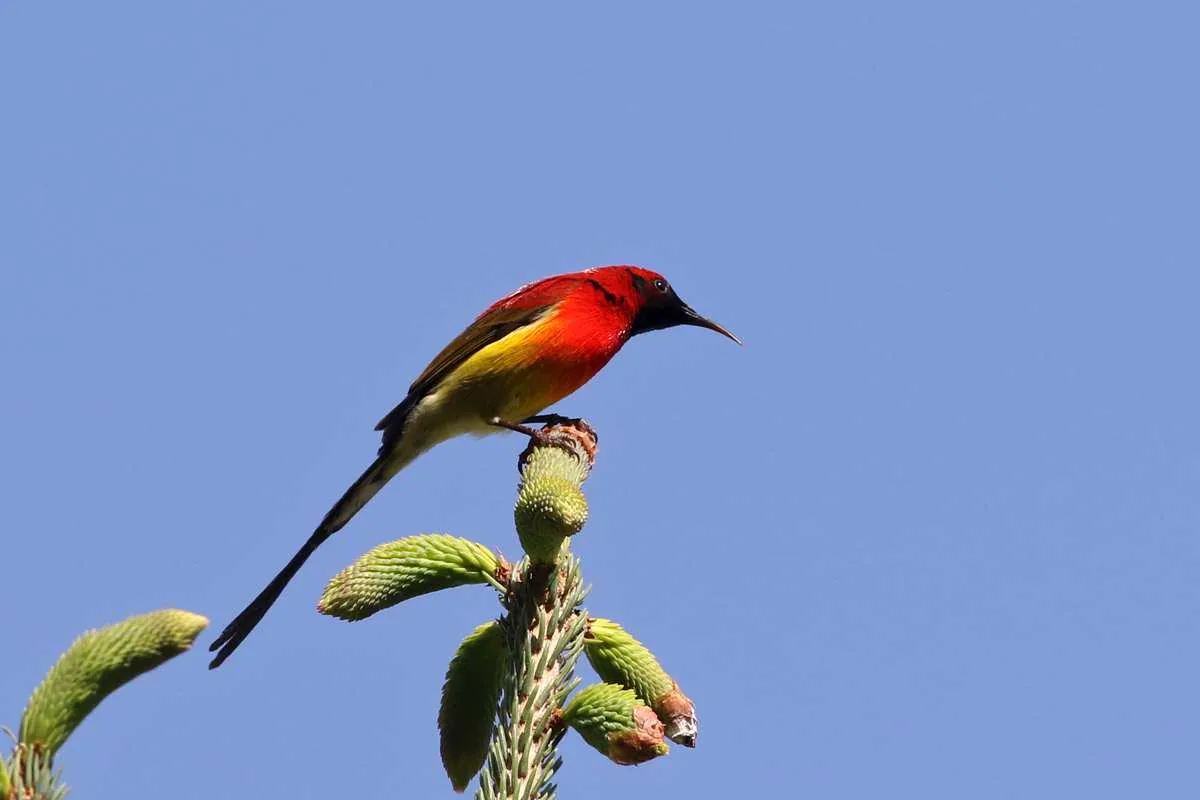
Fulvetta. Local specialties seen included Gray-faced (Emei) Liocichla on the higher parts, and Emei Leaf- Warbler much lower down. Warblers came in thick and fast, as is the way during the early days of any Sichuan tour, and we racked up Sichuan Leaf, Large-billed Leaf, Claudia’s Leaf, Yellowish-bellied Bush, and Aberrant Bush-Warblers, Gray-crowned, Martens’s and Bianchi’s Warblers, among others. Other notable birds included a pair of mating Red-tailed Minlas, a single Blue-winged Minla, a singing Chinese Thrush, a confiding Chestnut-vented Nuthatch, a handful of soaring White-throated Needletails, several Darjeeling Woodpeckers, mobile groups of Red Crossbills, a few Hodgson’s Treecreepers, regular White- collared Yuhinas and gorgeous Gould’s Sunbirds, and both Verditer and Rufous-gorgeted Flycatchers.
Late one afternoon, we got a great look at a responsive Streak-breasted Scimitar-Babbler (photo page 7), which provided a considerable upgrade to our earlier briefer views in Chengdu, and the same afternoon finally saw us nail down views of a (Chinese Blue) Blue-throated Flycatcher, with little neck straining and working a narrow window into its bamboo hideaway. A close calling Pygmy Cupwing proved popular, when it popped up in a near shrub, and revealed itself to all in doing so at such close range. The use of a Collared Owlet recording did not produce the owl itself, but did bring in a mobbing pair of Fire-crested Tits and a couple of feisty Yellow-browed Tits too. The endemic Yellow-bellied Tit was also located during these days too.
Other birds included a number of calling Lesser Cuckoos, (at least one of which was seen), regular handfuls of Himalayan Swiftlets hawking the skies overhead, daily encounters with spritely groups of Long-tailed Minivets, and a couple of short sightings of Brown Dippers were also had on the lower slopes of the mountain. A Gray-faced Buzzard perched at length at the end of one of these days was rather less expected.
Day 5: Longcanggou to Erlangshan
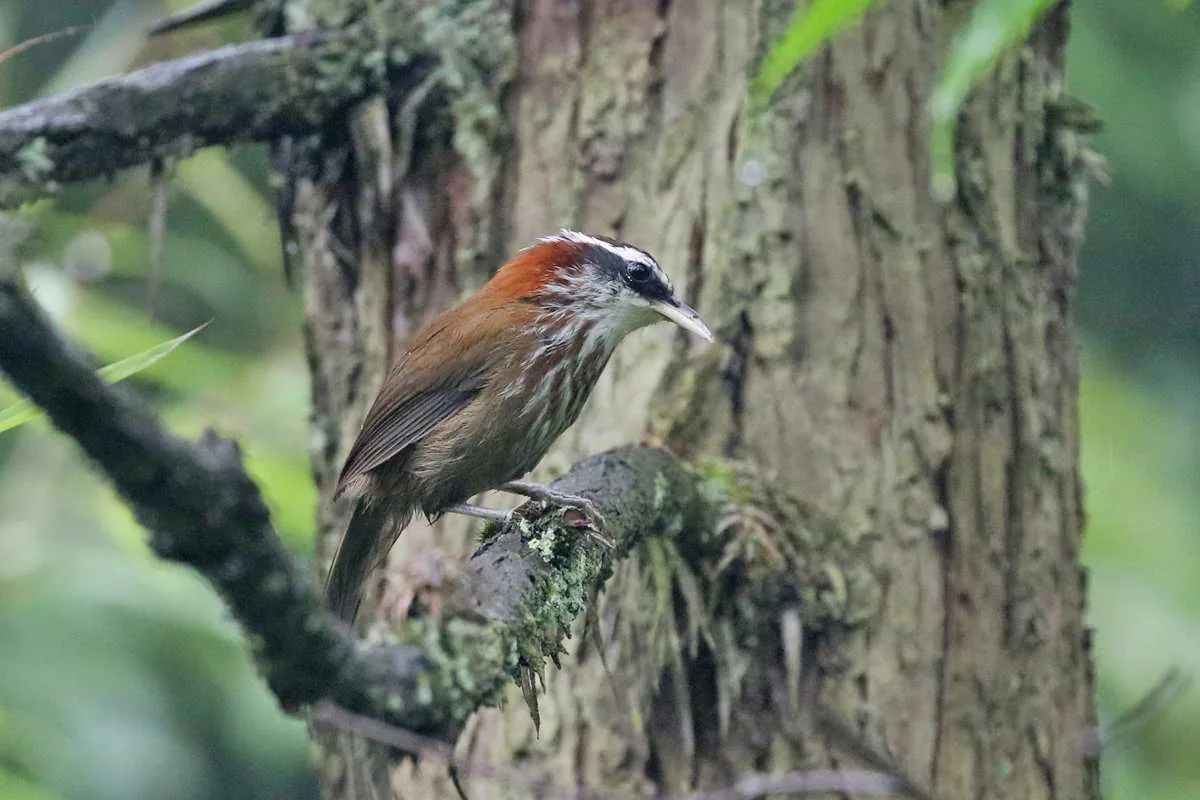
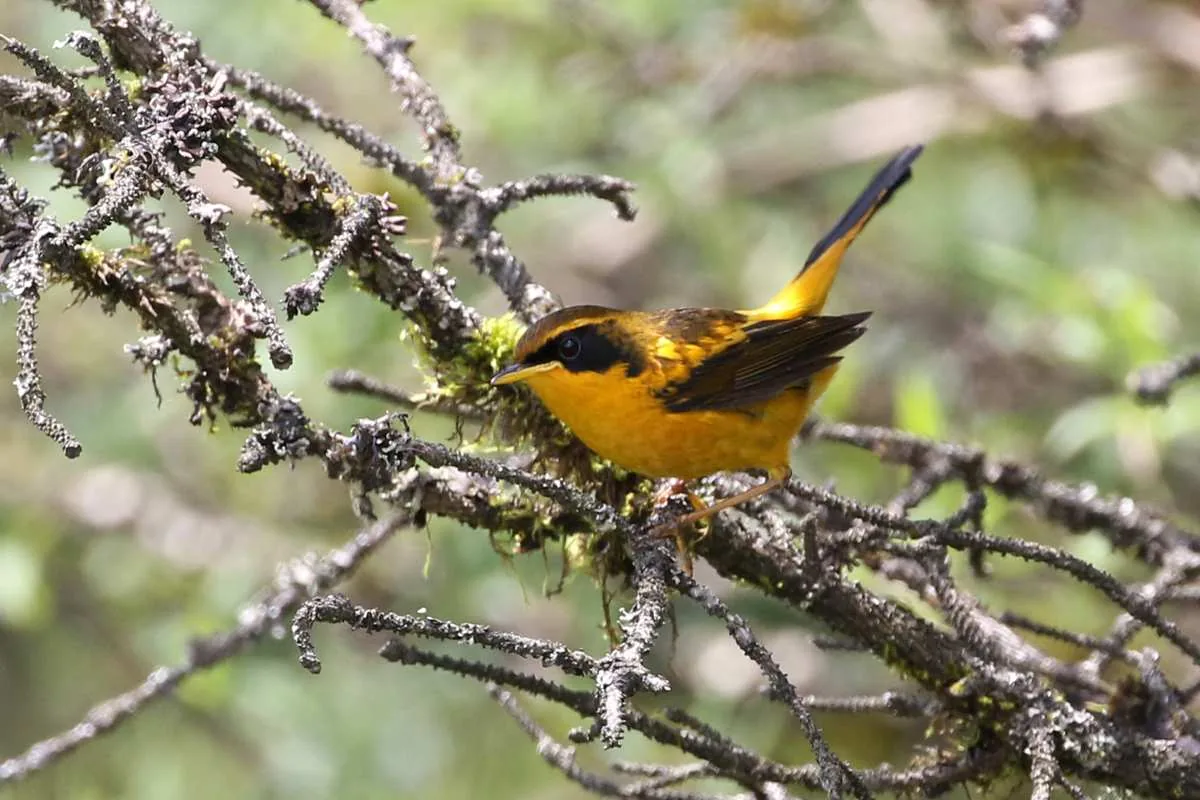
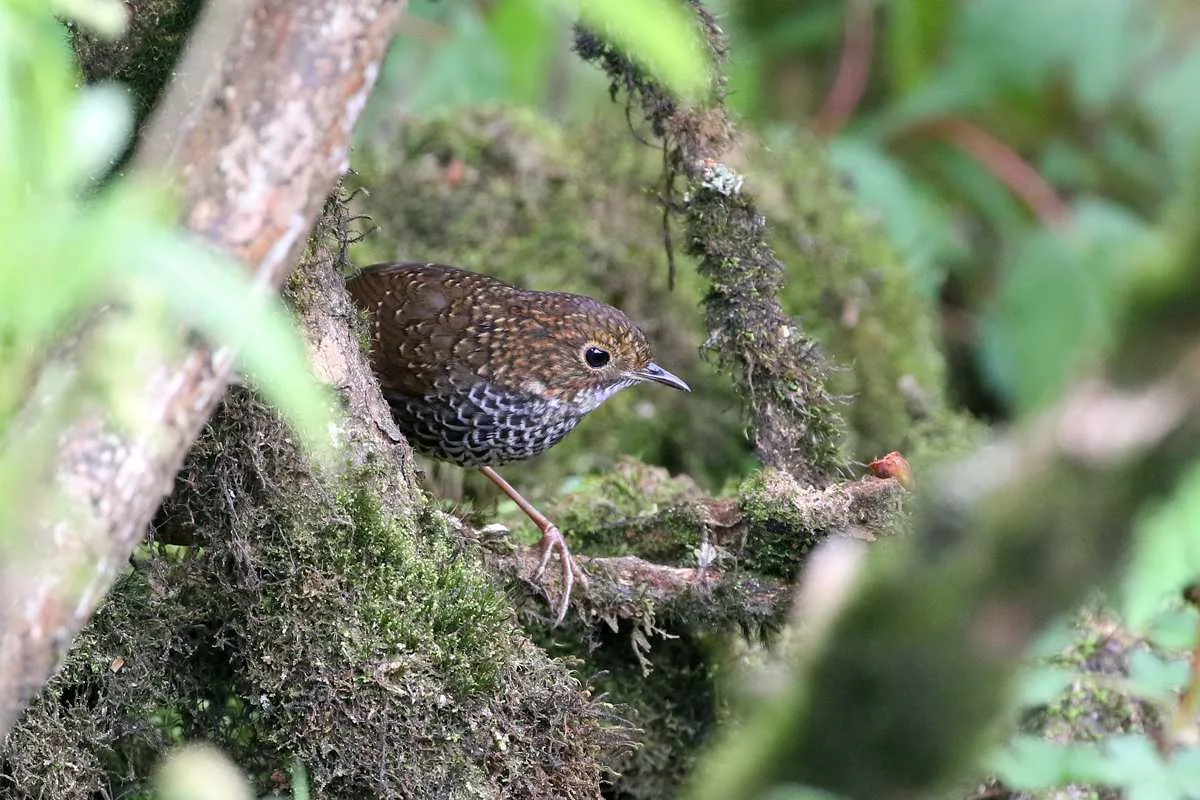
On this day, we swapped one mountain for another, starting the day on the lower slopes of Longcanggou, and finishing it on another, Erlangshan. The day was bookended by sightings of rare species at either end of the day. At Longcanggou, the star find was unquestionably a couple of sightings of the rare Golden-fronted Fulvetta, which were matched by their sighting of the equally rare Rufous-tailed Babbler (photo next page) at the latter site near the close of the day. Our final time, at a lower site, on Longcanggou yielded a sizeable group of vocal Buffy Laughingthrushes too; a Fujian Niltava also featured if only briefly, a single Black- chinned Yuhina working through the pine trees, and a prolonged view of a distant Little Forktail was also had. Other last-minute birds at Longcanggou included another showy Chestnut-crowned Warbler, a low flying Oriental Honey-Buzzard, a further Kloss’s Leaf-Warbler, more Himalayan Swiftlets, and our first Snowy-browed Flycatcher.
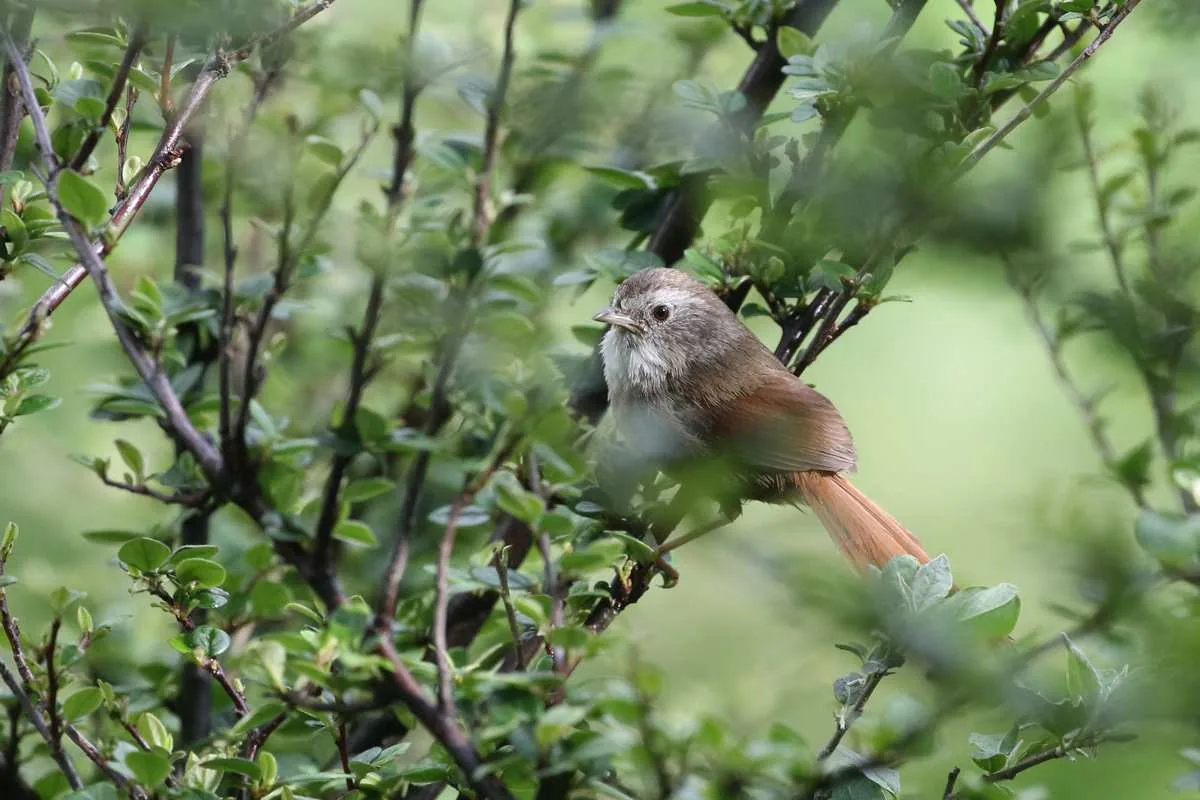
Following a long drive of some 5 hours, we reached the slopes of Erlangshan, where we started our birding there in earnest, in spite of a stiff wind blowing. We hit big early on, with an extremely responsive Rufous- tailed Babbler, one of Sichuan’s trickier birds, coming in very close on several occasions. A little later, the distinctive stanzas of the song of the Firethroat were heard coming from some roadside scrub, and after some initial frustration, views of this shocking bird were had by all. Our first views of Chinese Babax also came that afternoon, before we retired to Luding after picking up our first Chestnut Thrushes of the tour, for the first of two nights there.
Day 6: Erlangshan
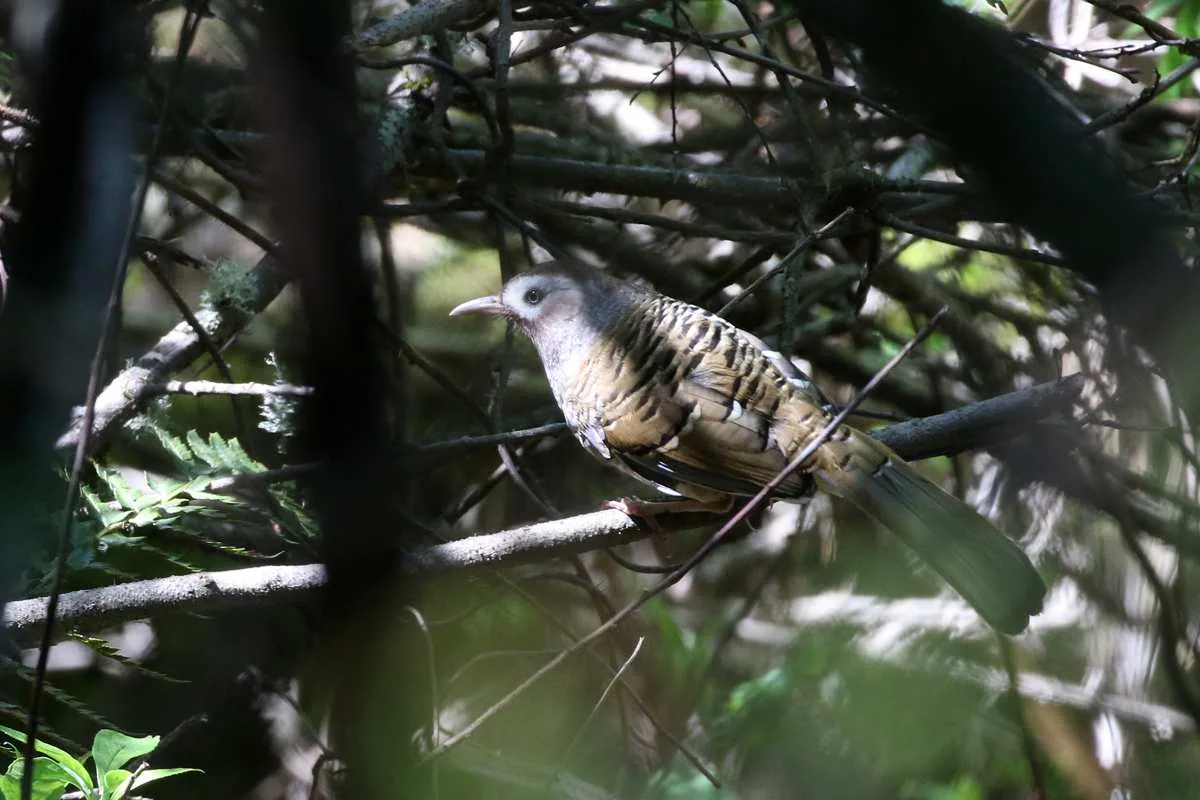
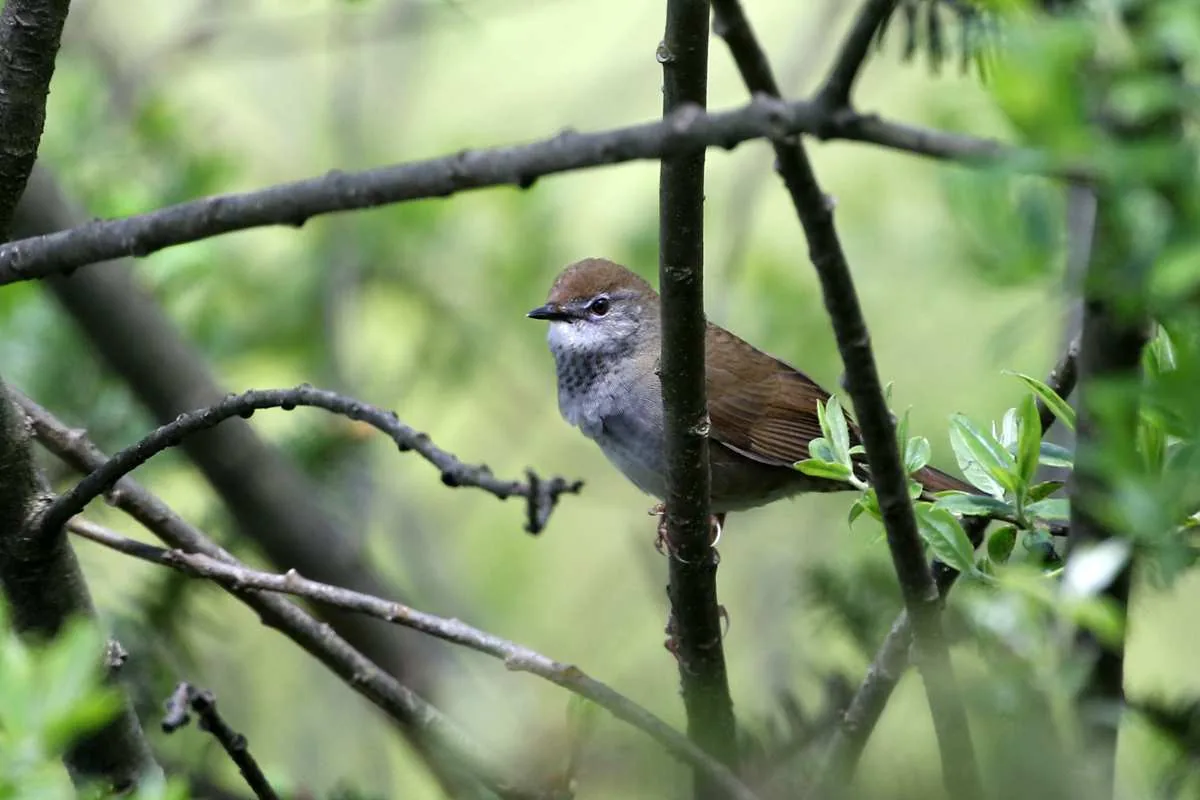
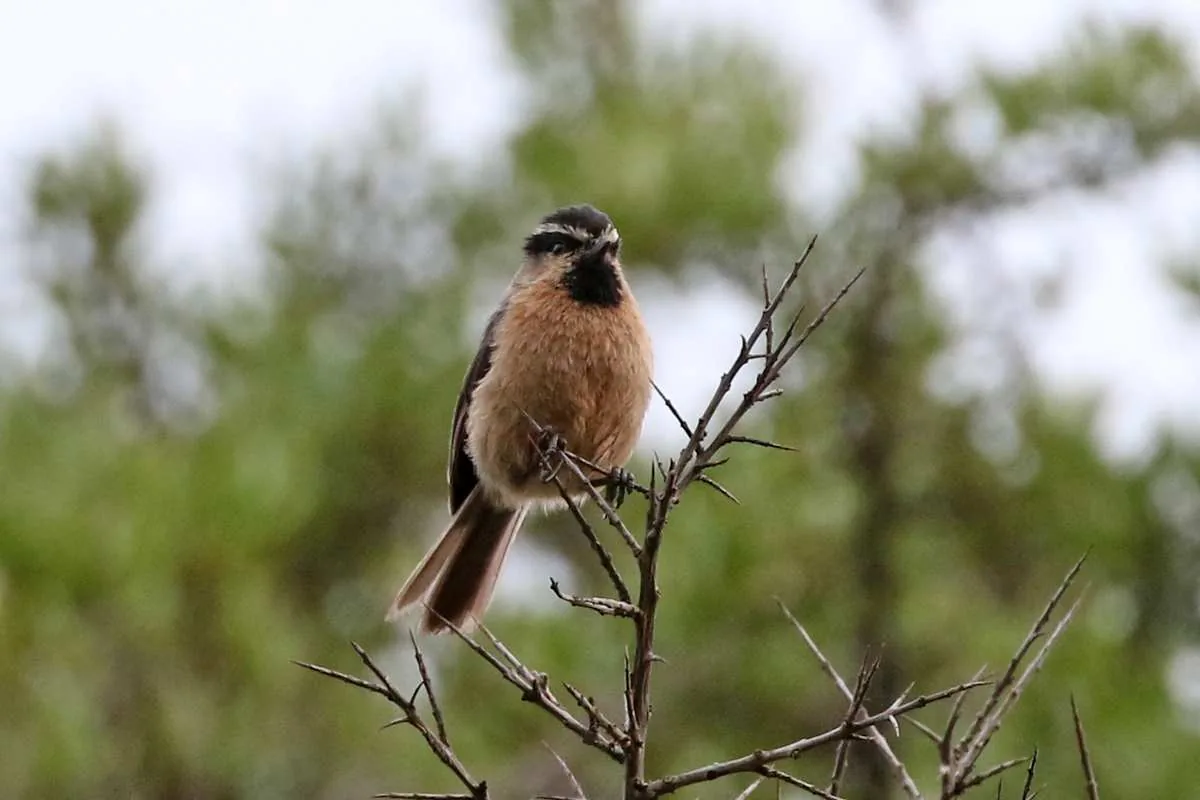
With the continuing closure of other formerly well-established Sichuan birding sites, like Wawu Shan and Labahe, it fell to Erlangshan to give us our chance to find the much-wanted Lady Amherst’s Pheasant. Our morning drives into their favored haunts revealed none though, but the afternoon produced sightings of two, first a female that took its time to walk out of view, before an immature male zipped across the mountain road at lightning speed. Eurasian Nutcrackers were a big feature at this site, with double figures recorded. Another stellar sighting came in the form of a pair of the often-elusive Barred Laughingthrush (photo above), which were far from easy, but gave some good looks to all in the end. Our first Slaty-backed Flycatcher of the tour gave us wonderful looks at its gorgeous blue-and-red plumage too. A good selections of tits also featured in and around the spruces on the upper flanks of the mountain, where Yellow-bellied, Japanese, and Gray-crested Tits were found, as well as Black-browed Tit too, the latter of which was typically confiding and photogenic, as they foraged low in front of us for extended views. As we ascended to near the summit, Parus picked out the call of a Gray-sided Bush-Warbler, which then gave crippling looks beside the group. This was quickly followed by fantastic views of another bush-warbler, this time a constantly calling Spotted Bush-Warbler (photo next page). Following lunch, we scoured the scrubby patches on the upper alpine slopes of the mountain for a gorgeous robin hiding within them, and our persistence eventually paid dividends, when a stunning Golden Bush-Robin (photo page 8) hopped out into the open. Over lunch, we got our first Blue-fronted Redstarts of the tour, with first a female, and then an immaculate blue and orange male. Moving a little lower down, the high-pitched call of the much-requested Chinese Cupwing (photo below) could be heard coming from the stunted growth on a nearby hillside. Some off-trail work was required to get into its territory, and our first overtures fell on deaf ears. However, on leaving the area, and resigned to failure, the recently mute individual began to sing again, and we quickly returned to the bushes and repositioned ourselves, and Sam’s speaker. This time, the cupwing flitted in and hopped about in full view of all for a considerable time, a quality viewing that elevated this species to greater popularity than usual! Nearby, a White-browed Bush-Robin came in several times. A couple more Chinese Babaxes also put in an appearance, and the endemic Elliot’s Laughingthrush were now starting to become a familiar tour bird. A string of other birds joined our bird list this day too, making it one of the standout days of the tour: Himalayan Griffon, Red Collared-Dove, Gray-headed Canary-Flycatcher, Yellow-streaked, Greenish, Chinese Leaf- and Buff-barred Warblers, Yellow-throated Bunting, Indian Blue Robin, Gray-backed Shrike, Vinaceous and Common Rosefinches, and Gray-headed Bullfinch among them.
Day 7: Erlangshan to Rilong
This was a scheduled long travel day in order to reach Rilong, although it ended up being much longer than usual – more than 12 hours (!), due to a recent bridge collapse along our usual route causing us to re-route a much longer direction. We did see our first White-backed Thrush during the journey though.
Days 8-9: Balang Shan
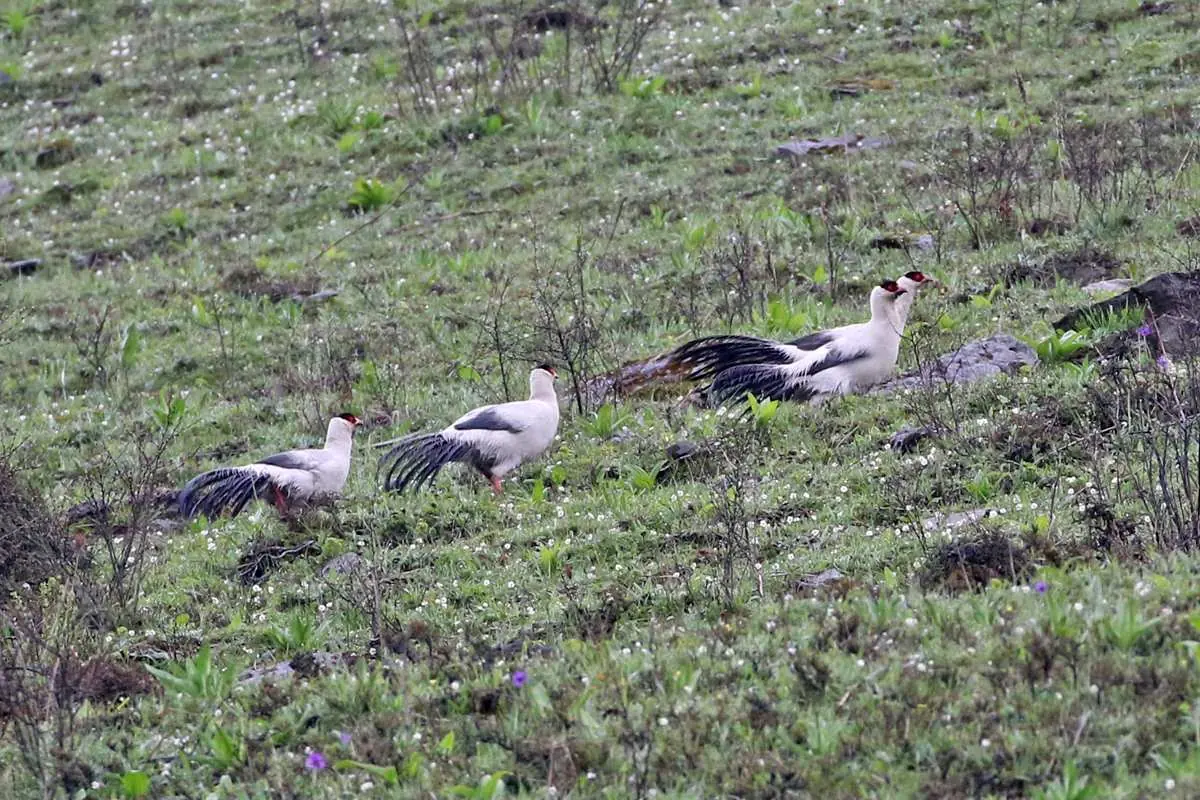
Birding the spectacular slopes of Balang Shan is surely one of the undoubted highlights of this tour. We birded from around 8200ft (2500m) upwards to 14,760ft (4500m) on these days in order to cover various altitudes, and therefore varying suites of birds among the different habitats. Our first stop at the site quickly yielded one of the mountain’s most wanted birds, as several male Chinese Monals grazed the open grassy slopes a short time after dawn. Not long after, a troop of White Eared- Pheasants (photo below), also paraded in the open too. These altitudes also yielded Blue-fronted and White-throated Redstarts that made their first appearances here of the tour, as did the first of a handful of raucous Giant Laughingthrushes (photo page 13). Finally, too after repeated attempts at previous sites, we finally set eyes on a calling White-bellied Redstart, which had become something of a nemesis by then. These days were rich in rosefinches, with six species seen at the various locations covered; Chinese White-browed, Himalayan Beautiful, Dark-breasted, Common, Vinaceous, and Pink-rumped Rosefinches all being seen. High up on the mountain, Charley made quick work of locating a pair of Tibetan Snowcocks stalking up a rocky scree slope, a slope that also held a male Red-fronted Rosefinch and our first Plain Mountain-Finches. Not far from them, a Snow Partridge was found on a higher slope still. Moving to the high pass that crosses this mountain, we were able to look down on neighboring Mount Four Girls, and pick up a pair of Snow
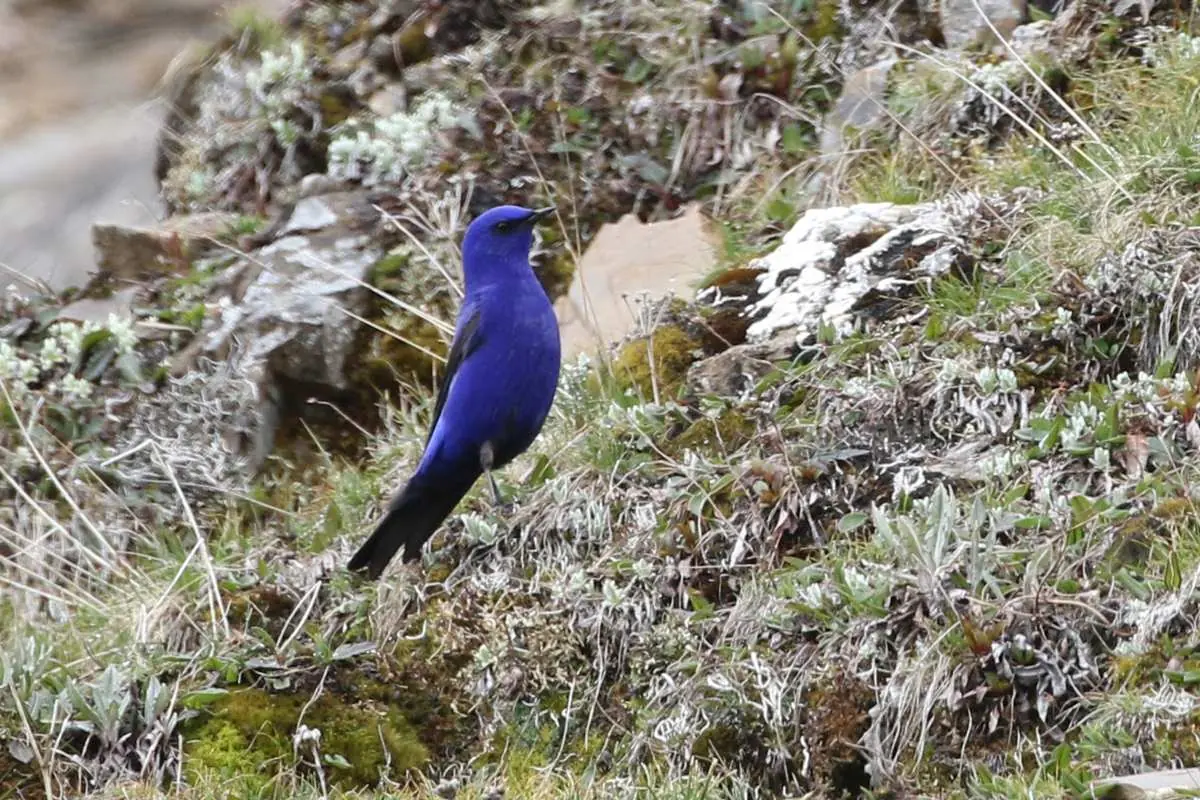
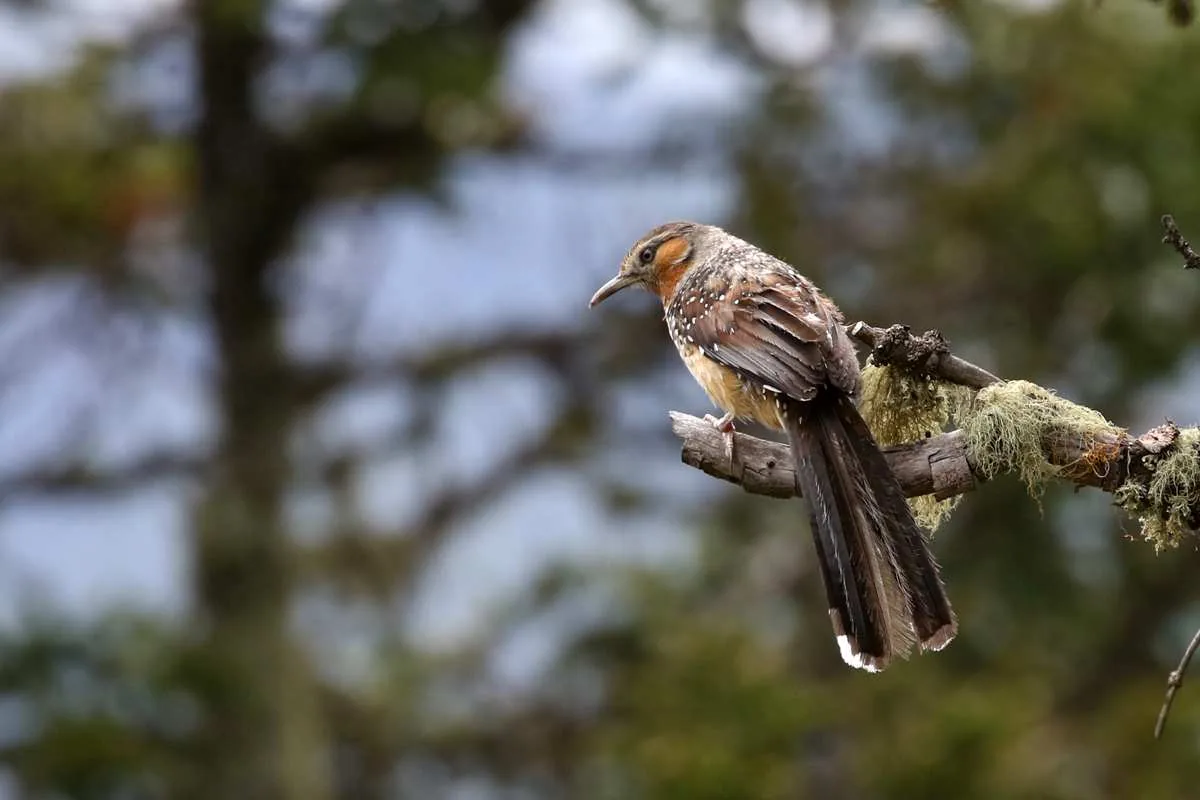
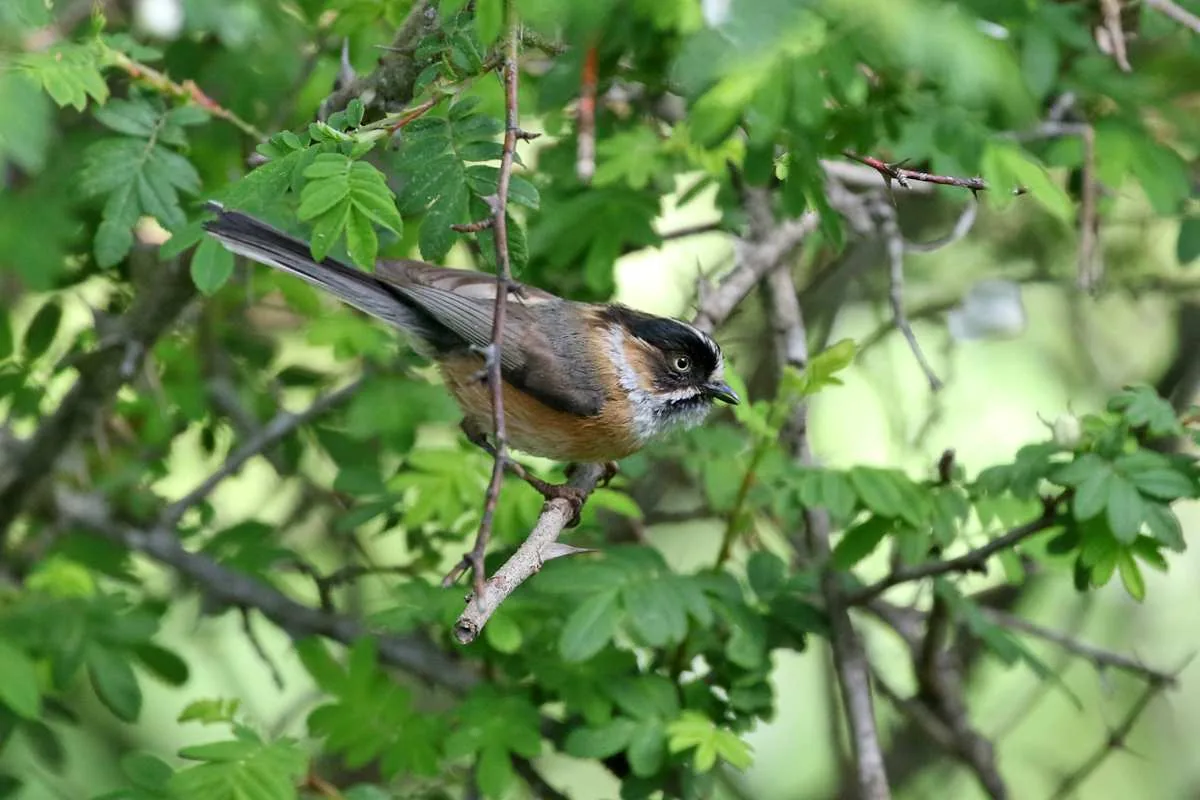
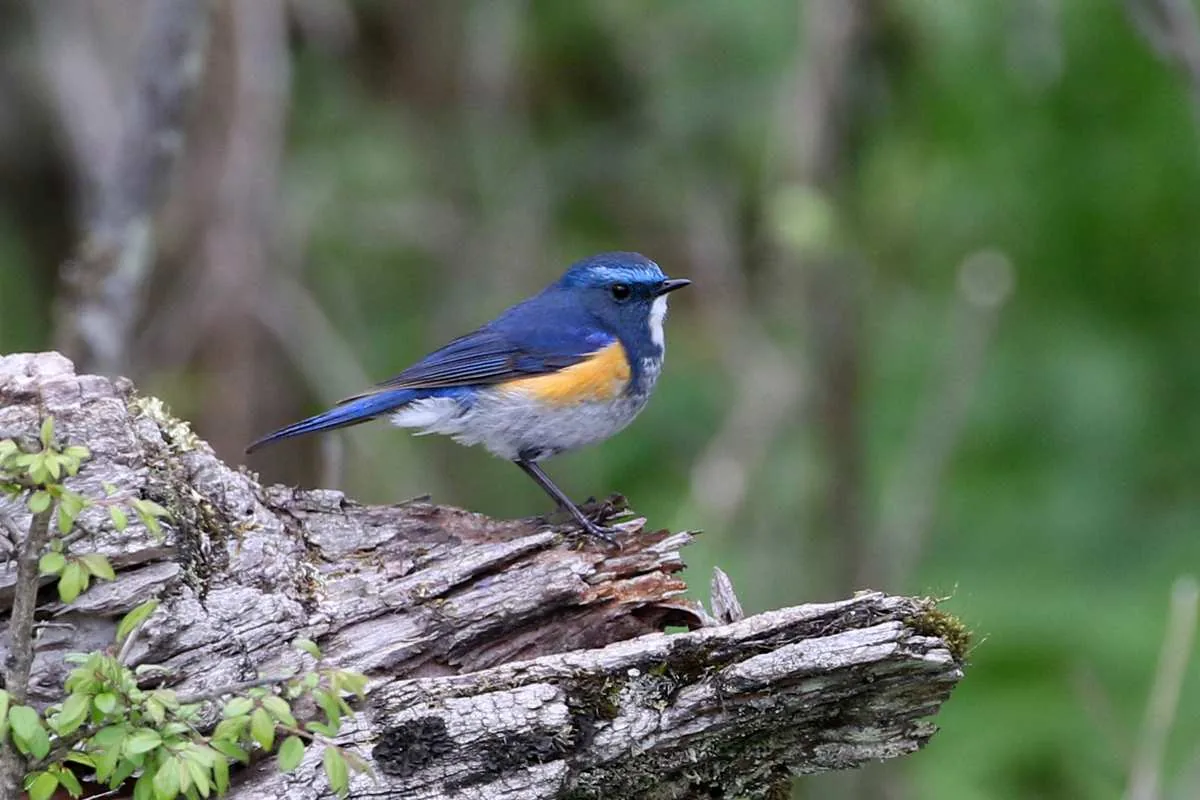
Pigeons foraging right at the pass, where a few Black-headed Mountain-Finches were also located, as were several Alpine Accentors, many of which were in song during this springtime visit. We were missing Grandala for a while, but once up at the top, a dedicated search of the area yielded a cracking indigo male, and several dusky females. Moving over the other side of the pass we dropped into an area where the first stunted bushes are able to grow, clasped to the hillside. This is the known habitat of the stunning White- tailed Rubythroat, and our calls were quickly answered, when a male popped up onto some rocky ledges, and sprigs at the tops of the tiny bushes to reveal his gleaming iridescent ruby throat on several memorable occasions. As we drove up and down to view different sections of the mountain, we ran into mobile flocks of both Red-billed and Yellow-billed Choughs, as well as several Himalayan Buzzards, and regularly encountered some of the many Rosy Pipits breeding on its slopes. Himalayan Griffons were seen as expected, and we enjoyed some rather nice low flying views of one of the local Lammergeiers too. Other additions on the lower slopes included a gorgeous royal blue male Himalayan Bluetail (photo page 14), the endemic Sooty Tit, a number of singing Buff-throated Warblers, a Crimson-browed Finch for some, and gorgeous black-and-yellow male Collared Grosbeak. Around Rilong, we added Long-tailed Thrush to the list too, and not far above there, we found our first Chinese Fulvetta, and Sichuan and Rufous-vented Tits, and ran into another group of Black-browed Tits (photo next page) too. Near the town of Wolong, we also got our first proper looks at a Chinese Pond-Heron standing sentry by a fast-flowing mountain river.
Day 10: Rilong to Mengbishan
After admiring a local Godlewski’s Bunting and a Yellow-streaked Warbler, and checking a local Wallcreeper site near Rilong (where the Wallcreeper had apparently been trapped and killed by a local person to our dismay); we set off for our next destination, the 13,125ft (4000m)-high Mengbishan…On the way we found our first Great Spotted Woodpecker, a few flying Eurasian Crag Martins, and a flock of Pacific Swifts. Unfortunately, a White-throated Dipper disappeared before anyone other than Sam got to see it.
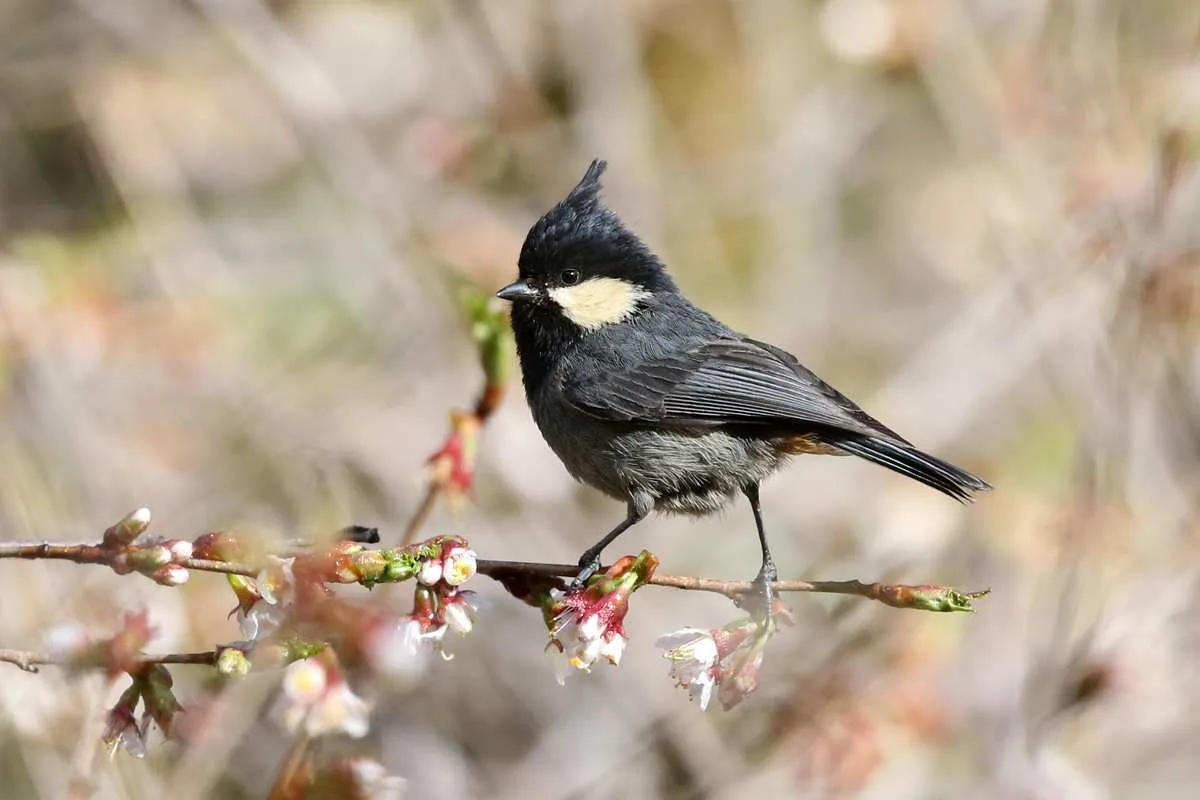
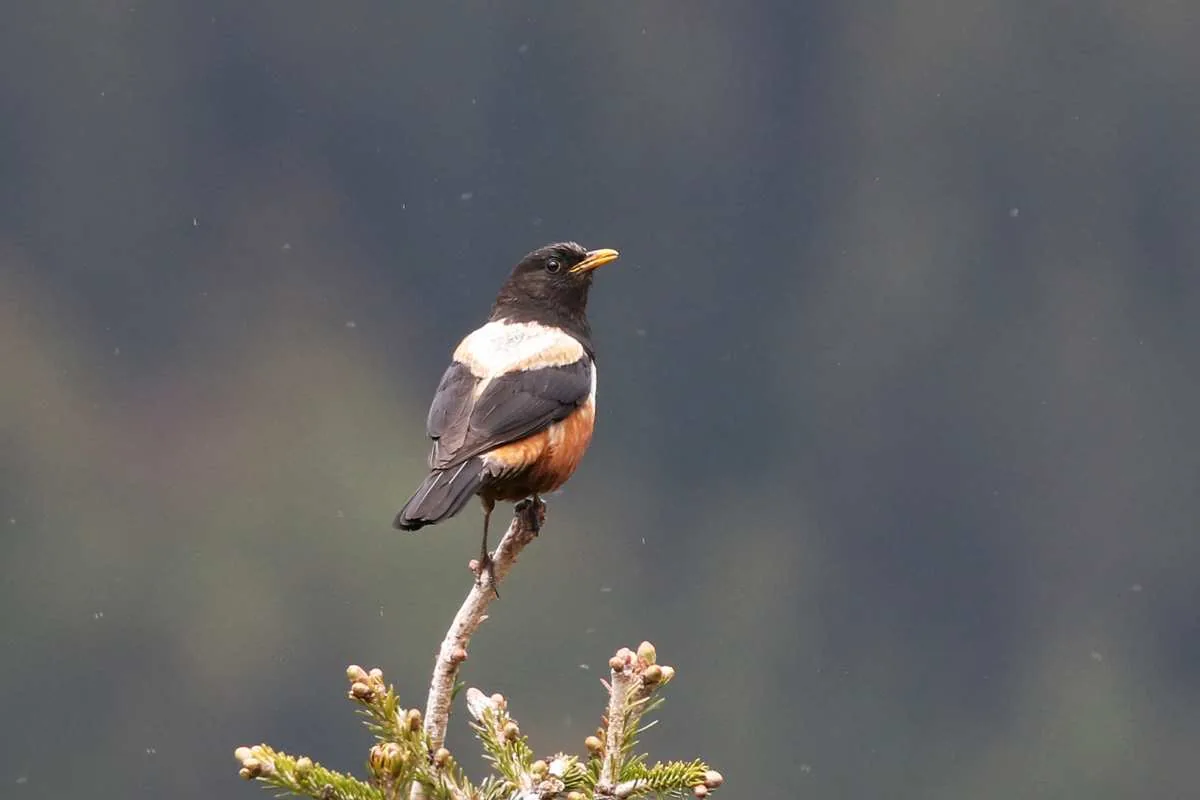
Arriving at lunchtime, we soon found a fine White-backed (Kessler’s) Thrush singing from atop one of the near spruces over lunch, when a male Snowy-browed Flycatcher also decorated the apex of another nearby tree. Blue-fronted Redstart and Alpine Leaf-Warbler were also found in the scrub on this higher section of the mountain, as was another Himalayan Buzzard. After lunch, we set off for some of our targets in the area, and quickly wrapped up some of these, starting with a small party of Blood Pheasants that crossed various openings in time for all to see them. Moving on down the road, out of the alpine scrub, and into the spruce covered slopes on the upper part of the mountain, we could see snow peaks off in the distance, and looked to locate one of the mixed feeding flocks in the area. We finally came upon one with Hodgson’s Treecreeper, Goldcrest, Gray-crested and Rufous-vented Tits (photo above), and the much hoped for Crested Tit- Warbler, which Jim found a little way into the flock.
The final highlight of the afternoon came when a large bird took flight in front of the group and landed nearby, but hidden, which appeared to fit the description of Verreaux’s Partridge (photo below), and bird we had already searched for on the slopes of Balangshan, and also heard earlier that afternoon, but to no avail. Trying playback of it rollicking call, soon got a boisterous response from the bird itself, two of which bounded up and down the slope, running through the blooming rhododendrons, before, finally settling down in an open spot to call back very conspicuously, for a sighting that was very popular to all. Other avian highlights that afternoon on Mengbishan, included Giant Laughingthrush (doing a flawless imitation of Sichuan Jay), and Pink-rumped and Chinese White-browed Rosefinches, and another male Collared Grosbeak.
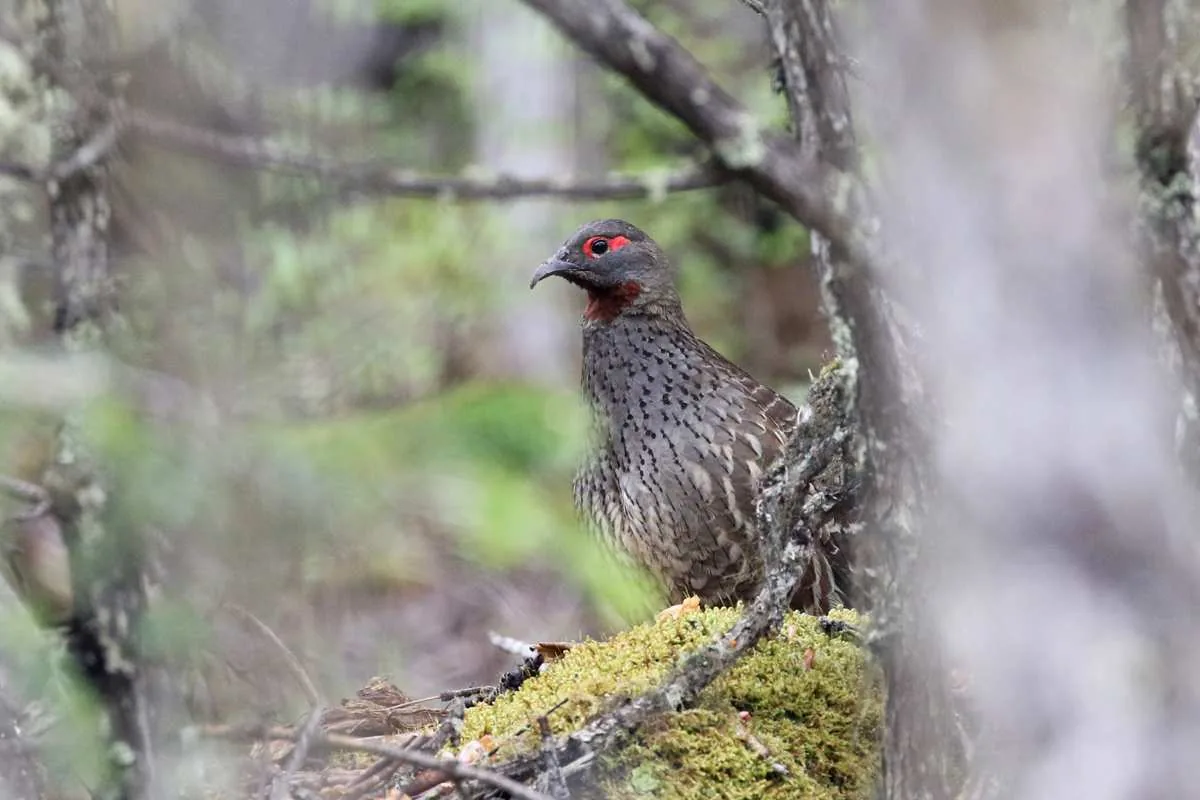
A full day was spent on the mountain, where, in fairness, tracking down our discrete list of target birds proved difficult. We attempted to find Koklass Pheasant at a known stakeout, but only managed to hear a very distant bird call once, in spite of our perfectly timed arrival at dawn. Later that morning, a shape perched on top of a tall spruce did morph into one of our other desired target birds, the handsome Three-banded Rosefinch, but otherwise the morning was very slow, aside from some repeat birds, like Blood Pheasant, soaring Himalayan Griffon, perched Himalayan Buzzard, and catch up views of White-throated Needletail for some who’d missed them before. However, after a first (brief) Maroon-backed Accentor that frustrated most, we managed to find several more of these beady-eyed birds, which ended up being the only ones encountered on the entire trip. A White-winged Grosbeak nearby turned out to be less accommodating, allowing only some to see it, before bolting off into the distance.
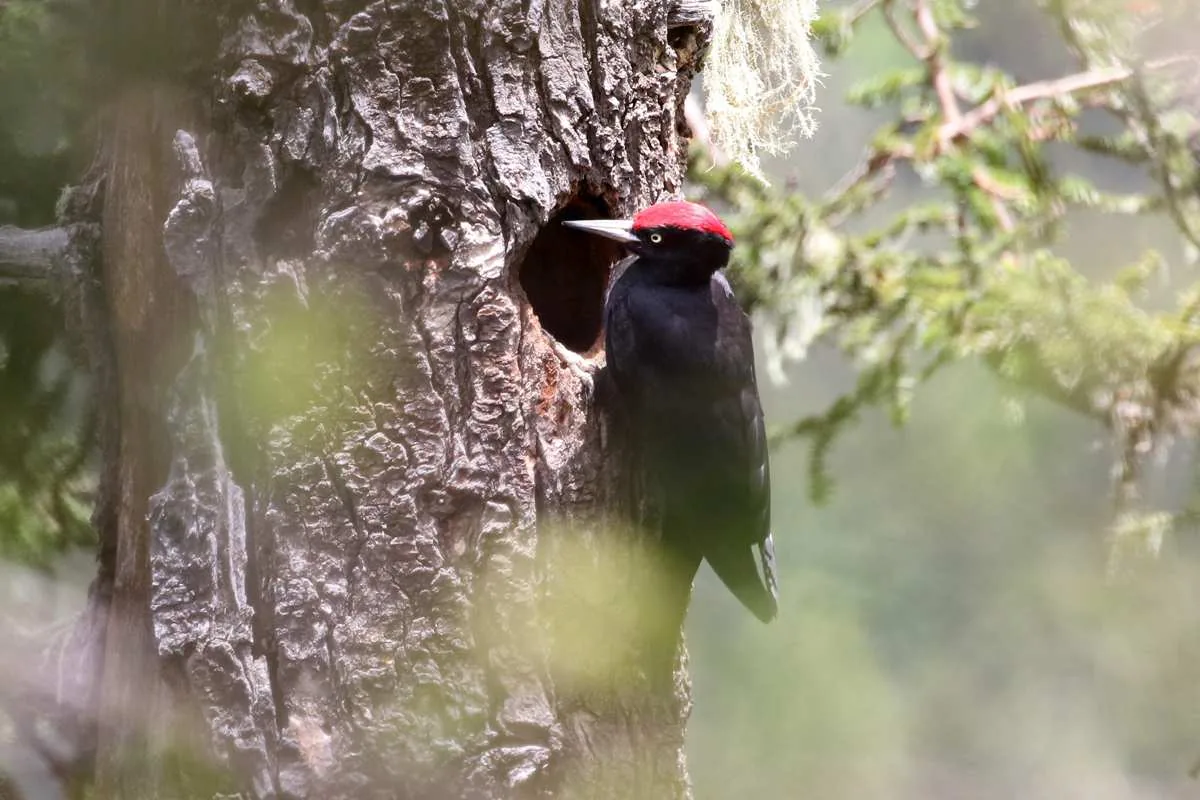
Stopping for a roadside lunch, beside some beautiful spruce forest accompanied by regular evidence of recent woodpecker activity in the area (i.e. large holes studding some of the dead trunks); Sam continued to pursue woodpeckers, and was shocked to notice a red-and-black head, and ivory-colored bill protruding from a near cavity: Black Woodpecker! The alert soon went up, and lunches were quickly abandoned, only for the head to evaporate from view for some time after, before most had been given the opportunity to observe it at all. We all waited patiently by the hole, and then watched a Siberian Chipmunk ascend the trunk and move in earnest towards the dark cavity. This was apparently too much for the occupant, and a male Black Woodpecker (photo below), quickly poked its head out of the hole, and jabbed at the chipmunk once it was within striking range, something that the chipmunk was wise not to repeat! Later, the woodpecker gave us a full body shot on the side of its nest, and some returned to see a female drop in to the nest too. The closeness and quality of the sighting was very popular indeed, leading this species to take the top bird of the tour spot for the first time – beating pheasants, which traditionally take up this hallowed position.
A prominent thrush song began emanating from the spruces after lunch, and was revealed to be none other than the recently split Sichuan Thrush (from Plain-backed Thrush). The bird was lured in close several times, but was always furtive, and only allowed some people good views as it hopped among the dark shadows of the forest floor. Not long after, another bird we had seemingly been pursuing for some time, finally relented, and appeared atop a nearby spruce, calling vigorously, though intermittently: Przevalski’s Nuthatch. It first appeared when some were taking a leave of absence, but was thankfully relocated by Charley later so that all could add it to their list. On the way back to town, shortly before rain stopped play, Jim spotted a Ring-necked Pheasant walking the agricultural fields nearby.
The day also featured other tour regulars like, Black Kite (our first of the tour that soon became regular after this point), Oriental Turtle-Dove, Gray-backed Shrike, Great Spotted Woodpecker, Long-tailed Minivet, Asian House-Martin, Gray-crested Tit, Hodgson’s Treecreeper, Goldcrest, Hume’s Warbler, a pair of Chinese Fulvettas, our first Dark-sided Flycatchers, Himalayan Bluetail, White-throated Redstart, White- backed Thrush, and Pink-rumped and Chinese White-browed Rosefinches.
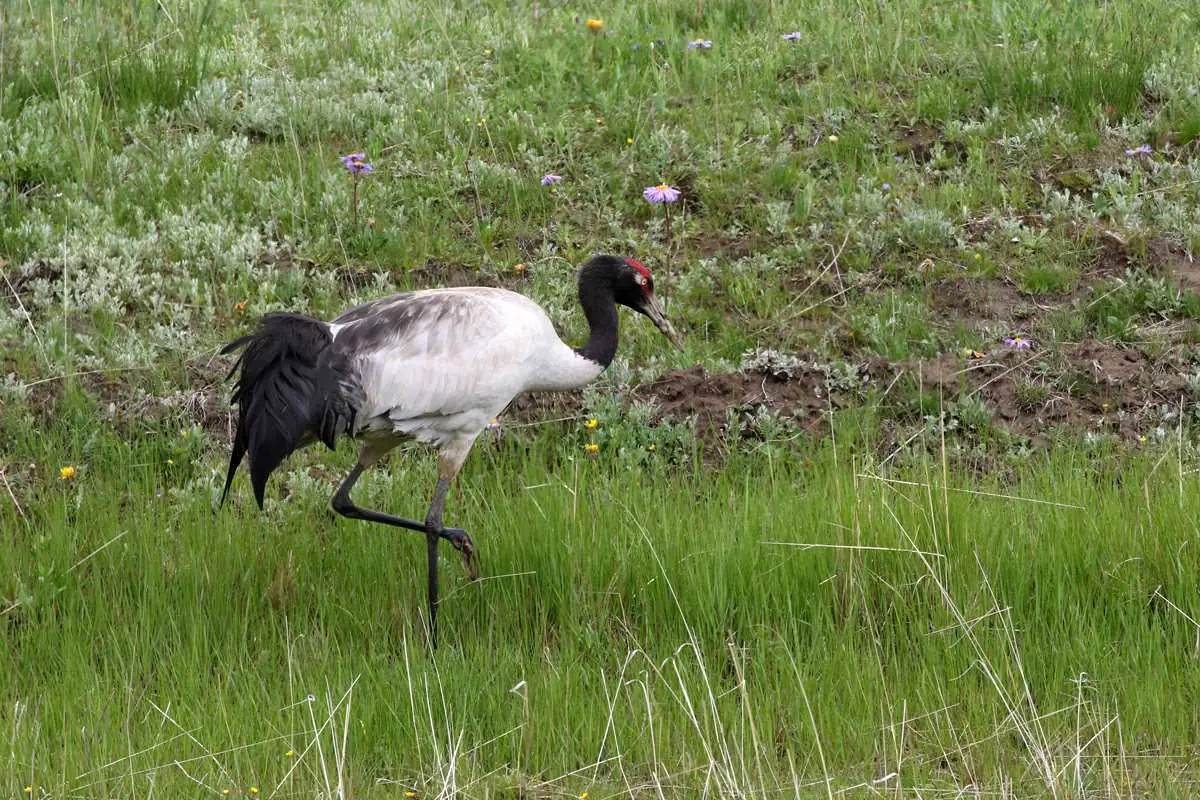
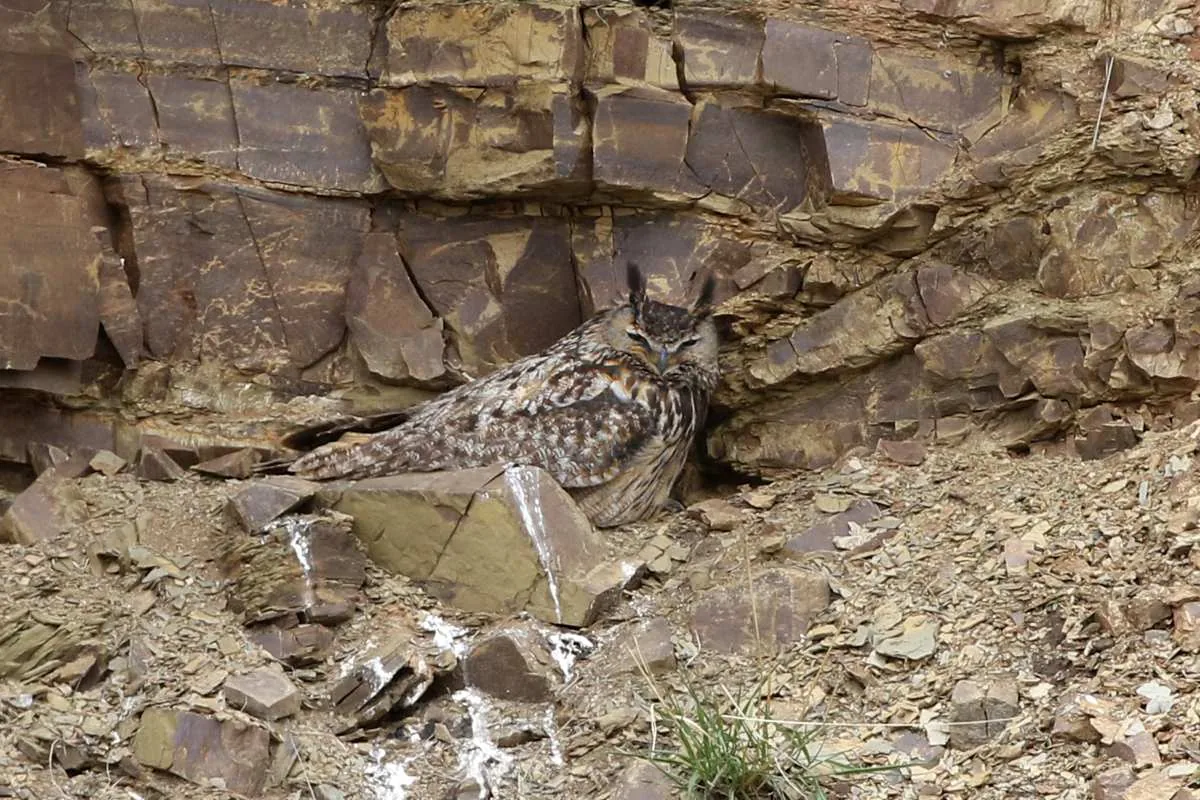
Following days for much of the tour covering tall spruce forests at high elevations, we changed one striking environment for another, as we spent the morning ascending up to the 11,810ft (3600m) high Tibetan Plateau, where the landscape was littered with vast herds of domestic yak, and the landscape was comprised of largely open grasslands, interspersed by clusters of Tibetan settlements, and studded with wetland areas, and cut through by shallow valleys dusted with stunted scrub, the latter of which were home to some of our main targets of the day. With a long journey to move out of the city of Maerkang, and arrive in another much more remote Tibetan city, Ruoergai, we needed to pick and choose our stops, with some major birds on the agenda for this day. Therefore, our stops only numbered a handful, but where we stopped we made the most of it. One of the first of these came when some large, regal shapes were spotted from the bus window, and we were soon admiring our first beautiful Black-necked Cranes (photo above), of which around ten birds were seen that day. Here and there, small quarries punctuated the grasslands, and it is here that we made our first major encounter of the day, and Parus found a superb roosting Eurasian Eagle Owl (photo page 19). The same quarry also hosted Rock Petronia, but our searches of the surrounding area failed to track down our other main avian quarry there, Chinese Gray Shrike. Nearby areas also yielded a gaudy yellow Citrine
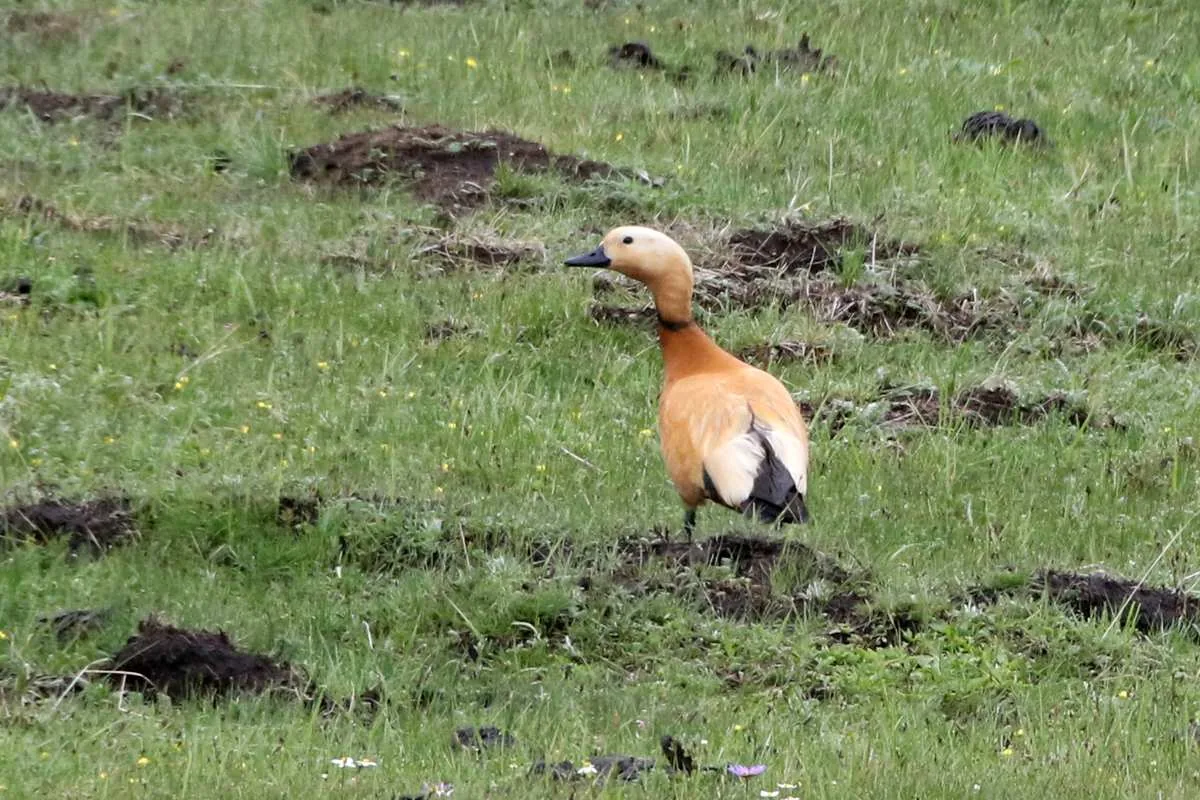
Wagtail, a Ferruginous Duck resting on a wetland that also held a striking breeding plumage White-winged Tern on it, as well as some of our first Ruddy Shelducks, which were to become familiar during our time on the plateau. As we crossed vast areas of the plateau, we encountered a number of Himalayan Marmots too, which are reasonably common in this habitat, and heard the regular songs of displaying Oriental Skylarks.
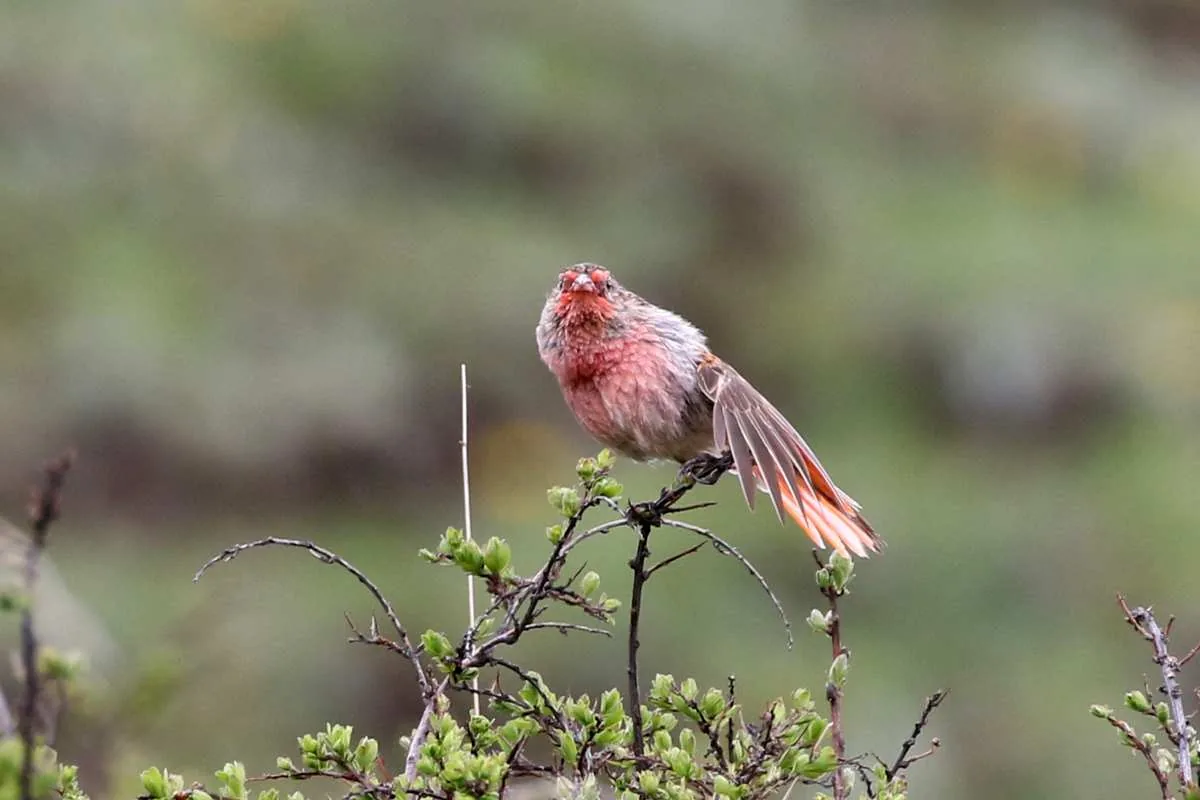
Moving on, we parked and lunched by a shallow valley studded with low shrubbery. This was to be arguably the most significant stop of the entire tour – for Jim at least anyway. After lunch, we ascended into the valley, feeling the altitude, as we did so, but seeing nothing initially other than the abundant Black Redstarts as we did so. Then, appropriately, Jim locked on to an all pink bird alighted on a near bush. All too soon, the bird dropped off, and was lost from view. He and the rest of us had a strong suspicion as to what it was, but we would have to be patient. As we surveyed the area for confirmation, a pair of Tibetan Partridges were observed walking across the bank. Following these gamebirds, some further glimpses of our pink quarry caused us to move position, and then focus on another pink species, when a male White-browed Tit- Warbler came in for an extended showing. However, finally, we returned to the bird that Jim had spotted earlier, a super male Przevalski’s Rosefinch (photo next page) that was located for all to see at length on a near shrub. As soon as the excitement had abated, and the bird evaporated back into the undergrowth, high fives ensued all round at having encountered one of the most desired birds of the tour, and a species that occupies its own unique family. This was Jim’s final bird family following a quest of some years, so the was palpable relief at fulfilling this quest and getting this bird. From something bright and conspicuous, we next added something at the opposite end of the scale, with a subdued Dusky Warbler, which came in very close several times over. The same hillside also hosted the first spritely White-browed Tits of the tour. However, we returned to birds of color, afterwards with a bright Robin Accentor within the same valley. Much of the reminder of the day was spent trying to locate the sparsely distributed Chinese Gray Shrike, which never showed up. Other birds that featured on this “travel day”, included Ground Tit, another pair of Chinese Fulvetta, Siberian Stonechat, Black Drongo, Daurian Jackdaw, several hulking Upland Buzzards, a couple of flyby Eurasian Hoopoes, and a handful of Azure-winged Magpies.
Day 13: Ruoergai area (Baxi Forest and Flower Lake)
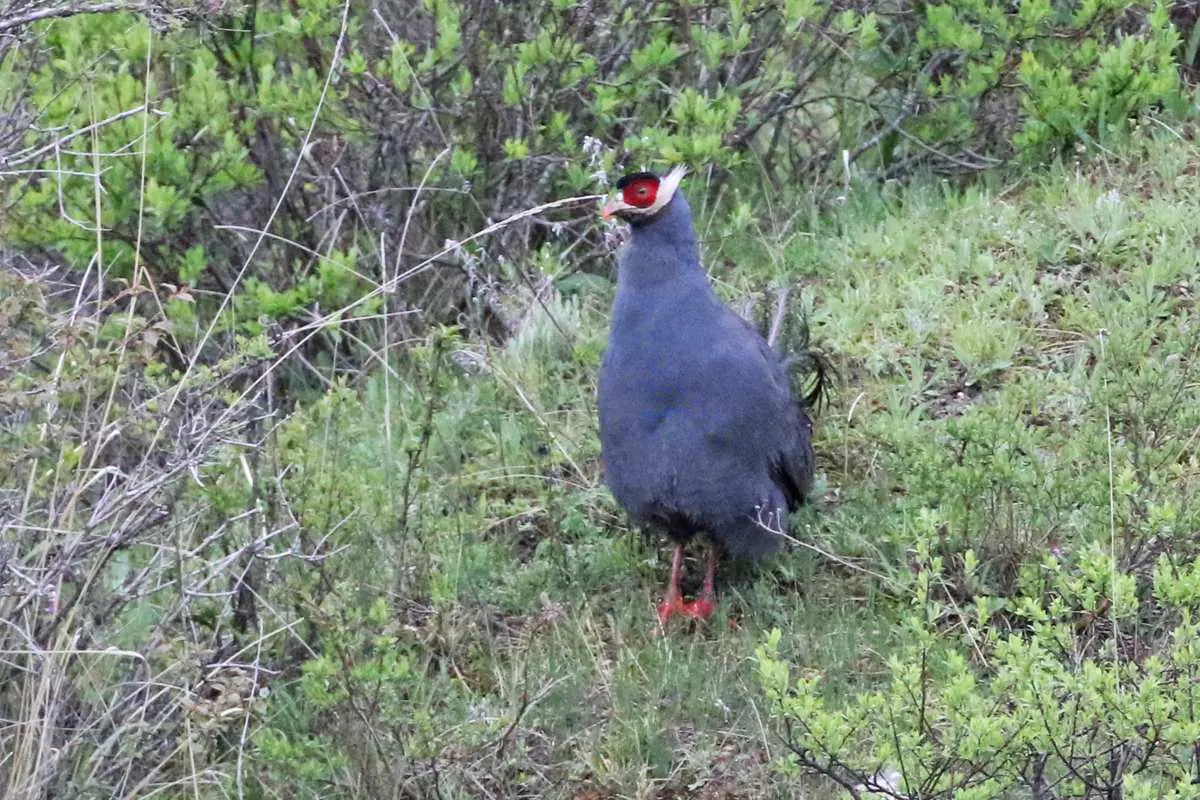
Having risen out of spruce-carpeted hillsides, to the heights of the open grasslands of Tibetan Plateau, you would think we would stay right there in that habitat. However, the strategic location of the town of Ruoergai allowed us to combine both of these markedly different environments in a single day. This made for both a varied and bumper birding day on the tour, with many new species added, and some major targets among these. Before dawn, we set out for the Baxi Valley, a spruce laden area just off of the plateau. Our dawn time arrival was strategic, and we were quickly scouring any open grassy areas at the edges of the foreboding spruce trees for signs of activity. Parus was the first to find what we were after, a bold Blue Eared-Pheasant (photo next page) that at this time of day, lost its usual inhibitions and emerged out from its usual dense forest hideout. A quick bit of repositioning had us in sight of “Parus’s” bird, which instead of retreating back into the forest at the sight of an excited group of birders, actually trotted out into a more open spot, where it remained for 5-10 unforgettable minutes. Breakfast was taken in the field, as usual, where birds like Pere David’s (Plain) Laughingthrush and Hodgson’s Redstart crept on to the list too. After breakfast, we headed into a nearby valley to try for a calling Sukatchev’s (Snowy-cheeked) Laughingthrush, noticing a male Three- banded Rosefinch perched atop a near spruce first. The laughingthrush led us a merry dance for some time, falling silent until we had walked away, then calling again once we had exited the valley. At that point, we walked back up the same valley, but this time were greeted with a more cooperative individual, that came into the open on several occasions, and allowed us all to log this often-shy endemic species on to our personal bird lists. Driving deeper, and lower into the valley (seeing another Ring-necked Pheasant as we drove down), we walked into some other spruce forest, where we swiftly logged a Snowy-browed (Chinese) Nuthatch that quickly responded; the same trail also led to several sightings of Sichuan Tit, and a single Pere David’s Tit that Tony found, and which strangely did not linger for more than a few to see. Other highlights in this area included Gray-headed Bullfinch, and further views of Dark-sided Flycatcher, White- backed and Chestnut Thrushes.
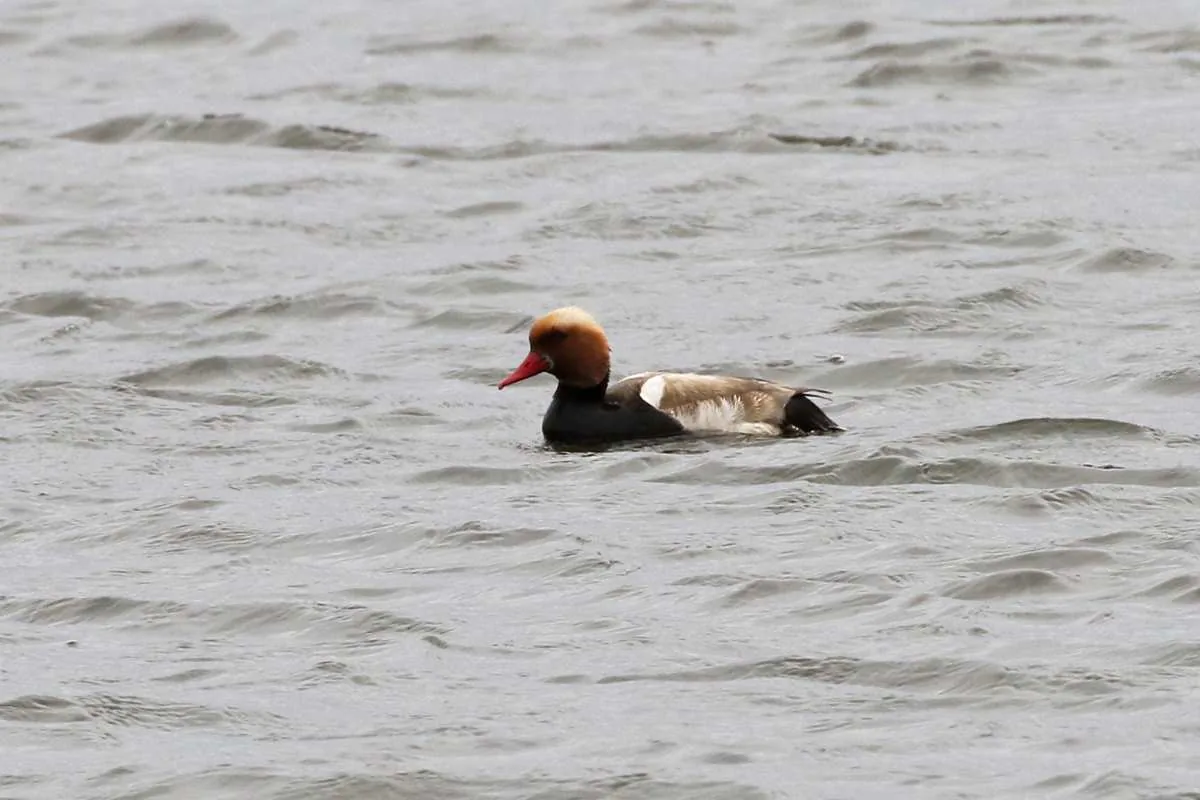
After lunch, back in Ruoergai at a Mao Zedong-themed restaurant (lots of Communist cartoons on the walls belying the nearby history of the Long March that came through this area in 1935), we departed for Flower Lake, 30 miles (50km) out of the city. Once at the lake, we were herded on to park buses the final few kilometers down to the lake shore, but not before picking up some great looks at a White- rumped and Rufous-necked Snowfinches at a local Plateau Pika colony. The boardwalk skirting the lakeshore was popular with Chinese tourists, and so we weaved our way through them to the various viewpoints across the lake, which led us to add numerous new birds to the bird list: Tibetan Larks often rose in display flights on the flower- sprinkled meadows, Citrine Wagtails sung nearby, Red-crested Pochards (photo next page), were prominent on various sections of the lake, sometimes mixed in with a few Common Pochards too, and the odd Ferruginous Duck, and a pair of Gadwall were also seen too. Jim spotted the first of numerous Salim Ali’s Swifts that foraged over the lake on and off all afternoon, where several Pale Sand Martins also appeared too. Great Crested Grebes revealed they had chicks in toe, while a pair of Horned Grebes was still active on their nest close to the boardwalk. Chinese Pond-Herons foraged in the shallows, and further out several Great Cormorants were drying out on an island. Brown-headed Gulls were conspicuous throughout our visit, and up to three species of tern were also seen (White-winged, Whiskered, and Common). Scanning more distantly led to an Eastern Marsh Harrier being sighted briefly a few times, a distant white blob morphing into a Whooper Swan, numerous Black-necked Cranes feeding at range, and some Black-winged Stilts found foraging far off of the lake edge. Some quick spotting by Tony led to us all getting eyes on a flying Great Bittern that remained in the air long enough for all to see. A quick check of a Saker area on the return journey revealed little in rainy conditions, before we retired to Ruoergai for another night.
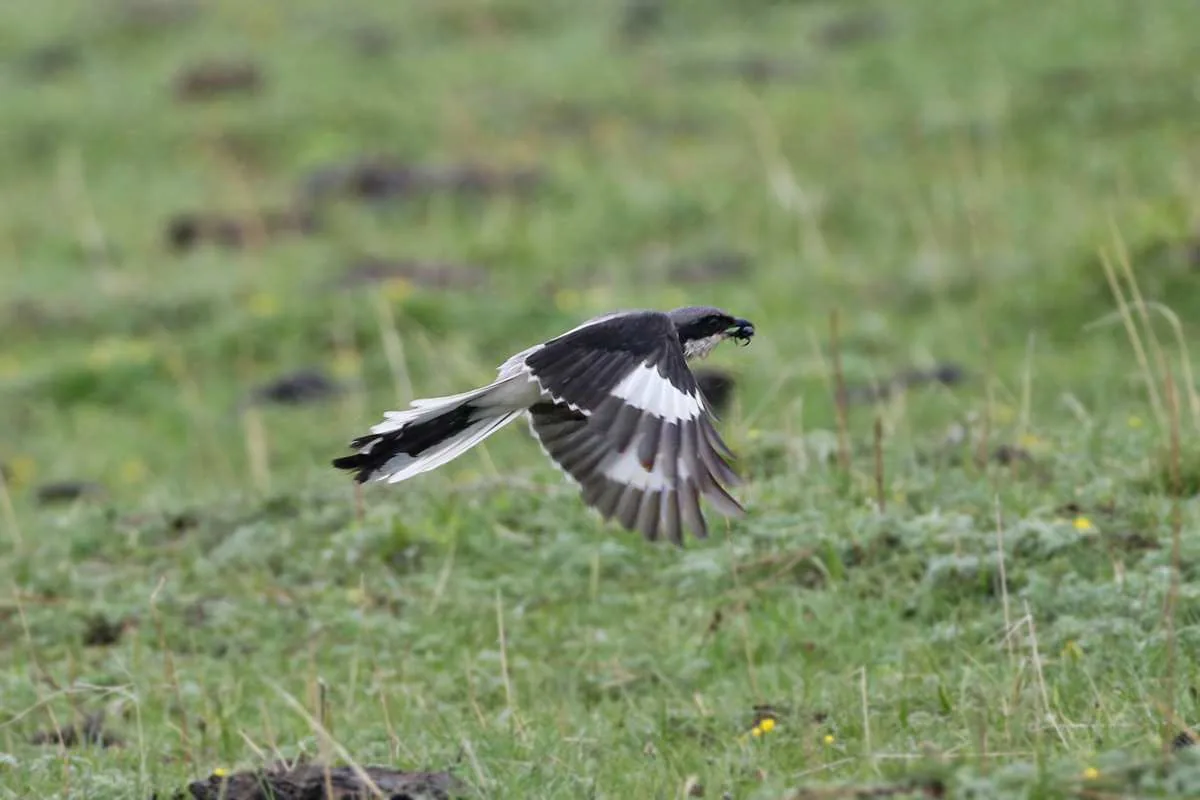
This was a day of considerable ups and downs. Trying a new birding area close to Flower Lake, we were scuppered in our plans to bird this new area, when a large new metal structure preventing logging trucks from passing though did the same for our bus too. With no other option, we were forced to do some considerable backtracking, but were rewarded for this with the first of two Saker Falcon sightings, in an area of open grassland that also held a Tibetan Fox too. Further down the road, we got to observe a family of three Chinese Gray Shrikes (photo left) at length, and also spend a long time with a pair of Little Owls later in the morning. Other plateau regulars featured too, like Black Redstarts, Upland Buzzards, Rock Petronias, further snowfinches, as well as several hulking Common Ravens. The afternoon saw us return to Baxi, but add little new of note, but still got some great looks at Tibetan Serins, as well as Common Cuckoos, Chinese Leaf- Warbler, Hodgson’s Redstart, Gray-crested, White-browed, Sichuan and Japanese Tits, White-throated Redstart, Plain Laughingthrush, and Common Rosefinch, among others.
Day 15: Baxi to Gonggangling area
A long drive was sandwiched between spells at first Baxi Forest, and then the high spruce-laden pass of Gonggangling late in the day. Unfortunately, both areas were much quieter than hoped, but we did see Przevalski’s Nuthatch and White-browed Tit at the first stop, then squeezed in a Siberian Rubythroat as we traveled between sites. The day also yielded some further stellar looks at Goldcrest, Chinese White- browed Rosefinch, Slaty-backed Flycatcher, Red-billed Chough, Eurasian Magpie, and Gray-headed Bullfinch too, as well as another Oriental Turtle-Dove or two.
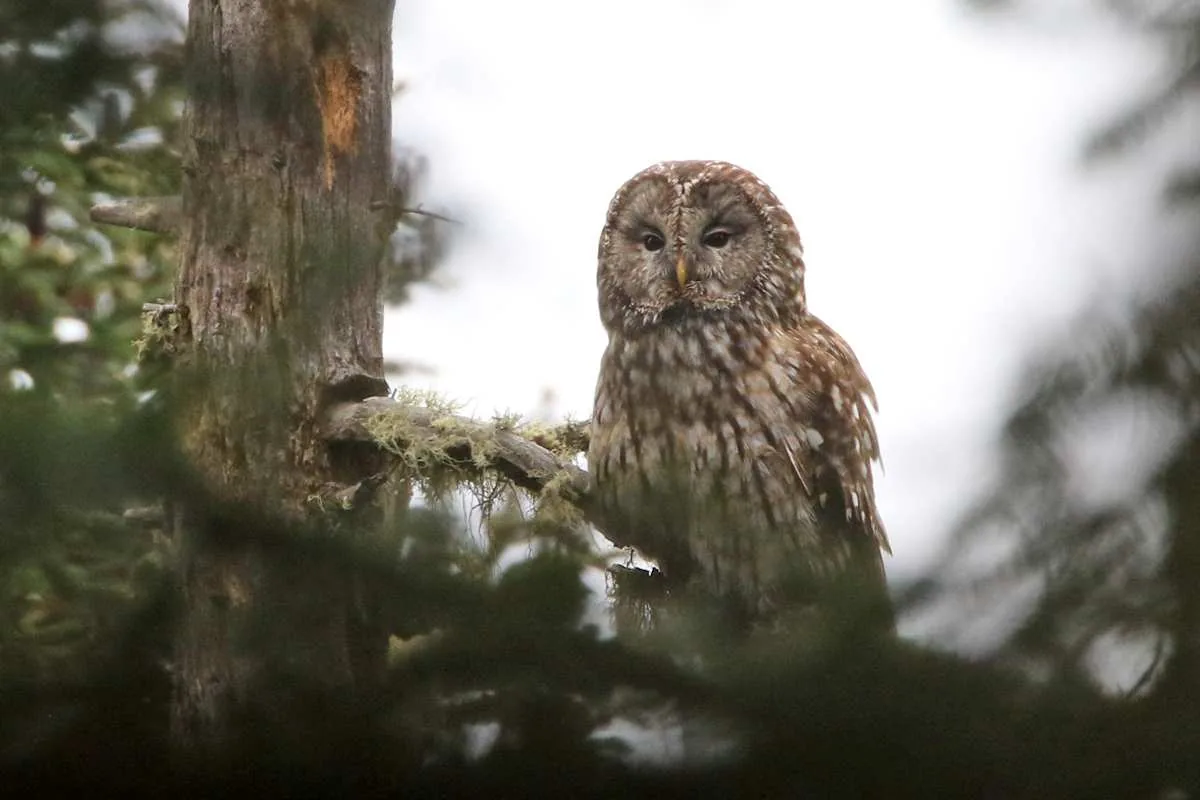
Our final day of birding was limited to just a handful of hours at Gonggangling, before we embarked on the 9- hour journey back to Chengdu. The focus was clear for this morning, with clear holes in the list, most notably with Pere David’s Owl (photo above) which we had tried very hard for the day before to no avail. Having tried right around dawn at two well-known areas for the owl, things were looking bleak for this large bird, until suddenly, at nearly 8am in the morning, the distinctive deep hoots could be heard resonating regularly from a near stand of spruces. We scanned frantically around the sound but simply could not locate the bird, and so with trepidation, walked into the spruce forest to try from in there. To our horror, the bird lifted out of the tree at our approach, but Bill saw it land in an open tree, and with work we had a ‘scope trained on the bird for some fifteen minutes! The last addition of the tour came later that morning, with a hyperactive Chestnut-crowned Bush-Warbler, and a confiding Himalayan Bluetail was also seen nearby. Before long though, we needed to leave for the long drive south back to Chengdu to wrap up the tour, (but squeezing in one more White- browed Tit-Warbler before we did so), with a final serving of Kung Pao chicken and spicy eggplant.
BIRD AND MAMMAL LISTS
The taxonomy of the bird list follows: Clements, James F., White, Anthony W., and Fitzpatrick, John W. The Clements Checklist of Birds of the World. Cornell, 2007. This list is up to date with the major changes published by Cornell up until August 2016.
(H) indicates a species that was HEARD only.
(GO) indicates a species recorded by the GUIDE ONLY.
| Ducks, Geese & Waterfowl · Anatidae | |
|---|---|
| Greylag Goose | Anser anser |
| Whooper Swan | Cygnus cygnus |
| Ruddy Shelduck | Tadorna ferruginea |
| Gadwall | Anas strepera |
| Mallard | Anas platyrhynchos |
| Red-crested Pochard | Netta rufina |
| Common Pochard | Aythya ferina |
| Ferruginous Duck | Aythya nyroca |
| Pheasants, Grouse & Allies · Phasianidae | |
| Tibetan Snowcock | Tetraogallus tibetanus |
| Chinese Bamboo-Partridge | Bambusicola thoracicus |
| Blood Pheasant | Ithaginis cruentus |
| Chinese Monal | Lophophorus lhuysii |
| Snow Partridge | Lerwa lerwa |
| Verreaux's Partridge | Tetraophasis obscurus |
| Temminck's Tragopan | Tragopan temminckii |
| Golden Pheasant | Chrysolophus pictus |
| Lady Amherst's Pheasant | Chrysolophus amherstiae |
| Ring-necked (Common) Pheasant | Phasianus colchicus |
| White Eared-Pheasant | Crossoptilon crossoptilon |
| Blue Eared-Pheasant | Crossoptilon auritum |
| Tibetan Partridge | Perdix hodgsoniae |
| Koklass Pheasant | Pucrasia macrolopha |
| Grebes · Podicipedidae | |
| Little Grebe | Tachybaptus ruficollis |
| Great Crested Grebe | Podiceps cristatus |
| Horned Grebe | Podiceps auritus |
| Cormorants & Shags · Phalacrocoracidae | |
| Great Cormorant | Phalacrocorax carbo |
| Herons, Egrets & Bitterns · Ardeidae | |
| Great (Eurasian) Bittern | Botaurus stellaris |
| Gray Heron | Ardea cinerea |
| Great Egret | Ardea alba |
| Little Egret | Egretta garzetta |
| Cattle Egret | Bubulcus ibis |
| Chinese Pond-Heron | Ardeola bacchus |
| Black-crowned Night-Heron | Nycticorax nycticorax |
| Hawks, Eagles & Kites · Accipitridae | |
| Lammergeier | Gypaetus barbatus |
| Oriental Honey-buzzard | Pernis ptilorhynchus |
| Himalayan Griffon | Gyps himalayensis |
| Gray-faced Buzzard | Butastur indicus |
| Eastern Marsh-Harrier | Circus spilonotus |
| Crested Goshawk | Accipiter trivirgatus |
| Chinese Sparrowhawk | Accipiter soloensis |
| Eurasian Sparrowhawk | Accipiter nisus |
| Black Kite | Milvus migrans |
| Himalayan Buzzard | Buteo refectus |
| Upland Buzzard | Buteo hemilasius |
| Rails, Gallinules & Coots · Rallidae | |
| Eurasian Moorhen | Gallinula chloropus |
| Eurasian Coot | Fulica atra |
| Cranes · Gruidae | |
| Black-necked Crane | Grus nigricollis |
| Stilts And Avocets · Recurvirostridae | |
| Black-winged Stilt | Himantopus himantopus |
| Sandpipers & Allies · Scolopacidae | |
| Common Redshank | Tringa totanus |
| Gulls, Terns And Skimmers · Laridae | |
| Brown-headed Gull | Chroicocephalus brunnicephalus |
| White-winged Tern | Chlidonias leucopterus |
| Whiskered Tern | Chlidonias hybrida |
| Common Tern | Sterna hirundo |
| Pigeons & Doves · Columbidae | |
| Rock Pigeon | Columba livia |
| Hill Pigeon | Columba rupestris |
| Snow Pigeon | Columba leuconota |
| Speckled Wood-Pigeon | Columba hodgsonii |
| Oriental Turtle-Dove | Streptopelia orientalis |
| Red Collared-Dove | Streptopelia tranquebarica |
| Spotted Dove | Streptopelia chinensis |
| Wedge-tailed Pigeon | Treron sphenurus |
| Cuckoos · Cuculidae | |
| Large Hawk-Cuckoo | Hierococcyx sparverioides |
| Common Cuckoo | Cuculus canorus |
| Himalayan Cuckoo | Cuculus saturatus |
| Lesser Cuckoo | Cuculus poliocephalus |
| Asian Koel | Eudynamys scolopaceus |
| Owls · Strigidae | |
| Oriental Scops-Owl | Otus sunia |
| Eurasian Eagle-Owl | Bubo bubo |
| Collared Owlet | Glaucidium brodiei |
| Asian Barred Owlet | Glaucidium cuculoides |
| Little Owl | Athene noctua |
| Himalayan Owl | Strix nivicolum |
| Pere David's Owl | Strix davidi |
| Nightjars And Allies · Caprimulgidae | |
| Gray Nightjar | Caprimulgus jotaka |
| Swifts · Apodidae | |
| White-throated Needletail | Hirundapus caudacutus |
| Himalayan Swiftlet | Aerodramus brevirostris |
| Pacific Swift | Apus pacificus |
| Salim Ali's Swift | Apus salimali |
| House Swift | Apus nipalensis |
| Hoopoes · Upupidae | |
| Eurasian Hoopoe | Upupa epops |
| Kingfishers · Alcedinidae | |
| Common Kingfisher | Alcedo atthis |
| Asian Barbets · Megalamidae | |
| Great Barbet | Psilopogon virens |
| Woodpeckers · Picidae | |
| Speckled Piculet | Picumnus innominatus |
| Gray-capped Woodpecker | Dendrocopos canicapillus |
| Darjeeling Woodpecker | Dendrocopos darjellensis |
| Great Spotted Woodpecker | Dendrocopos major |
| Black Woodpecker | Dryocopus martius |
| Gray-headed Woodpecker | Picus canus |
| Falcons And Caracaras · Falconidae | |
| Saker Falcon | Falco cherrug |
| Cuckooshrikes · Campephagidae | |
| Short-billed Minivet | Pericrocotus brevirostris |
| Long-tailed Minivet | Pericrocotus ethologus |
| Brown-rumped (Swinhoe's) Minivet | Pericrocotus cantonensis |
| Shrikes · Laniidae | |
| Brown Shrike | Lanius cristatus |
| Long-tailed Shrike | Lanius schach |
| Gray-backed Shrike | Lanius tephronotus |
| Chinese Gray Shrike | Lanius sphenocercus |
| Old World Orioles · Oriolidae | |
| Black-naped Oriole | Oriolus chinensis |
| Drongos · Dicruridae | |
| Black Drongo | Dicrurus macrocercus |
| Hair-crested Drongo | Dicrurus hottentottus |
| Crows, Jays & Magpies · Corvidae | |
| Eurasian Jay | Garrulus glandarius |
| Azure-winged Magpie | Cyanopica cyanus |
| Red-billed Blue-Magpie | Urocissa erythrorhyncha |
| Eurasian Magpie | Pica pica |
| Eurasian Nutcracker | Nucifraga caryocatactes |
| Red-billed Chough | Pyrrhocorax pyrrhocorax |
| Yellow-billed Chough | Pyrrhocorax graculus |
| Daurian Jackdaw | Corvus dauuricus |
| Carrion Crow | Corvus corone |
| Large-billed Crow | Corvus macrorhynchos |
| Common Raven | Corvus corax |
| Larks · Alaudidae | |
| Tibetan Lark | Melanocorypha maxima |
| Oriental Skylark | Alauda gulgula |
| Horned Lark | Eremophila alpestris |
| Swallows · Hirundinidae | |
| Pale Sand Martin | Riparia diluta |
| Eurasian Crag-Martin | Ptyonoprogne rupestris |
| Barn Swallow | Hirundo rustica |
| Red-rumped Swallow | Cecropis daurica |
| Asian House-Martin | Delichon dasypus |
| Fairy Flycatchers · Stenostiridae | |
| Gray-headed Canary-Flycatcher | Culicicapa ceylonensis |
| Tits, Chickadees & Titmice · Paridae | |
| Fire-capped Tit | Cephalopyrus flammiceps |
| Yellow-browed Tit | Sylviparus modestus |
| Coal Tit | Periparus ater |
| Rufous-vented Tit | Periparus rubidiventris |
| Yellow-bellied Tit | Periparus venustulus |
| Gray-crested Tit | Lophophanes dichrous |
| White-browed Tit | Poecile superciliosus |
| Pere David's Tit | Poecile davidi |
| Sichuan Tit | Poecile weigoldicus |
| Ground Tit | Pseudopodoces humilis |
| Green-backed Tit | Parus monticolus |
| Japanese Tit | Parus minor |
| Long-Tailed Tits · Aegithalidae | |
| White-browed Tit-Warbler | Leptopoecile sophiae |
| Crested Tit-Warbler | Leptopoecile elegans |
| Black-throated Tit | Aegithalos concinnus |
| Black-browed Tit | Aegithalos iouschistos |
| Sooty Tit | Aegithalos fuliginosus |
| Nuthatches · Sittidae | |
| Chestnut-vented Nuthatch | Sitta nagaensis |
| Przevalski's Nuthatch | Sitta przewalskii |
| Snowy-browed (Chinese) Nuthatch | Sitta villosa bangsi |
| Treecreepers · Certhiidae | |
| Hodgson's Treecreeper | Certhia hodgsoni |
| Wrens · Troglodytidae | |
| Eurasian Wren | Troglodytes troglodytes |
| Dippers · Cinclidae | |
| GO White-throated Dipper | Cinclus cinclus |
| Brown Dipper | Cinclus pallasii |
| Bulbuls · Pycnonotidae | |
| Collared Finchbill | Spizixos semitorques |
| Brown-breasted Bulbul | Pycnonotus xanthorrhous |
| Light-vented Bulbul | Pycnonotus sinensis |
| Black Bulbul | Hypsipetes leucocephalus |
| Kinglets · Regulidae | |
| Goldcrest | Regulus regulus |
| Cupwings · Pnoepygidae | |
| Chinese Cupwing | Pnoepyga mutica |
| Pygmy Cupwing | Pnoepyga pusilla |
| Bush-Warblers And Allies · Cettidae | |
| Chestnut-crowned Bush-Warbler | Cettia major |
| Gray-sided Bush-Warbler | Cettia brunnifrons |
| Chestnut-headed Tesia | Cettia castaneocoronata |
| Rufous-faced Warbler | Abroscopus albogularis |
| Brownish-flanked Bush-Warbler | Horornis fortipes |
| Yellowish-bellied Bush-Warbler | Horornis acanthizoides |
| Aberrant Bush-Warbler | Horornis flavolivaceus |
| Leaf Warblers · Phylloscopidae | |
| Dusky Warbler | Phylloscopus fuscatus |
| Buff-throated Warbler | Phylloscopus subaffinis |
| Alpine Leaf Warbler | Phylloscopus occisinensis |
| Yellow-streaked Warbler | Phylloscopus armandii |
| Buff-barred Warbler | Phylloscopus pulcher |
| Sichuan Leaf Warbler | Phylloscopus forresti |
| Chinese Leaf Warbler | Phylloscopus yunnanensis |
| Hume's Warbler | Phylloscopus humei |
| Greenish Warbler | Phylloscopus trochiloides |
| Large-billed Leaf Warbler | Phylloscopus magnirostris |
| Claudia's Leaf Warbler | Phylloscopus claudiae |
| Emei Leaf Warbler | Phylloscopus emeiensis |
| Kloss's Leaf Warbler | Phylloscopus ogilviegranti |
| Gray-crowned Warbler | Seicercus tephrocephalus |
| Martens's Warbler | Seicercus omeiensis |
| Bianchi's Warbler | Seicercus valentini |
| Chestnut-crowned Warbler | Seicercus castaniceps |
| Grassbirds And Allies · Locustellidae | |
| Brown Bush-Warbler | Locustella luteoventris |
| Spotted Bush-Warbler | Locustella thoracica |
| Sichuan Bush-Warbler | Locustella chengi |
| Parrotbills, Wrentit And Allies · Paradoxornithidae | |
| Golden-breasted Fulvetta | Lioparus chrysotis |
| Rufous-tailed Babbler | Chrysomma poecilotis |
| Chinese Fulvetta | Fulvetta striaticollis |
| White-browed Fulvetta | Fulvetta vinipectus |
| Gray-hooded Fulvetta | Fulvetta cinereiceps |
| Great Parrotbill | Conostoma oemodium |
| Three-toed Parrotbill | Cholornis paradoxa |
| Vinous-throated Parrotbill | Sinosuthora webbiana |
| Ashy-throated Parrotbill | Sinosuthora alphonsiana |
| Gray-hooded Parrotbill | Sinosuthora zappeyi |
| Golden Parrotbill | Suthora verreauxi |
| White-Eyes, Yuhinas And Allies · Zosteropidae | |
| White-collared Yuhina | Yuhina diademata |
| Black-chinned Yuhina | Yuhina nigrimenta |
| Chestnut-flanked White-eye | Zosterops erythropleurus |
| Japanese White-eye | Zosterops japonicus |
| Tree-Babblers, Scimitar-Babblers And Allies · Timaliidae | |
| Rufous-capped Babbler | Cyanoderma ruficeps |
| Streak-breasted Scimitar-Babbler | Pomatorhinus ruficollis |
| Black-streaked Scimitar-Babbler | Megapomatorhinus gravivox |
| Ground Babblers And Allies · Pellorneidae | |
| Dusky Fulvetta | Schoeniparus brunneus |
| Laughingthrushes And Allies · Leiothrichidae | |
| David's Fulvetta | Alcippe davidi |
| Gold-fronted Fulvetta | Alcippe variegaticeps |
| Sukatschev's Laughingthrush | Ianthocincla sukatschewi |
| Barred Laughingthrush | Ianthocincla lunulata |
| Giant Laughingthrush | Ianthocincla maxima |
| Pere David's Laughingthrush | Ianthocincla davidi |
| Buffy Laughingthrush | Ianthocincla berthemyi |
| White-browed Laughingthrush | Ianthocincla sannio |
| Chinese Babax | Ianthocincla lanceolata |
| Elliot's Laughingthrush | Trochalopteron elliotii |
| Red-winged Laughingthrush | Trochalopteron formosum |
| Red-billed Leiothrix | Leiothrix lutea |
| Red-tailed Minla | Minla ignotincta |
| Gray-faced Liocichla | Liocichla omeiensis |
| Blue-winged Minla | Actinodura cyanouroptera |
| Old World Flycatchers · Muscicapidae | |
| Dark-sided Flycatcher | Muscicapa sibirica |
| Asian Brown Flycatcher | Muscicapa latirostris |
| Ferruginous Flycatcher | Muscicapa ferruginea |
| Oriental Magpie-Robin | Copsychus saularis |
| Blue-throated Flycatcher | Cyornis rubeculoides |
| Fujian Niltava | Niltava davidi |
| Verditer Flycatcher | Eumyias thalassinus |
| White-browed Shortwing | Brachypteryx montana |
| Indian Blue Robin | Larvivora brunnea |
| White-bellied Redstart | Luscinia phaenicuroides |
| Blue Whistling-Thrush | Myophonus caeruleus |
| Little Forktail | Enicurus scouleri |
| Firethroat | Calliope pectardens |
| Siberian Rubythroat | Calliope calliope |
| White-tailed Rubythroat | Calliope pectoralis |
| White-tailed Robin | Cinclidium leucurum |
| Grandala | Grandala coelicolor |
| Himalayan Bluetail | Tarsiger rufilatus |
| White-browed Bush-Robin | Tarsiger indicus |
| Golden Bush-Robin | Tarsiger chrysaeus |
| Korean Flycatcher | Ficedula zanthopygia |
| Slaty-backed Flycatcher | Ficedula sordida |
| Slaty-blue Flycatcher | Ficedula tricolor |
| Snowy-browed Flycatcher | Ficedula hyperythra |
| Rufous-gorgeted Flycatcher | Ficedula strophiata |
| Blue-fronted Redstart | Phoenicurus frontalis |
| Plumbeous Redstart | Phoenicurus fuliginosus |
| White-capped Redstart | Phoenicurus leucocephalus |
| Hodgson's Redstart | Phoenicurus hodgsoni |
| White-throated Redstart | Phoenicurus schisticeps |
| Black Redstart | Phoenicurus ochruros |
| Daurian Redstart | Phoenicurus auroreus |
| Blue Rock-Thrush | Monticola solitarius |
| Siberian Stonechat | Saxicola maurus |
| Gray Bushchat | Saxicola ferreus |
| Thrushes And Allies · Turdidae | |
| Long-tailed Thrush | Zoothera dixoni |
| Sichuan Thrush | Zoothera griseiceps |
| Chinese Blackbird | Turdus mandarinus |
| Chestnut Thrush | Turdus rubrocanus |
| White-backed Thrush | Turdus kessleri |
| Chinese Thrush | Turdus mupinensis |
| Starlings · Sturnidae | |
| Red-billed Starling | Spodiopsar sericeus |
| Crested Myna | Acridotheres cristatellus |
| Sunbirds And Spiderhunters · Nectariniidae | |
| Gould's Sunbird | Aethopyga gouldiae |
| Accentors · Prunellidae | |
| Alpine Accentor | Prunella collaris |
| Robin Accentor | Prunella rubeculoides |
| Rufous-breasted Accentor | Prunella strophiata |
| Maroon-backed Accentor | Prunella immaculata |
| Wagtails And Pipits · Motacillidae | |
| Forest Wagtail | Dendronanthus indicus |
| Citrine Wagtail | Motacilla citreola |
| Gray Wagtail | Motacilla cinerea |
| White Wagtail | Motacilla alba |
| Rosy Pipit | Anthus roseatus |
| Olive-backed Pipit | Anthus hodgsoni |
| Przevalski'S Rosefinch · Urocynchramidae | |
| Przevalski's Rosefinch | Urocynchramus pylzowi |
| Buntings And New World Sparrows · Emberizidae | |
| Slaty Bunting | Latoucheornis siemsseni |
| Godlewski's Bunting | Emberiza godlewskii |
| Yellow-throated Bunting | Emberiza elegans |
| Finches, Euphonias And Allies · Fringillidae | |
| Plain Mountain-Finch | Leucosticte nemoricola |
| Black-headed Mountain-Finch | Leucosticte brandti |
| Crimson-browed Finch | Pinicola subhimachala |
| Brown Bullfinch | Pyrrhula nipalensis |
| Gray-headed Bullfinch | Pyrrhula erythaca |
| Dark-breasted Rosefinch | Carpodacus nipalensis |
| Common Rosefinch | Carpodacus erythrinus |
| Himalayan Beautiful Rosefinch | Carpodacus pulcherrimus |
| Pink-rumped Rosefinch | Carpodacus waltoni |
| Vinaceous Rosefinch | Carpodacus vinaceus |
| Dark-rumped Rosefinch | Carpodacus edwardsii |
| Three-banded Rosefinch | Carpodacus trifasciatus |
| Chinese White-browed Rosefinch | Carpodacus dubius |
| Streaked Rosefinch | Carpodacus rubicilloides |
| Red-fronted Rosefinch | Carpodacus puniceus |
| Oriental Greenfinch | Chloris sinica |
| Red Crossbill | Loxia curvirostra |
| Twite | Carduelis flavirostris |
| Tibetan Serin | Serinus thibetanus |
| Yellow-billed Grosbeak | Eophona migratoria |
| Collared Grosbeak | Mycerobas affinis |
| White-winged Grosbeak | Mycerobas carnipes |
| Old World Sparrows · Passeridae | |
| Eurasian Tree Sparrow | Passer montanus |
| Rock Petronia | Petronia petronia |
| White-rumped Snowfinch | Montifringilla taczanowskii |
| Rufous-necked Snowfinch | Montifringilla ruficollis |
| Waxbills And Allies · Estrilidae | |
| White-rumped Munia | Lonchura striata |
| Mammals | |
| Pallas's Squirrel | Callosciurus erythraeus |
| Penry's Long-nosed Squirrel | Dremomys pernyi |
| Himalayan Marmot | Marmota himalayana |
| Siberian Chipmunk | Tamias sibiricus |
| Plateau Pika | Ochotona curzoniae |
| Moupin Pika | Ochotona thibetana |
| Large-eared Pika | Ochtona macrotis |
| Woolly Hare | Lepus oiostolus |
| Tibetan Fox | Vulpes ferrilata |
| Domestic Yak | Bos grunniens |
This trip report was written by Tropical Birding and is reproduced with their permission, with their photographs. See Tropical Birding's China tour for their trips and more reports. To join this trip, see China: Birding with a Camera, Tropical Birding. Back to resources.