
 Wildlife
of China
Xinjiang and Tibetan Plateau Birding Tour Trip Report 2025
Trip report by Bird Tour Asia · June 2025
Tibetan Plateau and Xinjiang
7th – 26th June 2025 Leader: Mike Nelson
Participants: John Bjorkman, Adrian and Kate Hayward, John Wall, Gimme Walter, Nick Watmough, Kevin Stracey and Lizzie Dodd
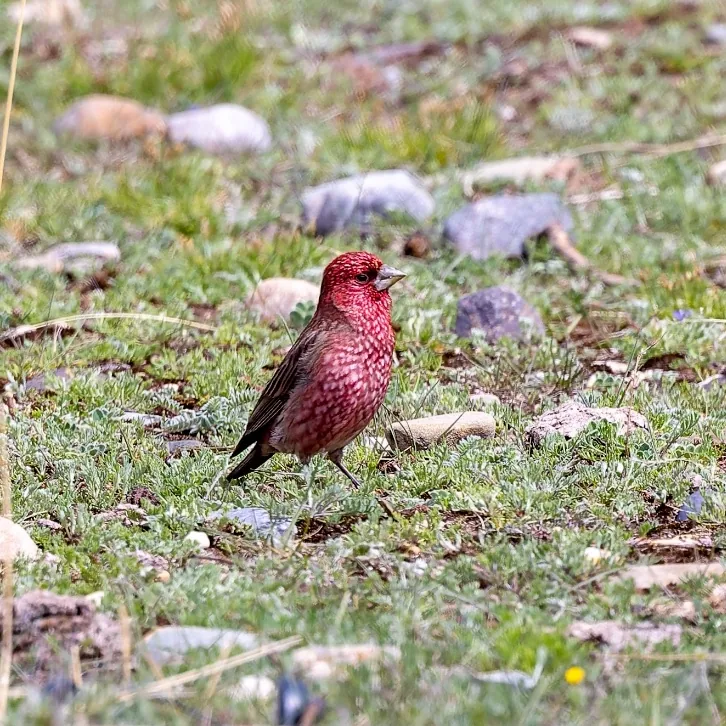
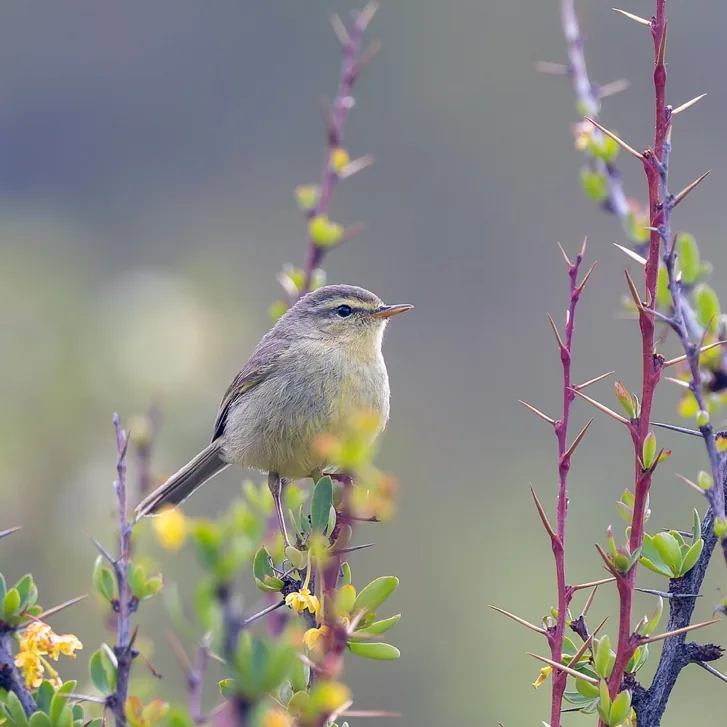
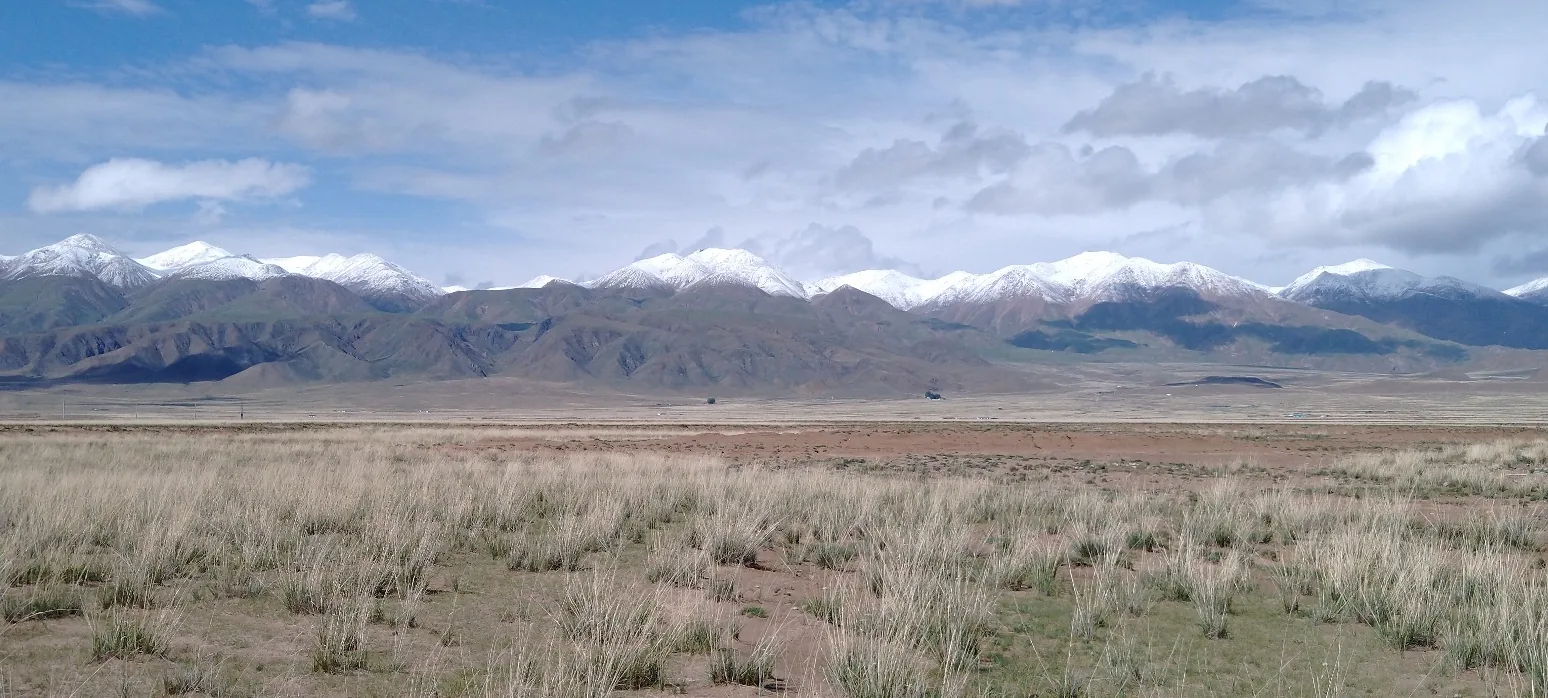
Tibet. The very name evokes a sense of wonder with soaring peaks, endless skies, vast grassy plains and ancient monasteries nestled among the clouds. Known as the “Roof of the World”, this mystical land stretches across a staggering 2.5 million square kilometres of China, encompassing some of the most spectacular and diverse landscapes on Earth. While often mischaracterized as a flat, barren plateau, Tibet is anything but. This vast region bursts with dramatic contrast from towering Himalayan ranges, plunging river gorges, windswept grasslands, and deserts fringed by snow-capped peaks. Our tour began in the wild northwest, just beyond the edge of the Tibetan Plateau in Xinjiang. Here, in a land where Asia and Europe collide, we were greeted by a remarkable blend of birdlife. Eurasian Three-toed Woodpeckers, Mistle Thrushes, and Stock Doves mingled with the vibrant Red-headed Bunting, Fire-fronted Serin, and Eversmann’s Redstart, creating a dazzling opening chapter to our journey. Skirting the fringes of the Taklamakan Desert, we spotted desert-adapted species like the charismatic Xinjiang Ground Jay, Saxaul Sparrow and Tarim Babbler, testaments to nature’s resilience in this harsh terrain. As we moved on to the southern ramparts of the Himalayas, the landscape transformed, and so did the avifauna. Black-headed Greenfinches flitted through the trees, while the vivid Lord Derby’s Parakeet flashed overhead. Moving higher still to a serene monastery near Lhasa, the tranquillity of the setting was matched only by spectacular sightings of Giant Babax and the regal Tibetan Eared Pheasants and then on to the splendour of Lhasa. In the vast heart of the plateau, wildlife encounters became regular with herds of Tibetan Antelope and Kiang (Tibetan Wild Ass) as we swept across the steppe, while Tibetan Foxes slinked through the grasses in pursuit of Plateau Pika. Birds were also on the cards with megas like Ibisbill, Kozlov’s Bunting, Chinese Rubythroat, and the exquisitely marked Tibetan Partridge. The conifer forests held their own treasures with Kozlov’s Babax, White-eared Pheasants, and the stunning Buff-throated Monal-Partridge. As we ventured into the wild expanse of the Kunlun Mountains, Wild Yak Valley added a jewel of a sighting in Tibetan Rosefinch. Further north, the Dulan Mountains, the massive Qinghai Lake and the arid gorges around Gonghe offered yet another fascinating dimension to the tour with the incomparable Przewalski’s Pinktail, Wallcreeper, Tibetan Lark, and richly coloured Pale Rosefinch, both bird and landscape adding an unforgettable mosaic of high-altitude biodiversity. Lastly a short visit to a deciduous forest north of Xining completed our tour with Gansu Leaf Warbler, Siberian Rubythroat and White-bellied Redstart.
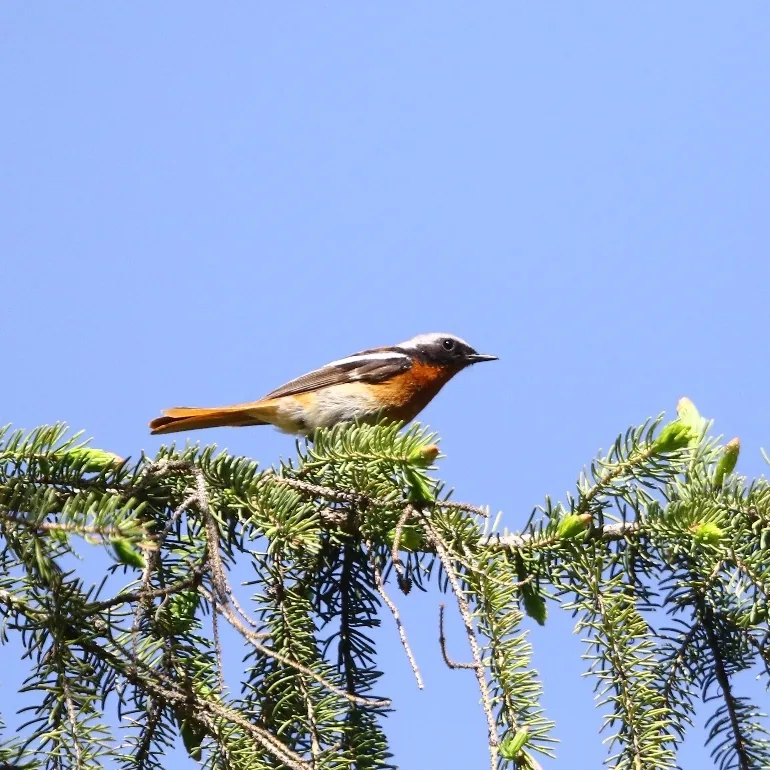
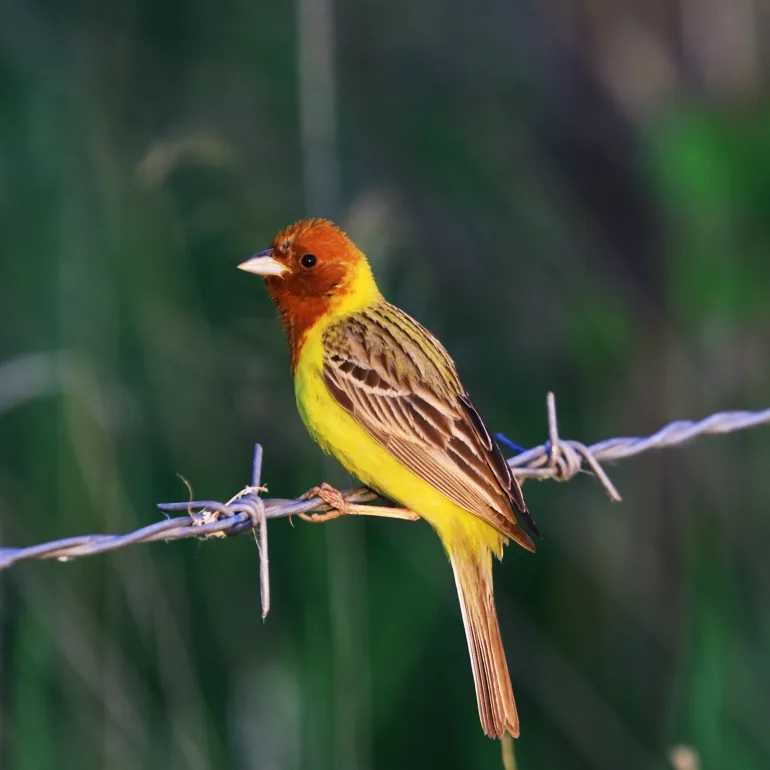
After assembling in Urumqi, we began exploring the gently rolling grasslands and forested hills. The morning sun bathed the landscape in golden light as our first notable bird made its appearance, a striking Red-headed Bunting, a fitting herald for what was to come. The air was alive with activity as Isabelline Shrikes perched sentinel-like on wires, while Chukar and Daurian Partridges scurried through the grasses. A chorus of Common Cuckoos and silhouetted Common Swifts high above gave the landscape a European feel. Post-breakfast, we ventured into a coniferous forest where Black Kites and a Booted Eagle glided overhead as a vigilant Common Buzzard joined them. On the forest’s edge, confiding Common Rosefinches showed well, while a Northern Wheatear called from a nearby structure. Eurasian Magpies and Carrion Crows added a lively chatter to the air and once venturing into the shaded stillness of the forest, we encountered an enchanting blend of sights and sounds with the distinctive songs of Willow Tit and Hume’s Leaf Warbler (of the humei subspecies) mixing with Coal Tits. Eurasian Nuthatch and Eurasian Treecreeper flitted up trunks, while Eurasian Blackbirds darted through the undergrowth, beaks full of grubs. A Black-throated Accentor gave a virtuoso performance from a branch overhead and both Blue-capped and Eversmann’s Redstarts delighted us with their bold colours and attentive parenting, while a shy Red-mantled Rosefinch teased us from the edge of a forest clearing. Out in the open again, we spotted a Siberian Stonechat and a Great “Steppe” Grey Shrike perched sentinel on a roadside wire as we nipped past. Our lunch stop in a quiet valley village provided one of the day's highlights. After generous plates of lamb and rice, we watched a nesting pair of Eurasian Wrynecks flying in and out of an old farm building like it was some massive nesting box after a fashion. A Northern Wheatear had taken up residence under a rooftop eave, while a Rufous-tailed Rock-thrush tirelessly ferried food to its hidden brood. A Common Whitethroat sang from a wire above us, and below it, a leaky bathtub served as a watering hole for Grey-crowned Goldfinch (recently split from the European species), Common Linnet, and the luminous Fire-fronted Serins. With our spirits lifted by food and birds, we returned to Urumqi to get ready to visit the other side of the Tien Shan Mountains.
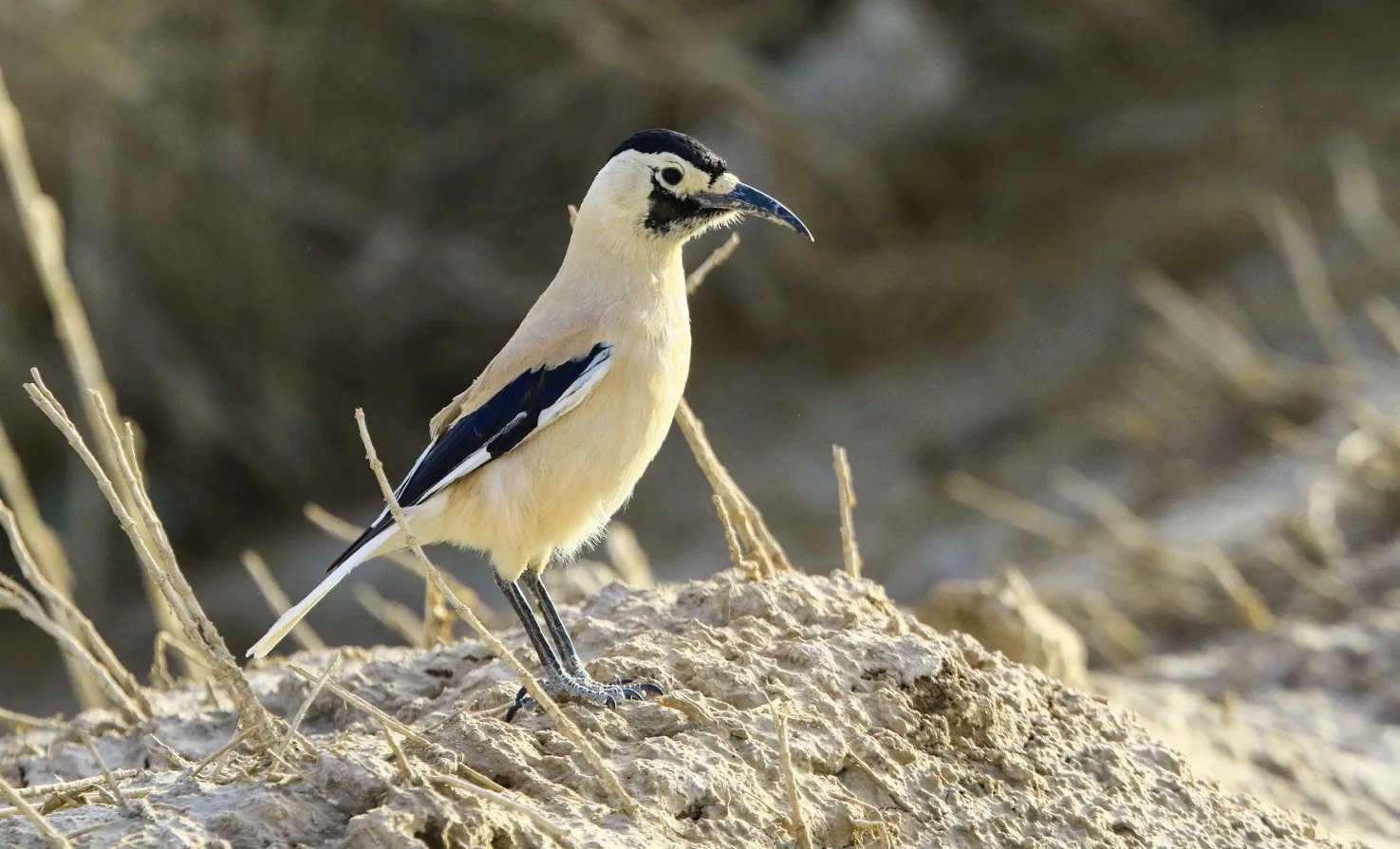
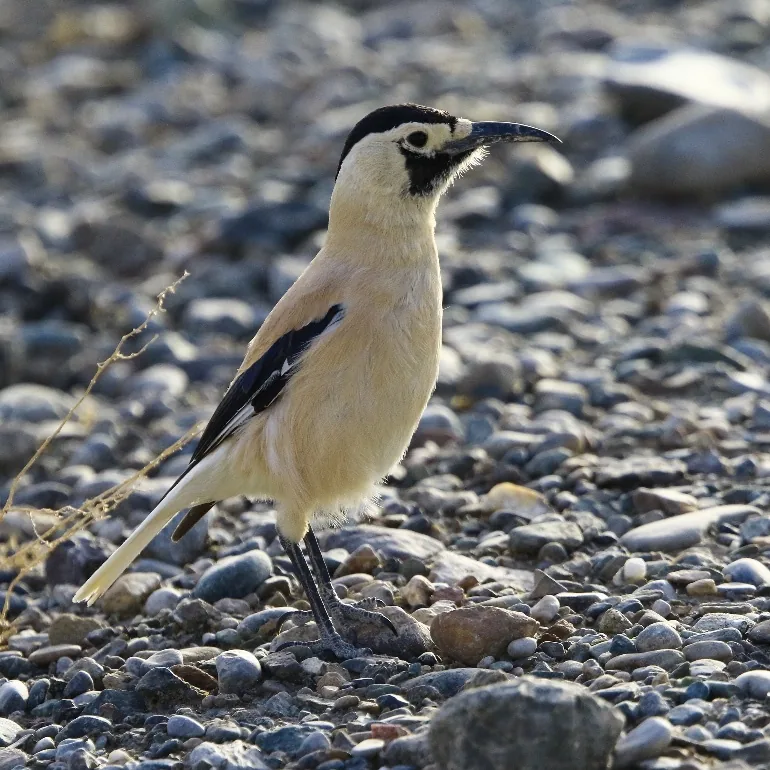
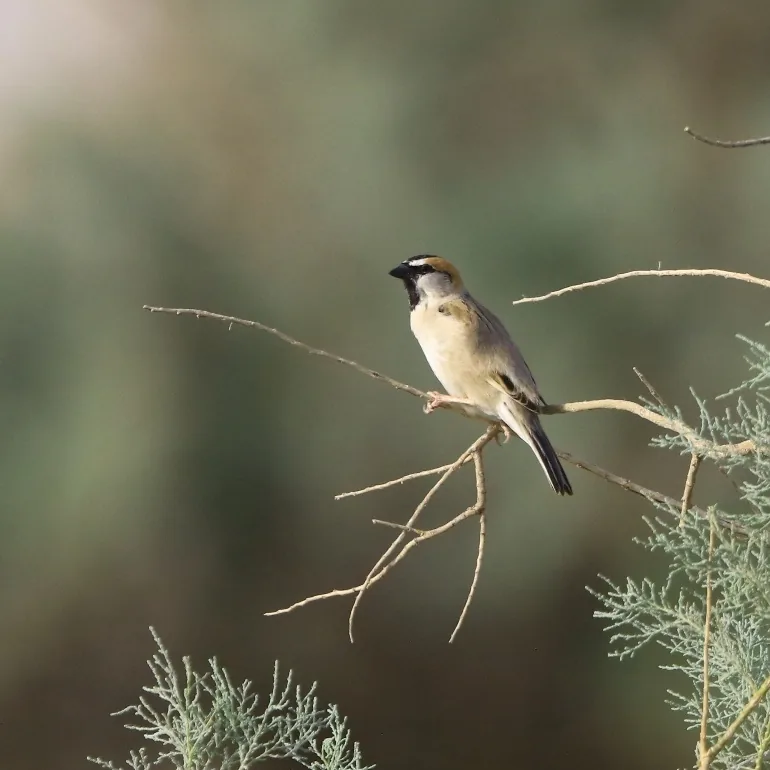
Catching an early morning flight that delivered us to the edge of the Taklamakan Desert we wasted no time diving into our first taste of the arid landscapes that define this part of Xinjiang. A quick lunch was followed by an afternoon excursion to a patch of dry forest, our first opportunity to explore this unique habitat. Barely into the dry forest, we were rewarded with a close encounter of a Saxaul Sparrow, busily nesting in a tree cavity, oblivious to our arrival. A few steps farther and flashes of soft blue and white gave away several Azure Tits, which led us on a merry chase through the scrub. While tracking their movements, we were treated to some views of a striking White-winged Woodpecker and a singing Desert Whitethroat flitting between branches. As the heat began to fade, we tuned in to the distinctive calls of a pair of Tarim Babblers, one of the region’s most sought-after dry forest specialists. We quietly settled in at a likely spot and, sure enough, the curious pair circled us several times before granting outstanding views as they darted among the low vegetation. With our desert checklist off to a fantastic start, we returned to our hotel via a winding desert road, making a final noteworthy sighting of a pale Xinjiang Shrike perched out in the open, scanning its dusty domain. The following morning saw us back on the road before sunrise, heading deeper into the desert in search of one of our top targets: the enigmatic Biddulph’s Ground Jay, also known as Xinjiang Ground Jay. Our efforts were rewarded after several strategic stops when a distant call caught our attention, and moments later a pair of these desert phantoms burst into view. With their bold white wing flashes and undulating flight, they glided in and began a remarkable display by circling us, perching low on sandy berms, and one even pausing in the middle of the road to examine us curiously before lifting off to re- join its mate. As the jays continued to call behind us, we turned our attention to a particularly photogenic Saxaul Sparrow that posed beautifully in the soft morning light. Nearby, a Desert Wheatear and a rather sullen-looking Desert Whitethroat (though has been pushed back into Lesser Whitethroat pending further study) rounded out our desert birding for the day. With hearts full and memory cards filling fast, we bid farewell to the jays and the sand-swept terrain, heading back just in time to catch our afternoon flight to Chengdu, where the next chapter of our journey awaited.
From Chengdu, we boarded a morning flight bound for the remote and bird-rich foothills of the Himalayas, right along the Arunachal Pradesh border with India. Here, in the mist-draped conifer forests of this little-travelled frontier, we were in pursuit of a particularly unusual target; Lord Derby’s Parakeet, a striking, cone-munching parrot found almost exclusively in this habitat. It’s not just the bird’s appearance that makes it stand out as its name carries a fascinating piece of natural history. The species was named in honour of Edward Smith-Stanley, the 13th Earl of Derby, who gave up a life in politics to become a devoted naturalist. At Knowsley Hall in Liverpool, Lord Derby built one of the largest private menageries of the 19th century. The job of cataloguing this living treasure trove fell to zoologist Louis Fraser, who named several species from the collection including the parakeet in honour of his patron. The Earl eventually founded what is now Liverpool’s World Museum, where much of his original collection is still housed. With that bit of Victorian-era intrigue in mind, we set off into the surrounding hills, hopeful that we, too, might add Lord Derby’s Parakeet to our own collection; of memories, that is. Although the parakeets remained elusive that first afternoon, the birding was anything but disappointing. Black-headed Greenfinches chirped from village wires, while a scattering of Daurian Redstarts and well-dressed Russet Sparrows added colour to the roadside birding. Groups of Prince Henri’s Laughingthrushes emerged from the roadside underbrush, bounding about with infectious energy. We also enjoyed close looks at Rusty-fronted Bushtits in a small conifer, while White-collared Blackbirds sang sweet notes from treetops above. A glittering Mrs. Gould’s Sunbird flitted through the canopy in a burst of crimson and gold—a true Himalayan jewel but alas still, no parakeet.
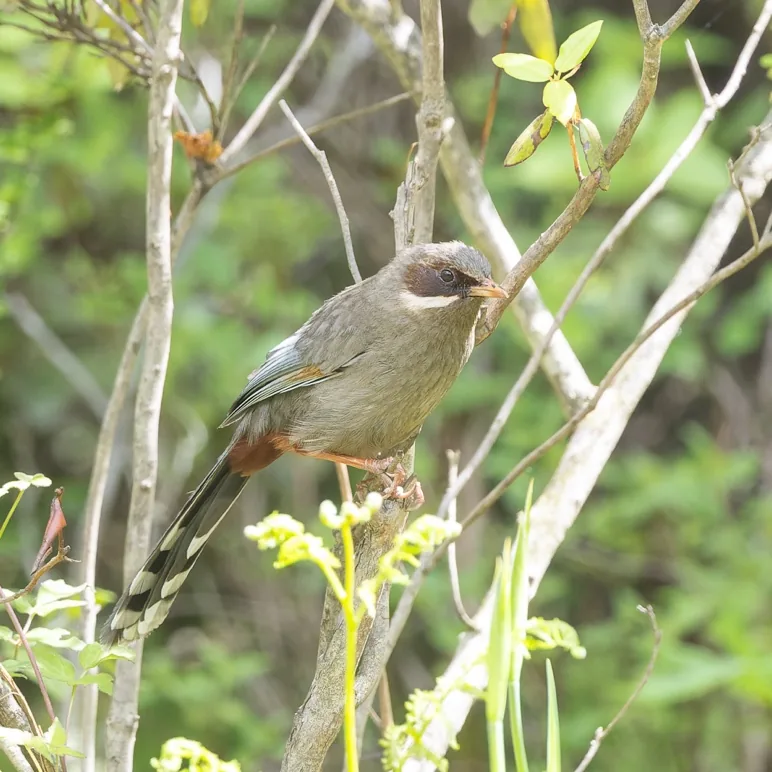
The next morning, our efforts paid off. As dawn broke, our bus startled a Grey Nightjar from the roadside as we journeyed to our first destination, an ethereal shape disappearing into the soft pre-dawn light. While enjoying breakfast in the field, we were surrounded by the musical warbles of Tickell’s Leaf Warblers, filling the forest air with their gentle song. The undergrowth was once again alive with activity with more Prince Henri’s Laughingthrushes, a pair of Giant Babax, and the raucous call of a Eurasian Jay echoed through the valley. A few Long-tailed Minivets flashed brilliant yellow and orange as they moved through the treetops, while a handful of Blyth’s Swifts zipped overhead, near the northern edge of their range. Then, we heard the unmistakable screeches of Lord Derby’s Parakeets as a pair hurtled pass just above the treeline. The encounter was brief but thrilling and left us wanting more. A while later, luck smiled again as a second group of three parakeets cruised in lower and slower, allowing for much better views. Powerful wingbeats, long tails, and bright green plumage and a red billed male allowed for another brief but fulfilling view that brought cheers from the group. From there, our journey turned toward higher ground. We began a long but scenic ascent through the Himalayan foothills, climbing steadily toward the iconic city of Lhasa. We made several rewarding stops along the way including a high-altitude pass where Black-winged and Rufous-necked Snowfinches flitted among the rocks, braving the wind. Farther along, another brief stop revealed more snowfinches and our first Ground Tit foraging boldly across open grassland, alongside the ever- present Plateau Pikas, which would become a near-constant companion in the coming days.
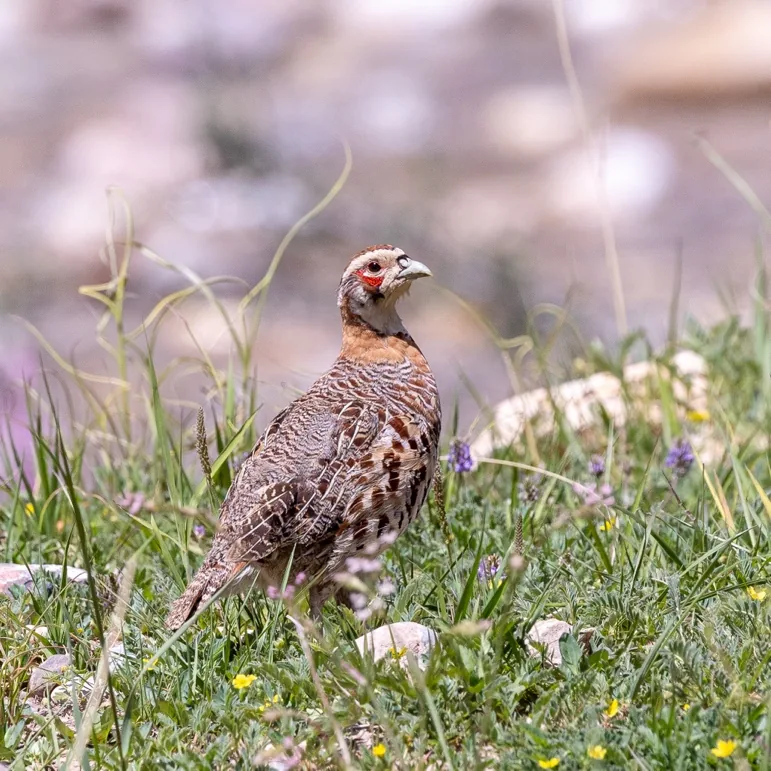
A brushy slope yielded a pair of wonderfully cooperative Tibetan Partridges, a species we’d soon become well acquainted with. Among other sightings were more Tickell’s Leaf Warblers, a nesting Common Kestrel, and a burly Woolly Hare that bolted toward us, skidded to a dramatic halt just a few feet away, and gave us a bold, challenging stare before vanishing into the scrub. By late afternoon, we descended into the high-altitude capital of Lhasa, the spiritual and geographic heart of Tibet, tired but exhilarated. The mountains had already given much but more fantastic birding awaited us in the days ahead.

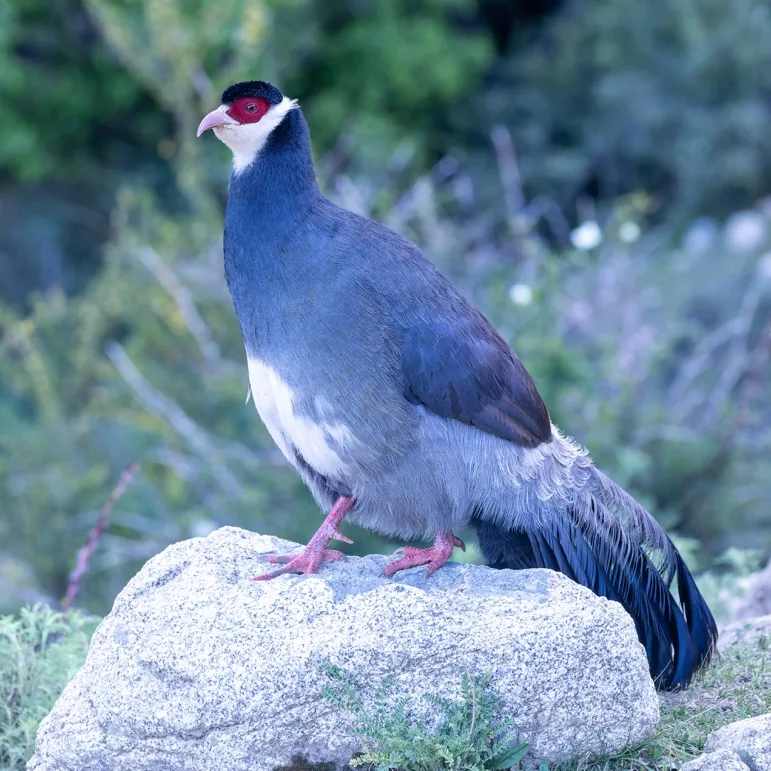
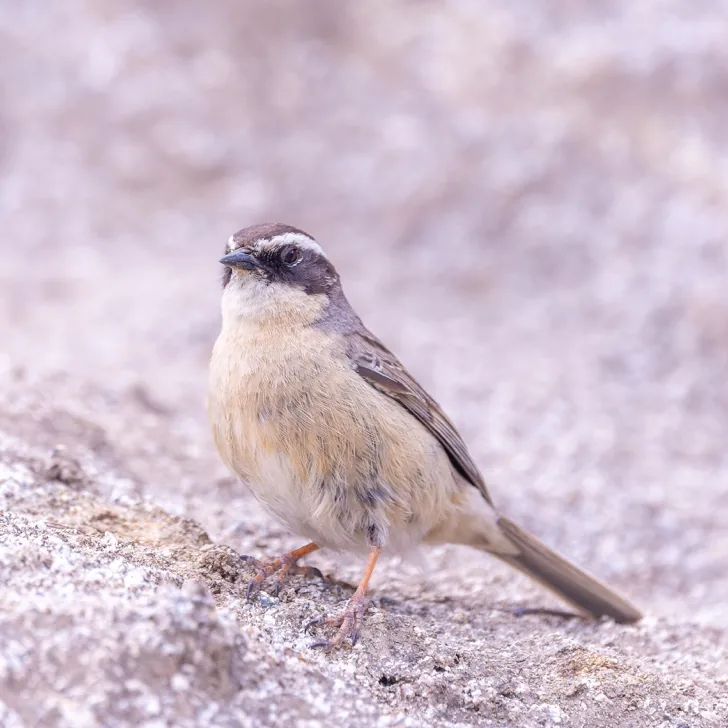
The next day we set off before sunrise, winding our way east of Lhasa into the high Himalayas. Our destination was a remote monastery and nunnery nestled in a sweeping 4,000-metre-high valley, an isolated haven steeped in beauty and brimming with wildlife. At the base of the valley, we paused for breakfast. Above us we could see the two nunneries clinging to the slopes like stone sentinels while below, a narrow creek gully thick with shrubs buzzed with activity. Streaked Rosefinches sang from every corner, their raspy calls leading us to brilliant flashes of their streaked and crimson plumage. Hill Pigeons and Eurasian Hoopoes wheeled through the sky in constant motion, while Prince Henri’s Laughingthrushes bounded from bush to bush with infectious energy. The air was alive with the songs of Tickell's Leaf Warblers, and a few Tibetan Blackbirds joined the morning chorus. Brightly coloured Pink-rumped Rosefinches added vibrant accents to the scenery, while the clear, delicate notes of Godlewski’s Bunting floated down from the tops of nearby shrubs. Then came the call we’d been hoping for. High up the winding road, a loud, straining cackle signalled the presence of one of our key targets: Tibetan Eared Pheasants. We drove higher, stopping at a suitable pull-off, and were immediately surrounded. A half dozen of these striking pheasants stalked boldly through the underbrush—some just feet away—offering extraordinary views. A Tibetan Partridge, equally fearless, wandered close by, adding to the excitement. Making our way up to the lower of the two nunneries we parked up and made our way over to the scrub-covered slopes below us and added more views of pheasants, along with additional Streaked Rosefinches and a noisy group of Giant Babax, crashing through the undergrowth with their typical chaotic charm. A tiny Severtzov’s Tit-Warbler, all subtle blues and delicate markings, flitted quietly in a bush just below us.
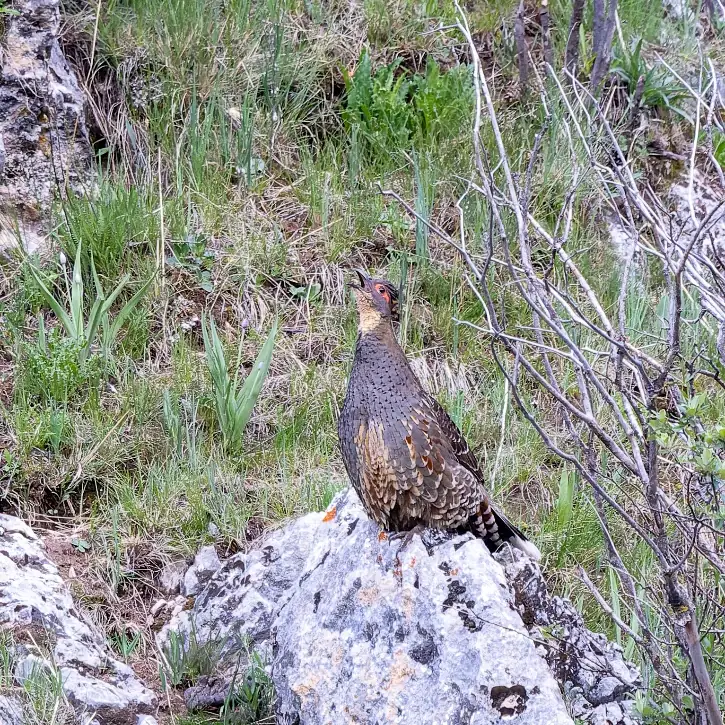
From here, we began a slow, steady walk up above the first nunnery. The trail came alive with colour and sound as White- bellied Redstarts, Hodgson’s, Black, and White-throated Redstarts all put on a show, many of them perched out in the open or flicking through the low bushes. Common Cuckoos chased each other overhead, their classic onomatopoeic calls ringing across the valley like a bevy of old-time clocks. We also caught glimpses of Salim Ali’s Swifts darting through the skies and one especially bold Red-billed Chough seen diving after a Golden Eagle. As we climbed, Brown Accentors began to appear in greater numbers, often skulking low before perching up to sing. Then, finally, we heard the far-off calls of Tibetan Snowcocks, that strange, rolling chuckle bouncing off the slopes. A scan revealed one flying into view, followed by several others. We watched as the group called back and forth, then launched into the air in a great, high arc, circling over us before landing behind the upper nunnery. Magnificent birds, and a fitting crescendo to the morning’s ascent. Rather than push our lungs further in the thin air, we turned back, making our way down the valley and returning to Lhasa in time for lunch.
The afternoon was ours to explore the vibrant soul of Lhasa. We strolled through its ancient streets, absorbing the spiritual pulse of this legendary city. The golden roofs and prayer flags of the Jokhang Temple shimmered in the sun, its inner halls echoing with the soft murmur of monks in meditation. Nearby, the iconic Potala Palace rose like a fortress into the sky; once home to the Dalai Lama, now a monumental symbol of Tibetan identity. Down the winding alleys of the old town, the past and present danced together. Traditional Tibetan homes leaned over narrow walkways, their balconies adorned with wood carvings and strings of drying herbs. Street vendors spilled into the roads, their stalls filled with prayer beads, yak-wool garments, silver jewellery, and steaming bowls of momos. The air was heavy with the scent of roasting yak meat, sizzling lamb, and spices, mingling with the aroma of incense drifting from temples and shops alike. It was a feast for the senses, visually, culturally, and spiritually. And for all the high-altitude birds and rugged beauty of the plateau, it was this human heartbeat that reminded us: Tibet is more than wilderness, it's a living, breathing land full of tales.
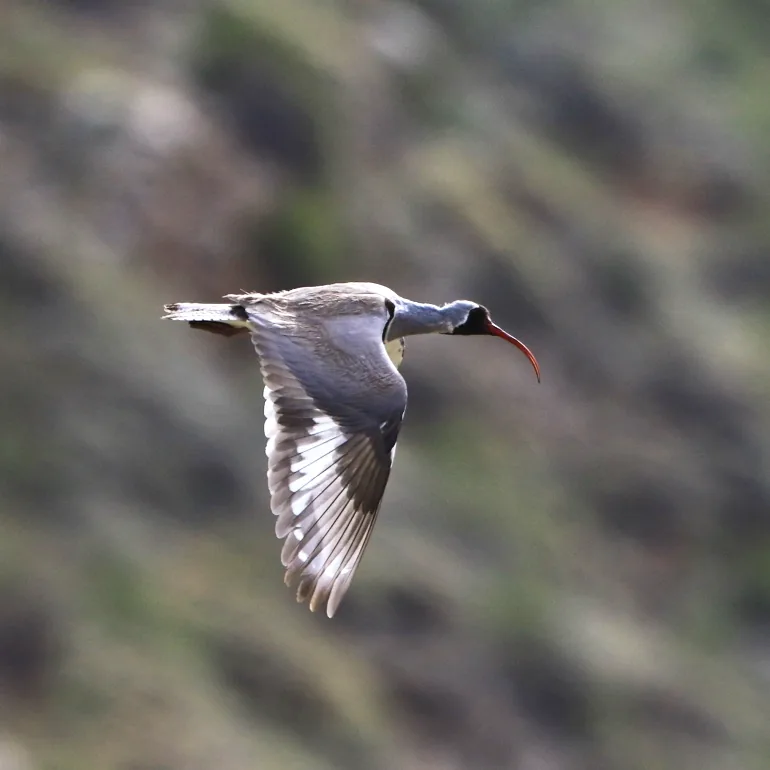
With the vibrant pulse of Lhasa still fresh in our minds normal service resumed as we boarded a flight to Yushu, deep in the wild heart of the Tibetan Plateau. Calling this one of the world’s most scenic flights wouldn't be an understatement. As we descended through shrouds of low-hanging cloud, snow-capped peaks suddenly appeared on either side, rising like frozen sentries around the narrow valley. For those with a nervous disposition it was perhaps a little nerve-wracking, but the approach was jaw-dropping in its drama and beauty. Below, the broad, flat valley floor stretched out like a welcome mat to the wild. Once safely on the ground and refuelled with coffee, we set off for birding for the day and we were immediately greeted by one of the tour’s unofficial mascots; the ever-present Ruddy Shelduck. These handsome, fiery-orange birds became a fixture throughout the trip, showing up even in the tiniest of alpine puddles. Above us, sheer cliffs hosted Common Mergansers, clearly nesting on the ridge above. A nearby cave bustled with activity as Hill Pigeons, Eurasian Crag Martins, Eastern Red-rumped Swallows, and Asian House Martins all zipped in and out in a constant aerial ballet. Salim Ali’s Swifts screamed overhead, while Upland Buzzards and a few fierce-looking Saker Falcons kept watch from electrical pylons and purposely erected nest boxes. On the ground, the always-charming Eurasian Hoopoes were busy ferrying food to their nestlings, and Kessler’s Thrushes were seemingly everywhere, perched on poles, singing from rocks, or busily collecting insects in the grass. A White-browed Tit was spotted bathing delicately at the river’s edge, and a Brown Dipper zipped past with typical urgency. In contrast, several Tibetan Wagtails were far more obliging, strutting about in full view. The surrounding meadows and slopes were alive with finches and we added Pink-rumped Rosefinches, a strawberry like Streaked Rosefinch, and several slightly subtler, though still impressive, Great Rosefinches to the list, one of which posed stoically on a wire cable. Pink-rumped Twite fed busily in the grasses nearby, adding to the growing tally but the star of the morning was always going to be the captivating Ibisbill, the sole member of its monotypic family and a much-desired tick. We found a striking pair that offered prolonged views along the gravel bars of a braided river while nearby, a lone male called from a grassy mound then took flight, calling out as it circled around us before landing farther upstream, yet another unforgettable moment on a trip full of them.
From Yushu, we began our journey south, winding our way through a spectacular gorge where the cliffs pressed close and the air thinned. Here, we encountered Himalayan Griffons roosting on both the rocky ledges and grassy hillsides, their massive forms unmistakable even at a distance. Blue Sheep, nimble and nonchalant, picked their way across slopes as if gravity were a mere suggestion. Climbing higher still, we emerged onto a broad alpine pass where White-rumped and
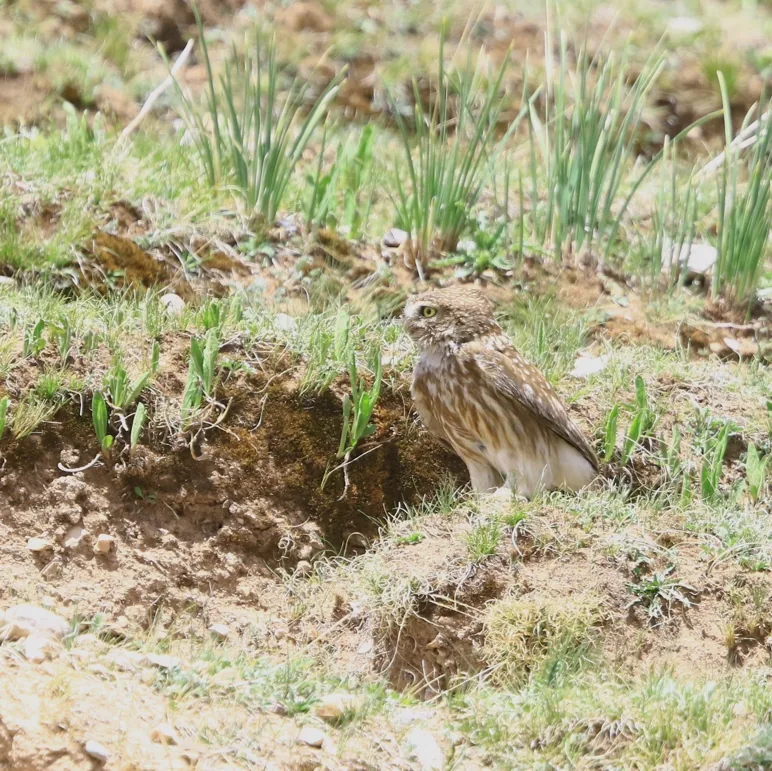
Rufous-necked Snowfinches danced through the short grass. These two species would become regular companions in the coming weeks, offering familiarity across the harsh and rugged landscape. Lizzie spotted a Little Owl perched on a low bank beside the road from the bus and we quickly piled out to enjoy excellent views before the bird flew a short distance down the road, landing on an open telephone pole and offering a perfect photographic perch. The rest of the afternoon was spent absorbing the scenery as we made our way to Nangquan, ready for a good night’s sleep and a full day of birding ahead.
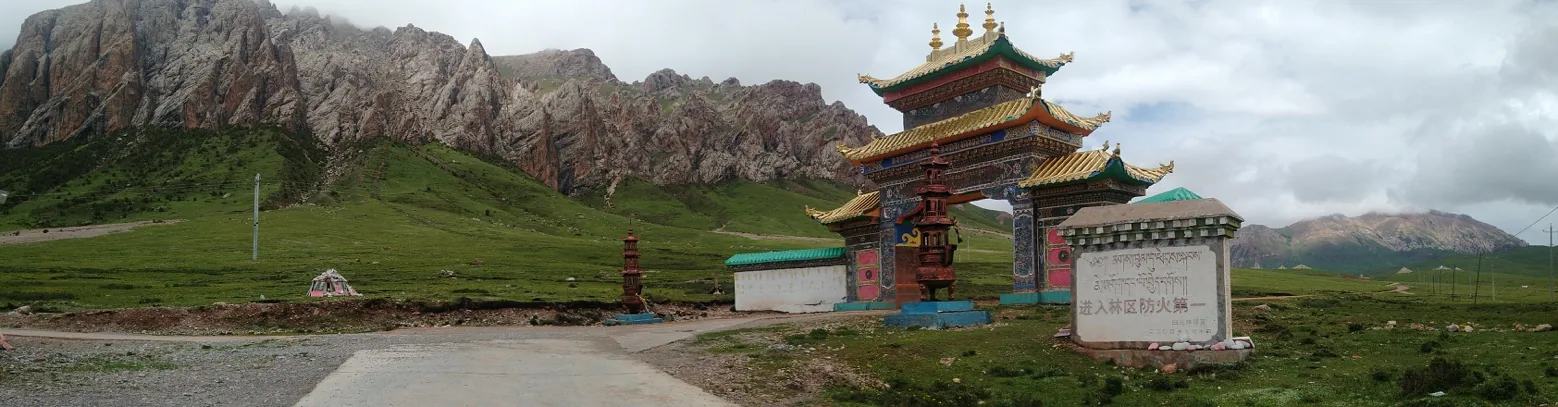
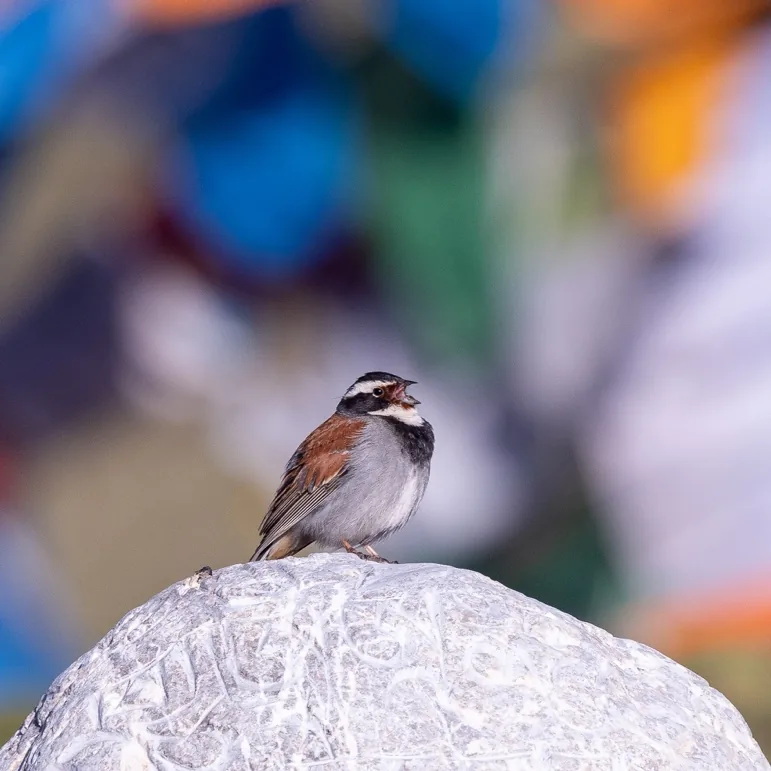
The ascent to Kandashan Pass is, without question, one of the most spectacular stretches of scenery on the entire tour, and that’s saying a lot in Tibet. Our road wound steadily upward, curling along the flanks of towering mountains, the valley below falling away as granite cliffs and snow-capped peaks rose above us. At the summit, we emerged into an alpine amphitheatre of scree slopes, grass-tufted ledges, and prayer flag-draped ridges. We paused here to soak it all in and enjoy breakfast amid one of the most awe-inspiring landscapes imaginable. Birding began in earnest right along the gravel road. Kozlov’s Buntings sang boldly, their sweet songs echoing off the stone, and we were treated to intimate views of one particularly confiding bird perched on a pale white rock carved with Tibetan script, framed by fluttering prayer flags, an image as emblematic of Tibet as one could wish for. Turning our attention higher up the ridgeline, we heard the whistles of Red-fronted Rosefinches reverberating down from a towering cliff. Eventually, we located a massive male perched on a jagged outcrop. With a little patience, both he and his mate descended to a grassy slope near us, where they began feeding. We marvelled at the size and intensity of the male, a true bruiser among the rosefinches.
Then came the unmistakable, eerie whistle of Tibetan Snowcocks echoing down from the peaks above. We soon spotted a pair high on the slope and then another. As we watched one after the other began taking to the wing sailing out across the gorge. Huge, powerful silhouettes glided over our heads with a continuous series of loud calls as they crossed the valley to land on the distant scree slopes. A lone bird, still high up on the ridge, began strutting downhill, tail cocked, calling loudly. Pausing for a second it took flight. But instead of soaring gracefully like the others, it came screaming down the slope, just meters off the ground, heading straight for us, or more precisely, straight for John, who was innocently admiring yet another Kozlov’s Bunting.
In a split second, bird and birder locked eyes. The massive "chicken missile" whistled past John’s head, nearly parting his hair as it whooshed by in a blur of feathers and fury. The snowcock flared its wings, pulled up dramatically, and landed on a slope behind him, where it began calling again and cocking its tail creating some oohs and ahhs from the group along with some well-earned chuckles. One thing was clear, we could definitively tick Tibetan Snowcock off the list.
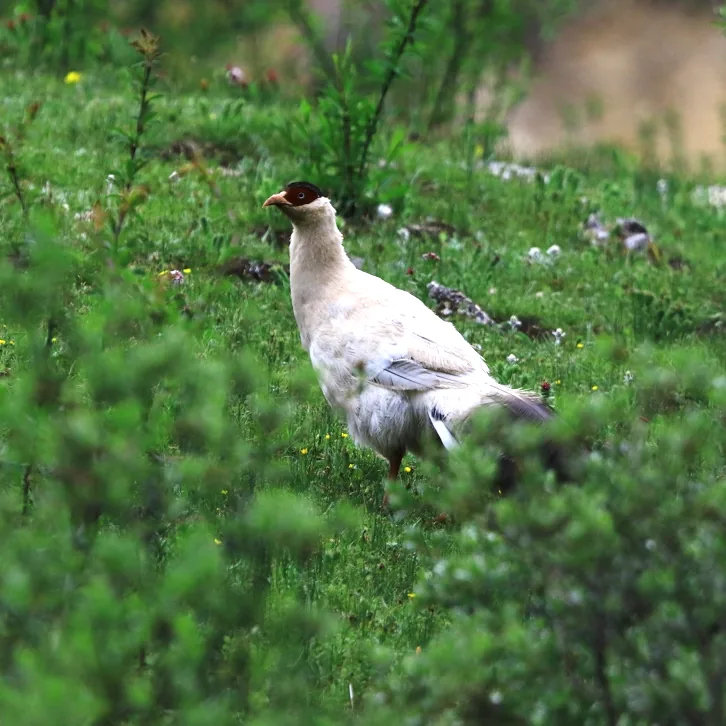
Descending from the high pass, we birded slowly through the surrounding slopes. Red-billed and Yellow-billed Choughs tumbled in the updrafts, and we stopped at a brush-covered hillside where a Chinese Rubythroat burst into song and then circled around us, showing beautifully. On a forested slope nearby, we found the first of many White Eared Pheasants, a species whose surprisingly high numbers in the following days would defy expectation. Farther up a trail behind a small farm, we entered some coniferous forest and were soon rewarded with views of a pair of Buff-throated Monal-Partridges. One bird approached quite close before realizing our presence and retreating up the slope, where it joined its mate in a duet of rich, resonant and at times deafening calls. On our way back to the road we stopped to admire a Hodgson’s Redstart sat atop a fence post, capping off a productive stretch before we headed down the valley in search of lunch. Beside the road, several Himalayan Griffons were hunched over a dog carcass, echoing a similar scene from last year’s tour. Their immense size and raw, prehistoric presence were staggering at such close range. We watched as they jostled and tore, wings spread like cloaks of shadow, before leaving them to their meal and heading off for ours. After lunch, we slowly retraced our route back toward the base of the valley, stopping whenever the birds demanded it, which seemed often. One stop produced a lively group of Kozlov’s Babax, prancing and calling raucously from conifer branches, providing some entertainment as they hopped around noisily. Hill Pigeons circled the cliffs, and yet another pair of Tibetan Partridges gave us great roadside views. As the afternoon sun began to dip low, we neared our hotel, and there, on a rocky riverbed, was one final gift for the day: a lone Ibisbill, perched regally among the stones a fitting end to a day that had included close calls, high peaks, rare birds, and endless beauty.
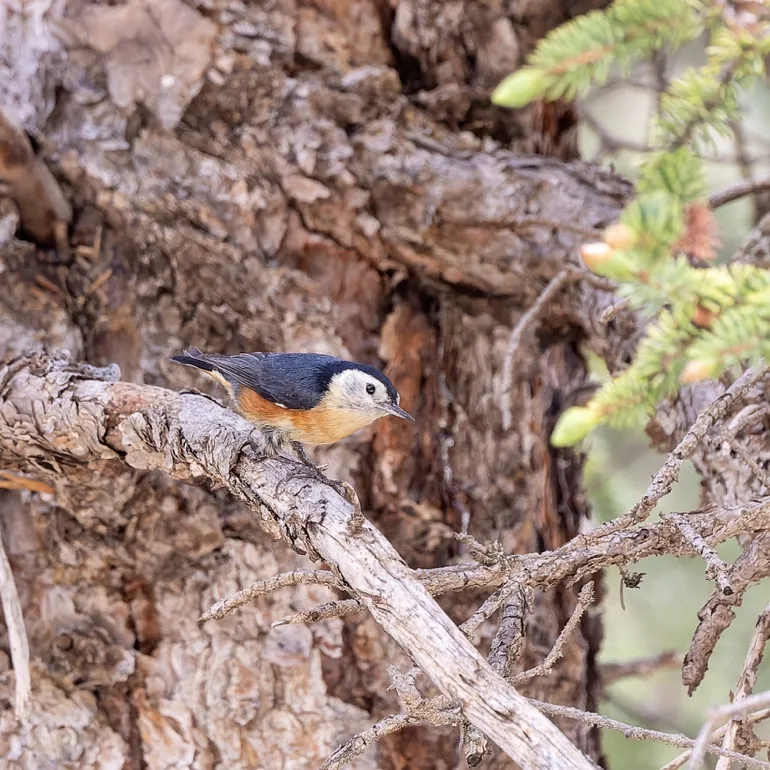
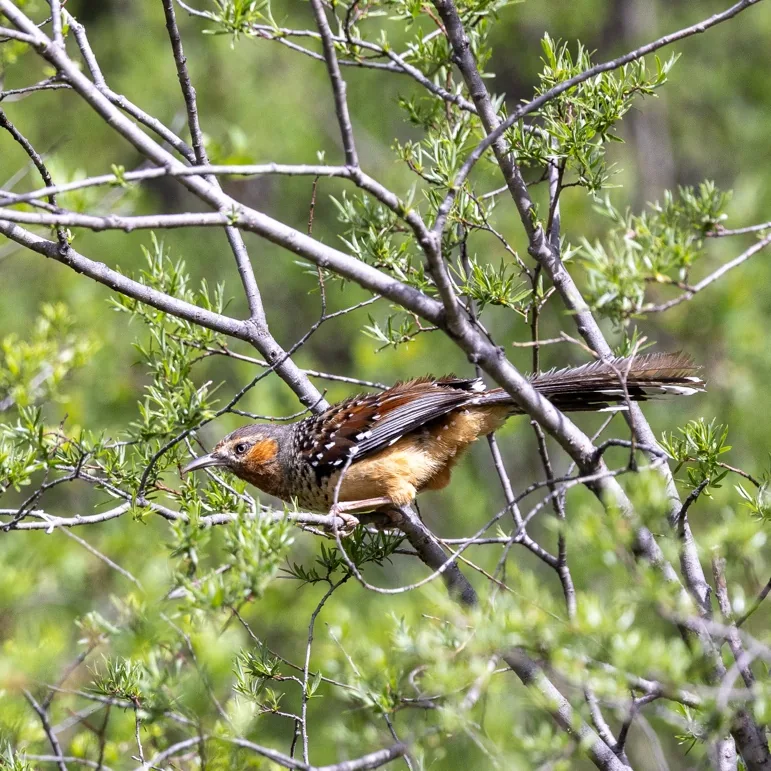
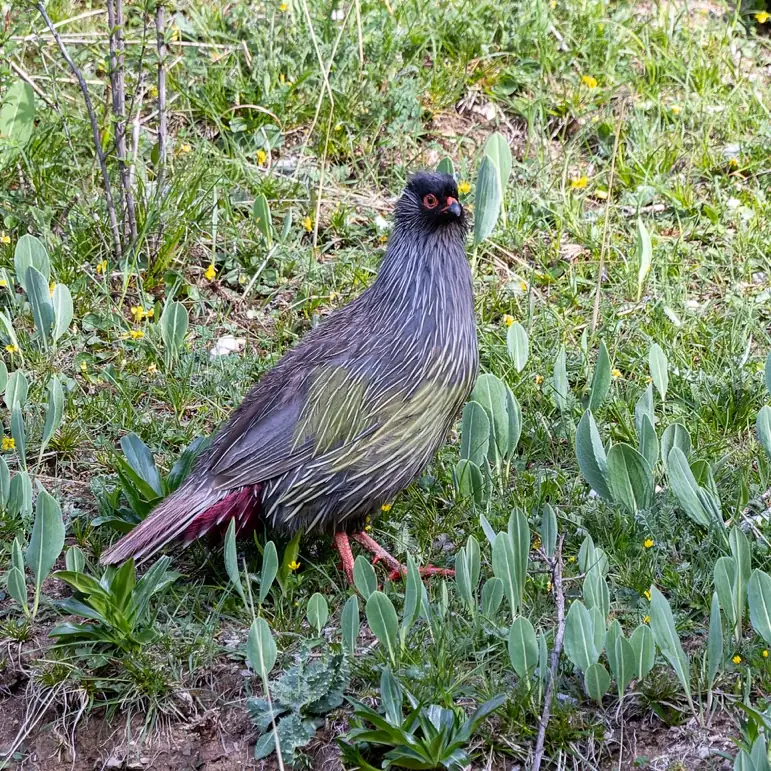
The following morning saw us heading into a lush, forested valley—its steep slopes cloaked in towering conifers, scattered deciduous trees, and brush-choked gullies. The cool mountain air was still and crisp but the forest alive with birdsong. Just after breakfast, the calls of Sichuan Tits led us to a small group flitting through nearby fir trees, our first highlight of the day. Winding our way up a narrow gravel path through a wooded ravine, we soon picked out the distant, rhythmic duets of Buff- throated Monal-Partridges. Their loud, resonant calls echoed down from high on a ridgeline, and with some persistence, we located a pair descending toward us. They eventually emerged into full view, tossing back their heads in full-throated song, a spectacular sight in a spectacular landscape. As we made our way back to the bus, several pairs of White Eared Pheasants were seen and heard calling across the slopes, and we were treated to close-up views of Blood Pheasants threading their way through the underbrush, boldly marked and every bit as captivating as their name implies.
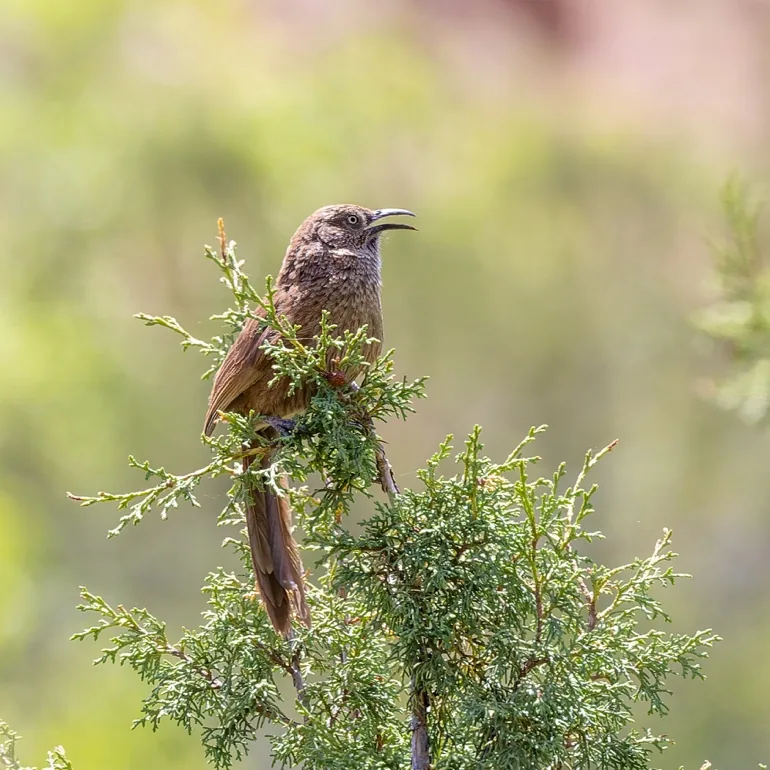
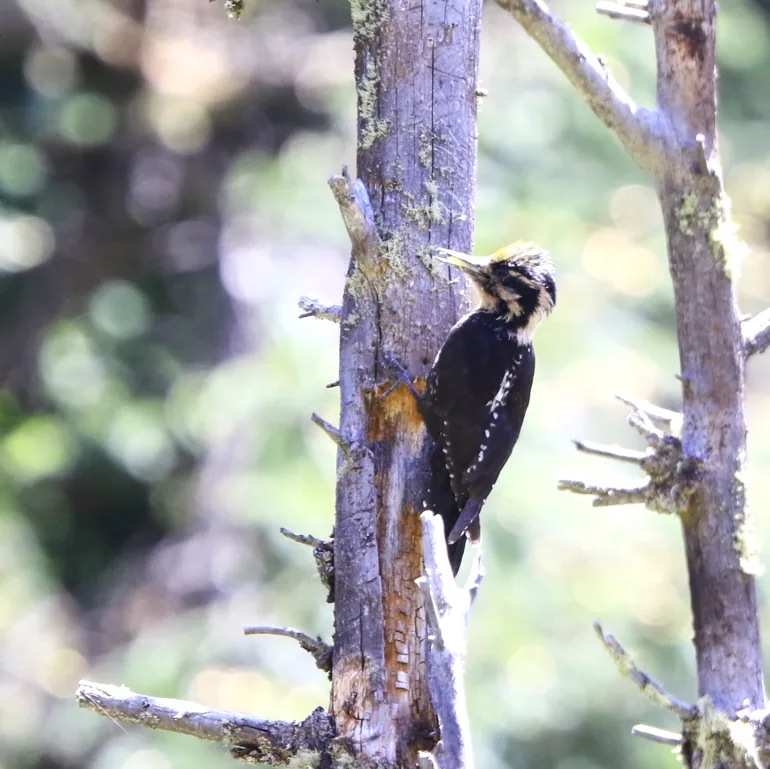
Venturing deeper into the valley we stopped frequently, beginning with a group of Giant Laughingthrushes calling from low willows. These charismatic birds gave excellent views, revealing their finely patterned plumage as they moved through the scrub. Near a bend in the track, a group of Daurian Jackdaws caught our attention, and as we emerged from the bus the surrounding woods rang out with the songs of warblers with Yellow-streaked, Buff-barred, Sichuan Leaf, Hume's Leaf, and Greenish Warblers all chiming in, creating a melodic soundscape. A Slaty-backed Flycatcher was particularly obliging, singing and feeding from the low branches right in front of us, and Kessler’s Thrushes continued to appear throughout the day, many visibly collecting food for hungry nestlings. The pink hues of Common, Pink-rumped, and Chinese White-browed Rosefinches peppered the canopy, while overhead, a dark Himalayan Buzzard and a majestic Golden Eagle patrolled the skies. More Kozlov’s Babax bounced around in the undergrowth, and we were soon visited by a Przewalski’s Nuthatch, which worked its way down a conifer trunk directly in front of us for yet another brilliant encounter. Following the small river that flowed through the valley, we were treated to brilliant views of both White-throated and Brown Dippers, each bobbing along rocks and plunging into the water with effortless grace. Our route culminated at a dramatic cliff face where a monastery clung precariously to the mountainside, seeming to grow out of the rock itself. Here, a regal Lammergeier perched calmly on a rocky shelf near its nest hundreds of feet above us. Below it, Eurasian Crag Martins and Asian House Martins swooped and skimmed, riding the thermals that rose from the cliff face. Returning into the depths of the conifer forest, we were once again surrounded by White Eared Pheasants, with group after group appearing as we moved along the trail and by day’s end, we had logged over two dozen individuals, a remarkable total. The tall trees were teeming with life. Willow, Rufous-vented, and Asian Tits came in close, scolding us with sharp calls, a behaviour that attracted a whole cast of warblers and rosefinches. Among them, a dazzling Crested Tit-Warbler darted through the lower branches, its colours flashing from the shade of a conifer. Farther along, a Himalayan Bluetail sang sweetly from the top of a conifer, silhouetted against the thinning clouds. But the star of the afternoon was undoubtedly the striking, all-dark Eurasian Three-toed Woodpecker of the funebris subspecies, unique among its kind for its entirely black chest and belly, with faint white flecking. Perched stoically atop a dead snag, it made for an impressive sight and one of the most distinctive woodpecker encounters of the trip, though that was rivalled by a massive Black Woodpecker that swooped in with a flight call that sounded like an old-time phone. It landed with a thud against a dead tree clinging to the side offering an iconic final image before we made our way back.
Departing the wild surrounds of Yushu, we began our two-day traverse across the vast Tibetan Plateau, an endless ocean of sky and earth. The scenery along the journey was nothing short of epic: sweeping alpine plains stretched in all directions, snow-capped peaks loomed like frozen giants, and a procession of mammals added life to the landscape. Kiang roamed in small herds, Tibetan Antelope and Gazelles flickered across the steppe, and Tibetan Foxes hunted stealthily amongst the pika colonies. A huge Wild Yak bull stood stock still like the guard to the gates of the steppe, and at one point, a Wolf—lithe and silent—crossed near our vehicle, an unforgettable moment of raw wilderness. The ever-present Plateau Pikas zipped between burrows, while in rocky gullies, we glimpsed the occasional Glover’s Pika peeking out from the boulders. En route, we passed Lizzie’s Little Owl, perched loyally on its usual roadside haunt. Soon after, we reached a massive wetland, an oasis of life in the high plateau. Here we paused to scope through a thriving community of waterbirds. Dozens of Bar-headed Geese dotted the lake with goslings in tow, while our ubiquitous Ruddy Shelducks made their daily appearance. A pair of Mallards hid among the grasses, and out on the water, Ferruginous Pochards bobbed alongside Great Crested Grebes attending their floating nests. Above the wetland, the air buzzed with Salim Ali's Swifts, Pale Martins, and the sharp calls of Common Terns slicing through the sky. At the water’s edge, Eurasian Coots mingled with Common Redshanks feeding in the shallows. Our prize targets here, Black-necked Cranes, proved recalcitrant at first, remaining distant in the shimmering heat haze as ghostly silhouettes. But patience rewarded us with a stunningly close pair, allowing us to take in their regal posture commemorated in pixels. The plateau’s power lines hosted Upland Buzzards and the occasional Saker Falcon, while nearby scrub revealed another White-browed Tit. In the open grassland, Ground Tits bustled about, feeding insistent fledglings, while White-rumped and
Rufous-necked Snowfinches zipped across the turf. At a high mountain pass, we braved wind, rain, and bone-deep cold to hunt for Henri’s (aka Tibetan) Snowfinch, a challenging bird in these challenging conditions but success meant we could shelter in the bus again. Eventually, we descended toward the Yushufeng Massif, a commanding line of snowy peaks where we added another pair of Tibetan Partridges before settling in at our accommodations, tired but thrilled by the day.
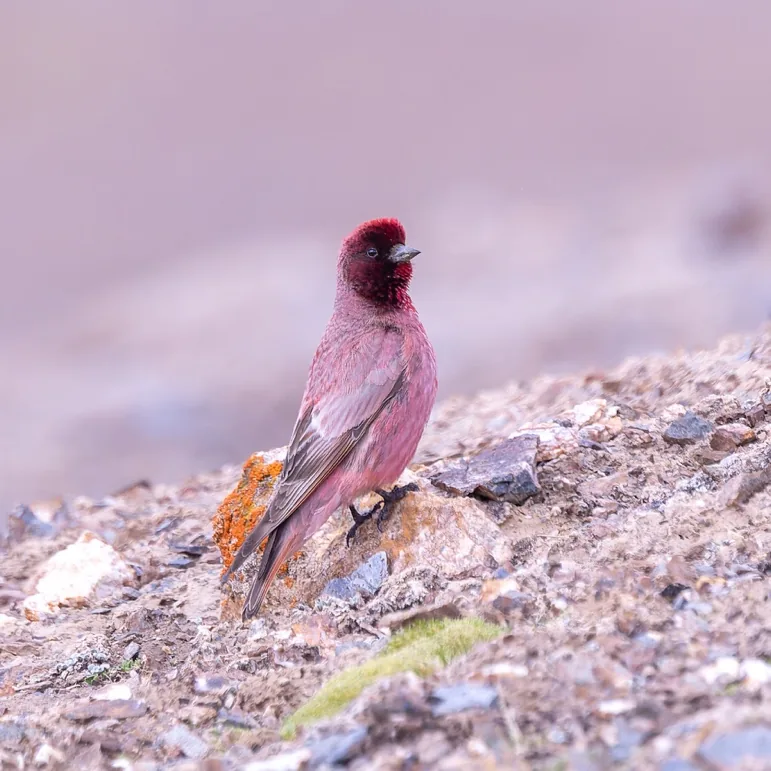
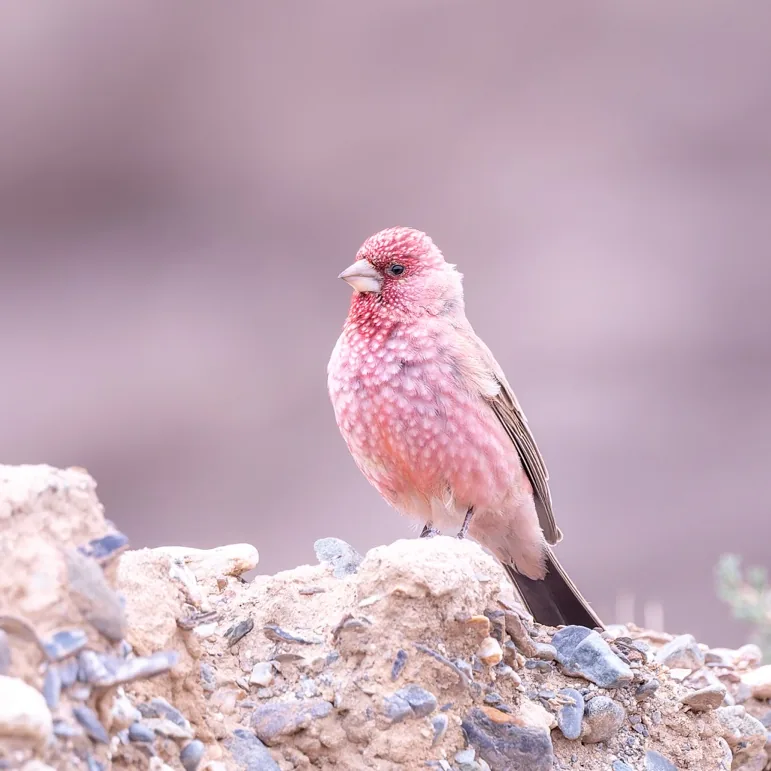
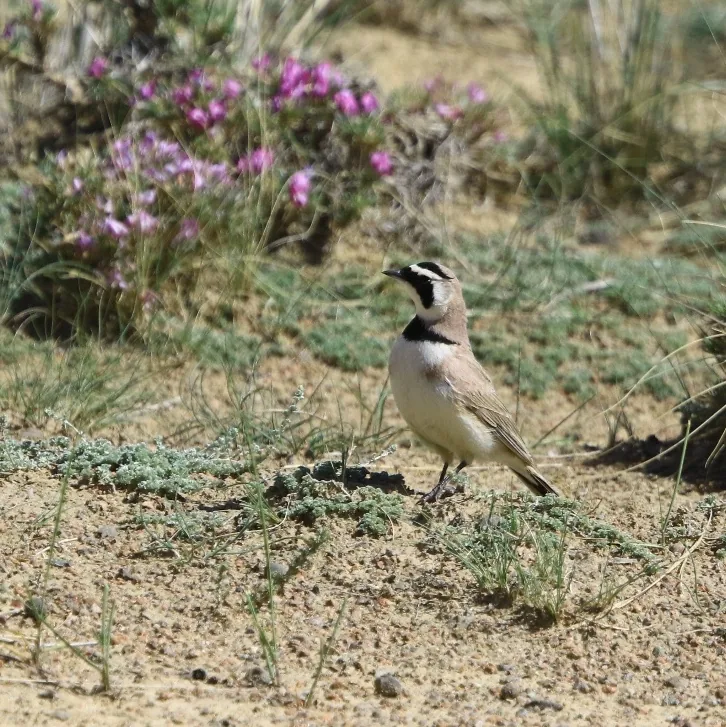
The next morning began in darkness as we set out for the highest elevation birding of the tour. As dawn crept over the horizon, the mountains surrounding us were bathed in golden light, revealing a valley that stretched up to dizzying heights over 5,000 metres. Ascending along a riverbed we eventually arrived at our destination and began the short, breathless, hike up to our birding spot. We soon picked out the first of many Brandt’s Mountain Finches, their buzzy calls echoing off the rocks. Female Tibetan Rosefinches began appearing around us, and eventually we were rewarded with breath-taking views of brightly coloured males—a real alpine jewel. Unfortunately, the rarer Sillem’s Rosefinch, a specialty of these towering heights, eluded us despite much scanning. After a quick lunch at lower altitude, we turned our attention to Tibetan Sandgrouse, which also proved elusive that day. However, the nearby lake offered ample compensation with superb looks at Blanford’s Snowfinches, clouds of Hume’s Short- toed Larks, and flocks of Horned Larks carpeting the open steppe. On our return, a group of Great Rosefinches gave us our best encounter with them yet, bold, bulky, and burley.
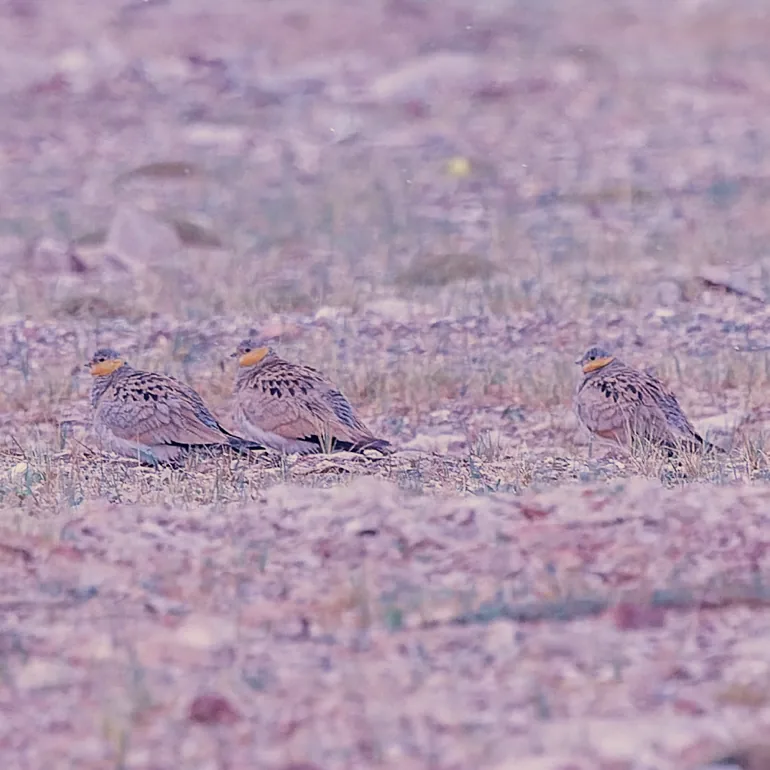
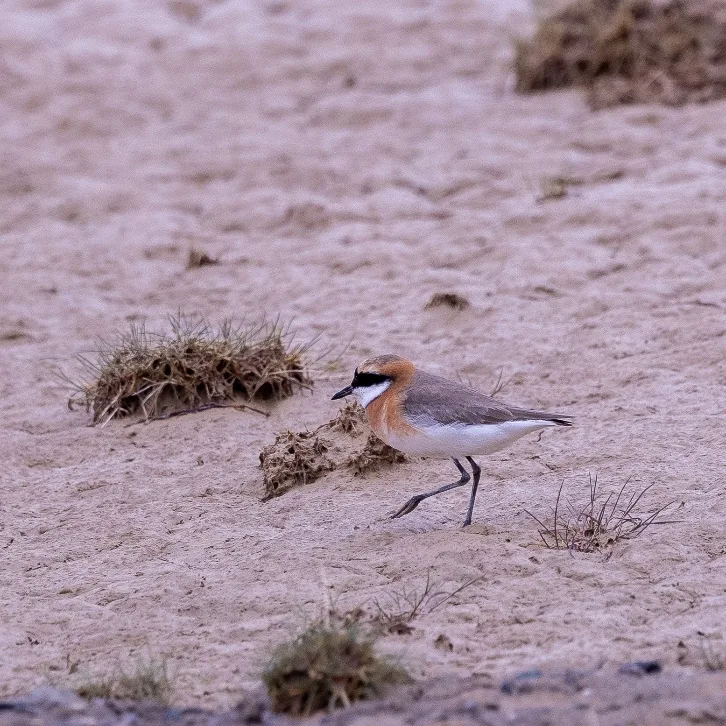
Refusing to let the sandgrouse get the better of us, we doubled back the next morning to try again, this time on a barren, open plain of gravel and stone. A few Tibetan Sand Plovers flushed from our path, and then... success. The faint calls of Tibetan Sandgrouse drifted across the wind. We crept forward, scanning carefully, and then Gimme spotted them: a trio, feeding quietly not far off. With quiet excitement, we converged on the spot and soon everyone had locked in on the group. The birds slowly walked across the plain before lifting off, black underwings flashing in the morning light as they glided into the distance. It was a triumphant moment. Satisfied with sandgrouse finally in the bag we re-joined our bus for the long drive to Dulan. Though a tedious three-hour traffic jam slowed us down, our spirits remained high, charged by another successful day on the plateau.
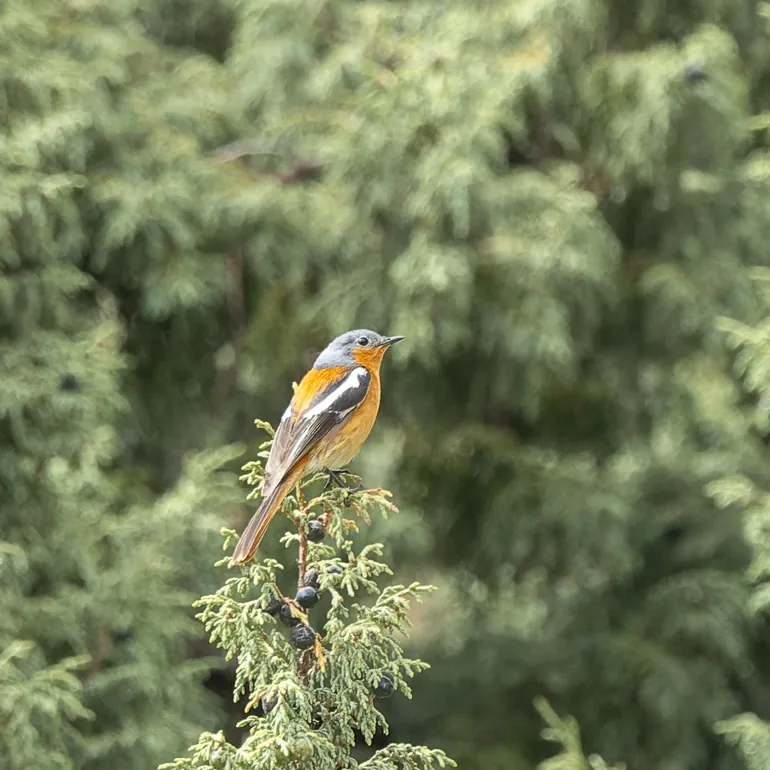
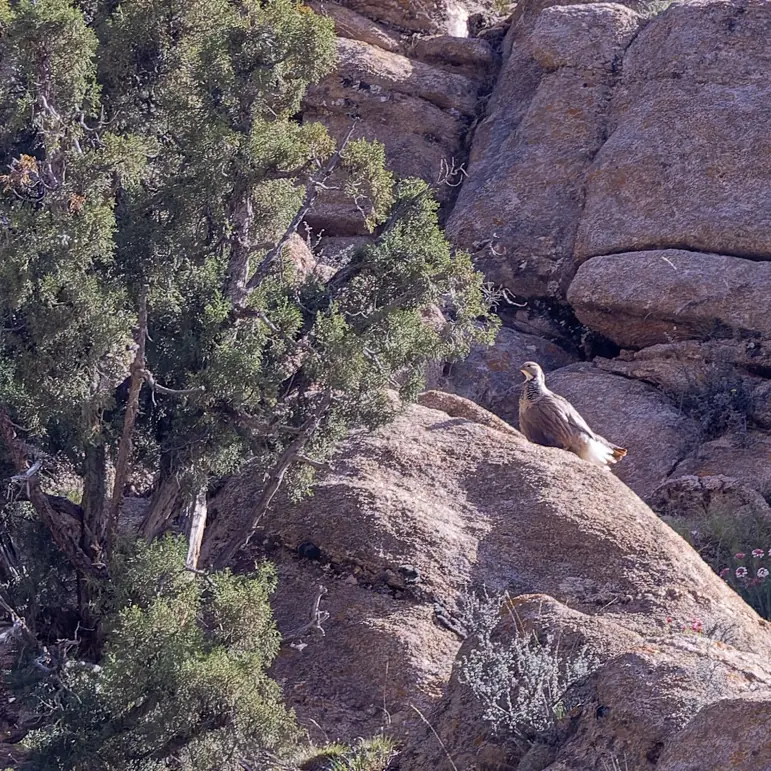
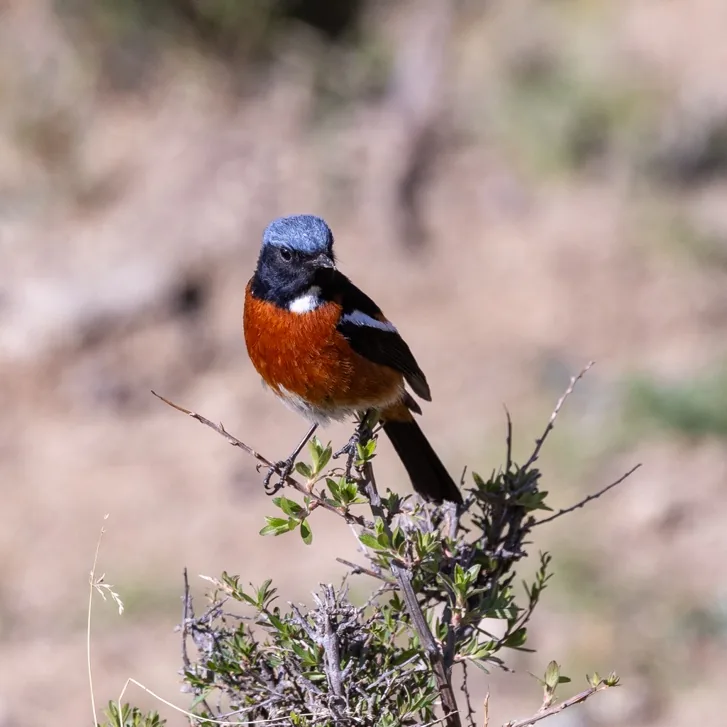
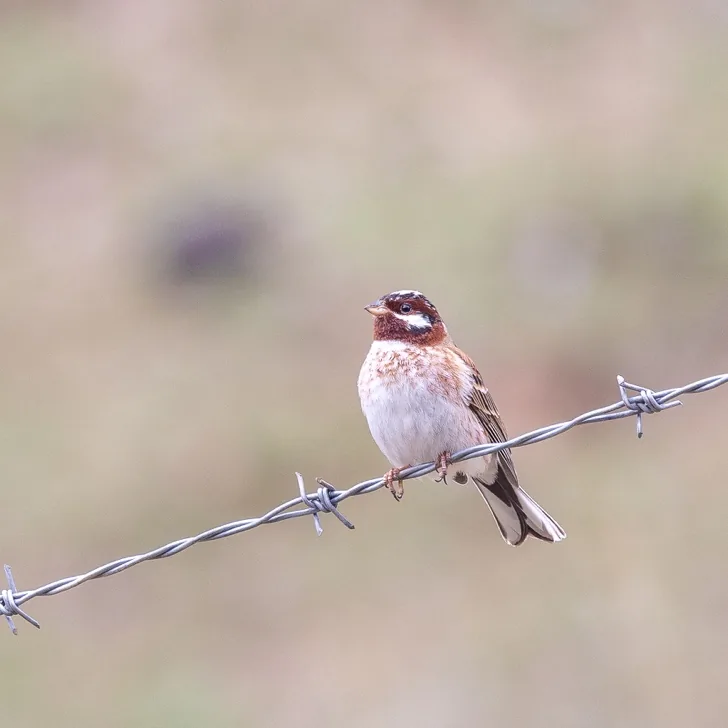
Our two full days around Dulan delivered some of the most diverse birding and dramatic landscapes of the trip. Nestled amid conifer-lined valleys and grassy mountain basins, this region provided not just stellar scenery, but also an array of standout species. On the ascent to a remote mountain valley, the low scrub yielded Isabelline and Desert Wheatears, darting between bushes. Where shrubs gave way to grassy clearings, we were rewarded with excellent views of several Pine Buntings, their soft songs drifting across the slopes. As we neared the base of the mountains, a sudden call drew our attention to a Daurian Partridge that trotted confidently up a dirt path and paused dramatically, its black belly patch on full display. Continuing through a narrow gorge, we emerged into a lush, secluded alpine valley surrounded by fir-covered slopes, a hidden Eden. Skittish Himalayan Marmots scattered as we approached, and Black and White-throated Redstarts flashed among the trees. From a distance, the rich notes of a White-winged Grosbeak reached us, and as we climbed further up the valley our scanning was rewarded with our key target, a stunning Ala Shan Redstart. A pristine male perched on a selection of open conifers, giving us multiple prolonged, unforgettable views. As we descended, we picked up a lovely Himalayan Beautiful Rosefinch and flushed a mixed pair of Daurian and Tibetan Partridge. Near a small farm, we were delighted to find a pair of Przewalski’s Partridges calling from a grassy sloop below us with another pair of Tibetan Partridges lurking nearby. Continuing our descent, we picked out more Pine Buntings before we returned to our bus.
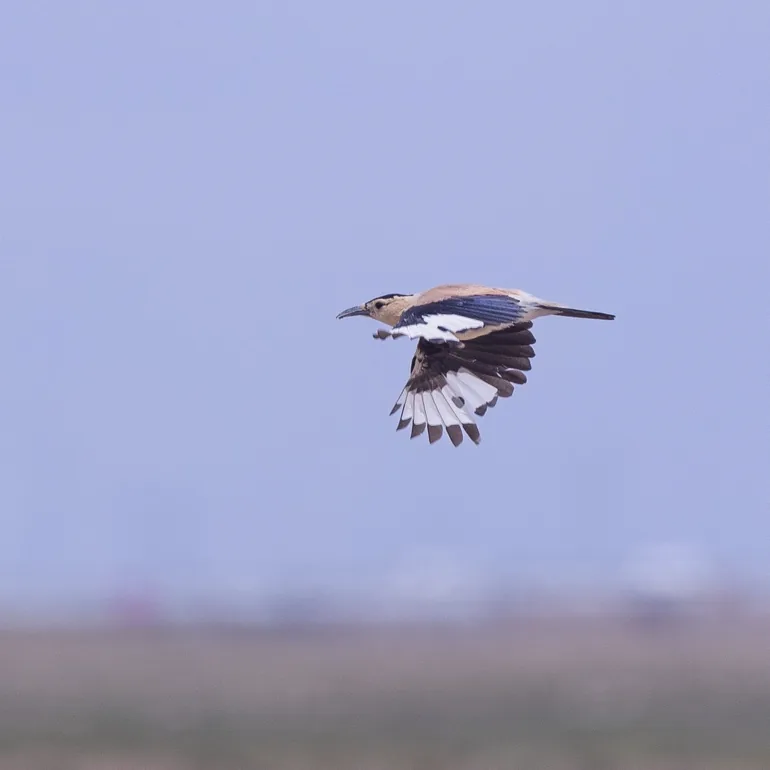
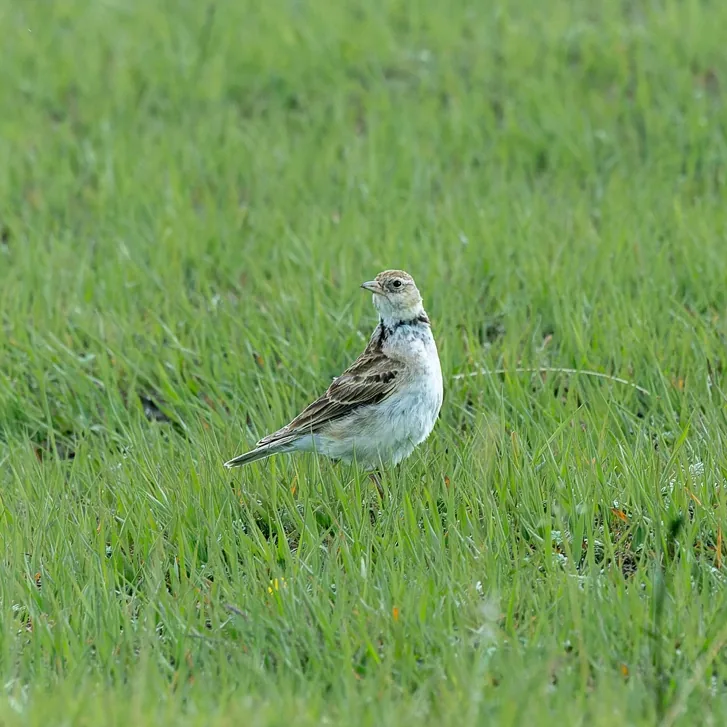
The scrubby steppe around Dulan also proved fruitful. Asian Short-toed Larks skittered across the ground, while Oriental Skylarks lifted into the air on song flights. Horned Larks were everywhere, but it was a massive, pale-winged lark that stole the show, a Mongolian Lark, unmistakable in flight. We trailed it through the field until we had close views of its sharp plumage as it foraged. Searching a patch of sandy hillocks, we encountered a pair of Mongolian Ground Jays, a high priority target here. One perched and circled us, calling out giving us some great views before it took off in a flash of white and buff to re-join its partner, a quintessential bird of the arid Chinese steppe. A small grove of trees nearby attracted a flurry of Azure-winged Magpies, and the scrubby grassy fields beyond teemed with Twites and Horned Larks.
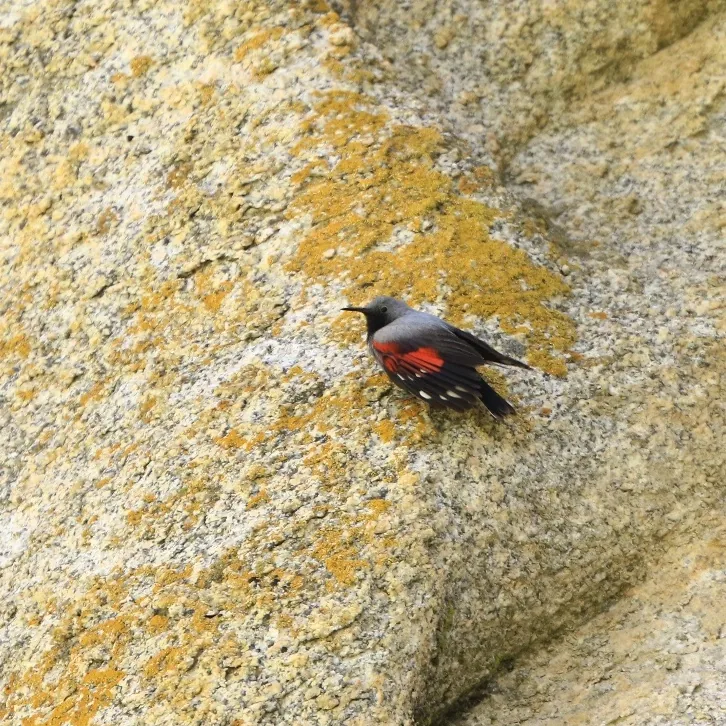
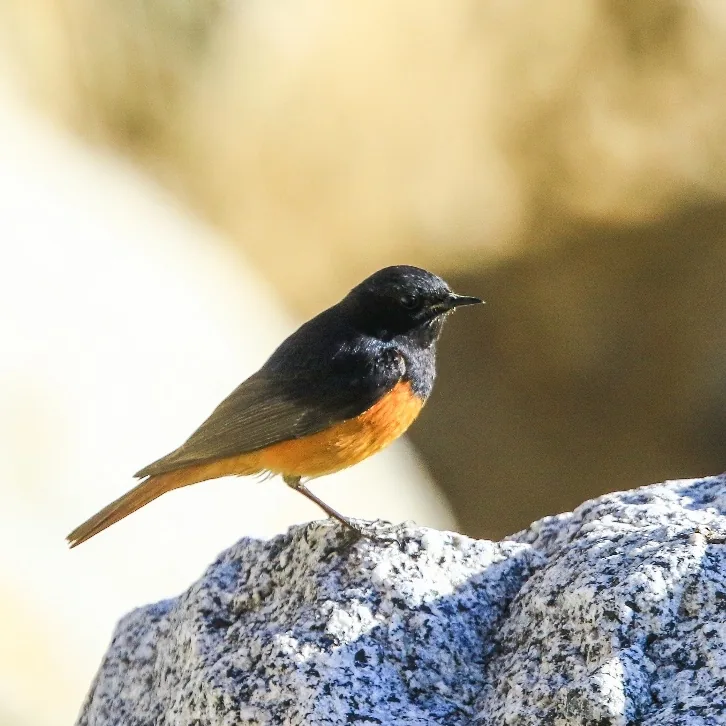
A morning in a rocky alpine valley began with Oriental Skylarks creating a welcoming dawn chorus. As we moved higher towards the edge of the valley, we heard the unmistakable chuckles of Przewalski's Partridges, as well as Black Redstarts and Godlewski's Buntings. But the highlight came farther up along a huge rocky cliff face where a flutter of red and grey against stone revealed a Wallcreeper weaving across a cliff face. We watched, transfixed, as it flashed crimson wings in flight and clung vertically to impossible angles. Yet another monotypic family it was a brilliant tick for the family listers. Among the grassy fields, Daurian and Tibetan Partridges flushed from underfoot, while Hill Pigeons and Rock Doves sought crevices and cave entrances. Common Swifts screamed overhead, and a Red-billed Chough chased a Golden Eagle across the sky (again!) Among calling Black Redstarts, we had some excellent views of White-winged Grosbeaks and Himalayan Beautiful Rosefinches, adding further colour to the multi-hued rockscape surrounding us. Throughout the morning, we had heard occasional distant whistles piercing the mountain air. They came from some distant snowcocks and on a hunch, we made our way up the valley once more to investigate. Reaching the head of the valley we could pick out their loud whistles but could not pinpoint the distant birds. Then from behind a group of conifers two Himalayan Snowcocks burst into flight, swooping down the face to our front clucking away in alarm as they drifted across the sky on broad wings sweeping overhead. Their dark breasts and rufous tails confirmed the identification before they landed high up the slope behind us. This isolated population is rarely seen, making the encounter all the more thrilling. We tracked one bird as it landed and slowly walked down the jagged rock spine above us, pausing often to throw its head back and emit its eerie, up-slurred whistle. Manoeuvring carefully, we positioned ourselves for better views and photographs. Then, in perfect symmetry, the pair took to wing again and glided across the valley calling loudly all the way, alighting on the grassy slope opposite tails cocked and calling in duet. Eventually they reached the top of the rise and disappeared with only their long whistles echoing over the valley. It was one of those magical moments that will linger long after the echo of the calls have faded. Before wrapping up our stay, some time spent exploring the local pools near Dulan yielded Black-winged Stilts, a few Chinese Pond Herons, and a Black-crowned Night Heron.
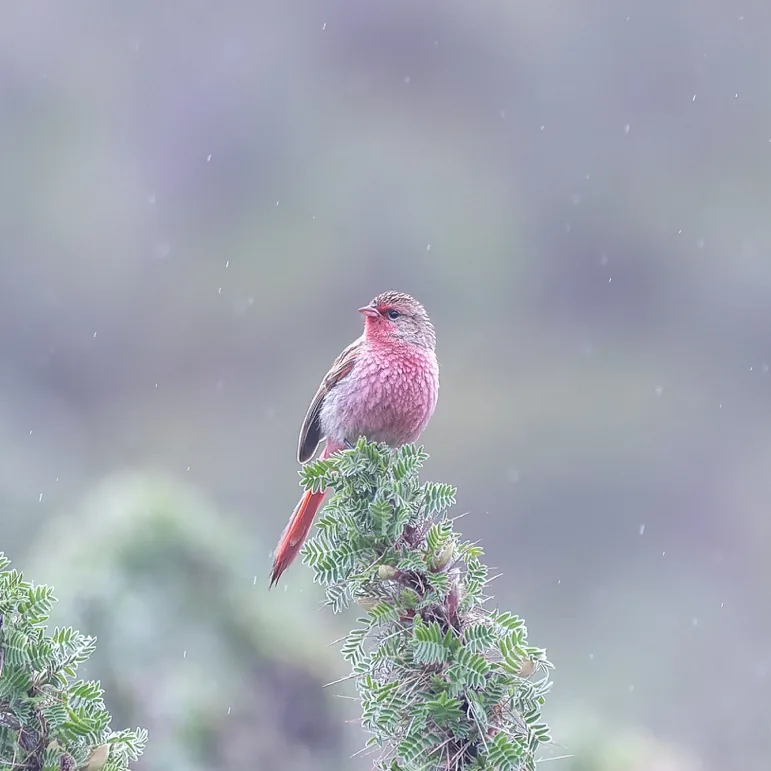
The following morning, we pushed northeast, skirting the spine of a long mountain chain before descending a dramatic pass into a region of stunted, brush-covered slopes, prime habitat for one of China’s most enigmatic birds. Our target was Przewalski’s Pinktail, a species long mired in taxonomic mystery. Once considered a rosefinch, then a true finch, it is now known to represent an entirely unique lineage — Eurocinclramidae — a monotypic family found nowhere else on Earth.
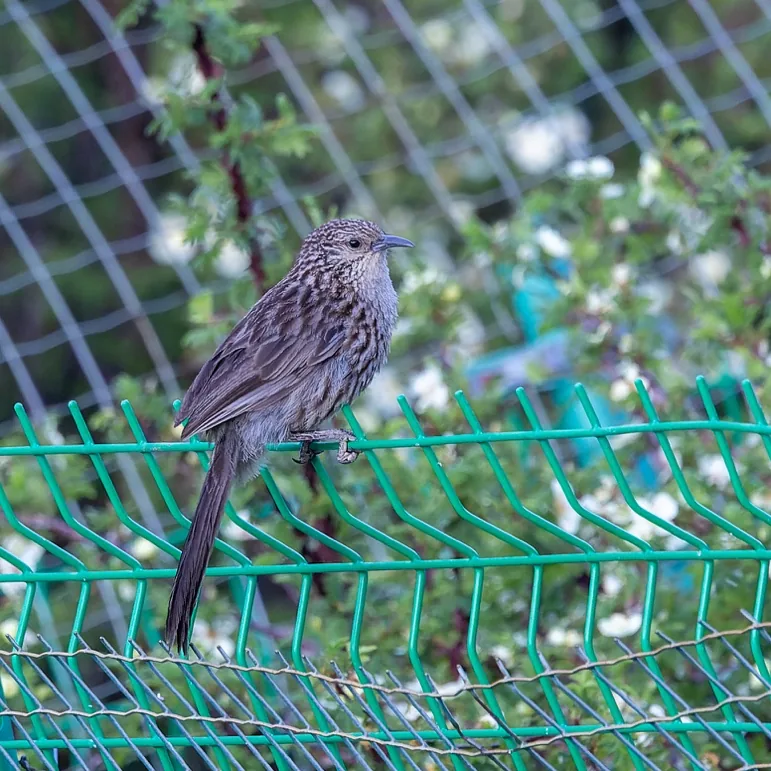
Arriving at our first stop, hopes were tempered. The area had been overrun by local livestock — goats, sheep, and yak roamed across what should have been promising habitat. Deciding not to waste time, we pushed on to a second site where the slopes wore a healthier coat of vegetation, and bird activity buzzed immediately. Robin Accentors dotted the landscape, singing from low perches, while a few Brown Accentors added variety. Among the open grassy patches and rocky ledges, Black-winged Snowfinches flitted between tussocks and rocky outcrops, joined on the open grassy areas by White-rumped and Rufous-necked Snowfinches, ever-present companions on the plateau. The striking przewalskii subspecies of Siberian Stonechat, with its rich rufous wash across the chest and belly, made a particularly photogenic appearance. Isabelline Wheatears perched on wires, and small flocks of Twites buzzed over the slope crests. It was classic Tibetan plateau birding—vivid, windswept, and filled with anticipation, but so far, the pinktail remained hidden. Climbing higher into a side valley, we stumbled on another stretch of brush-covered hillsides. Here, we were rewarded with views of Smoky Warblers, the weigoldi subspecies now split from Dusky Warbler based on genetic evidence. The warblers foraged low to the ground between stunted shrubs, joined by Tickell’s Leaf Warblers, flickering through the branches. We were still bereft of our target so proceeding to yet another vegetation covered slope we surveyed a long valley listening to more Tickell's Leaf Warblers when, in one of those classic moments of field magic, Lizzie called out, “Here’s the pink one!” We turned as one to see a stunning male Przewalski’s Pinktail perched proudly across from us. In full light, he radiated a kaleidoscope of salmon, coral, rose, and deep pinkish-red tones, a visual spectacle unmatched by anything else in the region. He posed and sang from bush to bush, radiating charm and confidence. A female appeared briefly before he darted off in pursuit, only to return again and again to the tops of the bushes, giving us some brilliant views. With memory cards full and broad smiles, we returned to the bus, still grinning from our encounter with one of the great prizes of the Tibetan Plateau safely ensconced in our memory.
From pinktail country, we descended toward the mighty Qinghai Lake (Kokonur), China’s largest inland saltwater lake. Several stops along the way added to an already bird-rich day. Greylag and Bar-headed Geese clustered along the shoreline and in flooded meadows, while the ever-ubiquitous Ruddy Shelducks held their ground despite rising winds. Oriental Skylarks swirled up from the grasslands in song-flight, but two imposing figures stole our focus, Tibetan Larks, true giants among their kind. We enjoyed exceptional views as they strutted and fed close by, dwarfing the other larks with their sheer bulk and long bills. The wind off the lake howled across the open plains, pushing waves of intermittent rain rippling across the marshes and after soaking in the stark grandeur of Qinghai’s blue expanse, we turned east and made our way into the more arid region of Gonghe for the night ready for the next chapter in our high-altitude adventure.
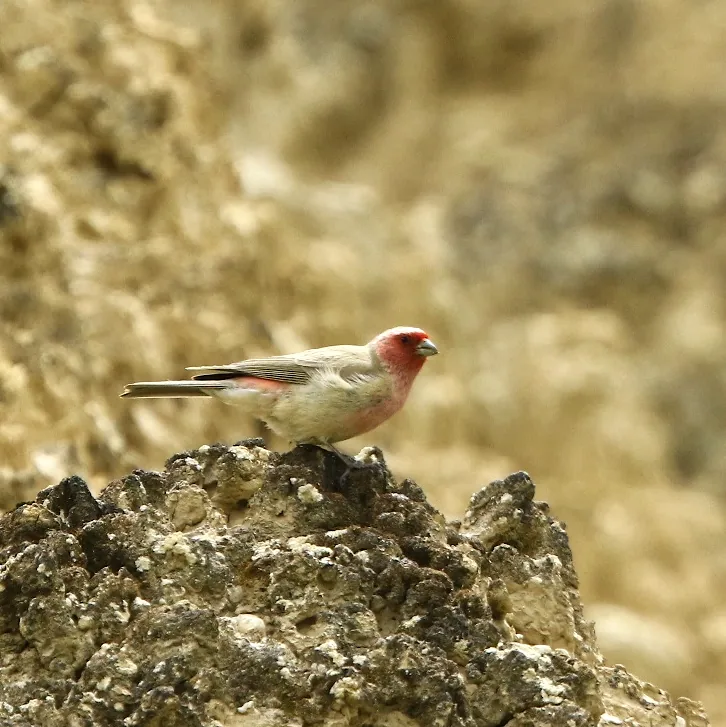
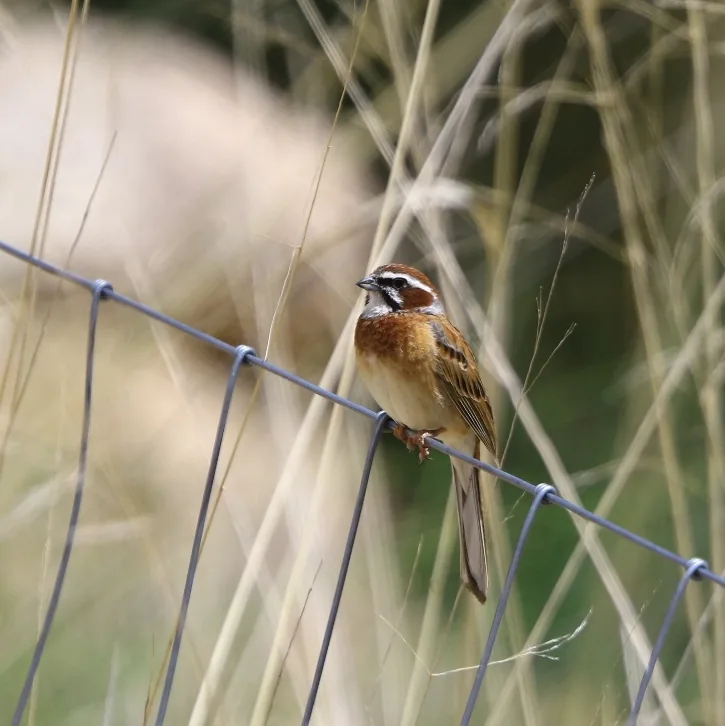
Returning to Qinghai Lake’s grassy edges, we were greeted once again by clouds of Oriental Skylarks flushing from the fields. A few Mongolian Larks also made fleeting appearances. Our main quarry, Pere David’s Snowfinch, soon came into view. We spotted a pair beside the road, busily feeding. Watching closely, the male split from the female and settled into the nearby field, revealing his striking black neck and face patches as he foraged in the grass. He soon took flight, returning repeatedly to the road, seemingly hovering over the opposite field in short, looping flights—most likely displaying to an unseen female hidden in the tall grass. This fascinating behaviour held us spellbound until the wind and a rising drizzle urged us back to the bus, bound for the drier Gonghe region. Winding along a narrow valley with towering sandy stone walls worn smooth by time, we made several stops. Small groups of Mongolian Finches appeared, often landing close enough for detailed views. Nearby, Crested Larks sang enthusiastically, one flashing its characteristic upright crest with remarkable clarity. Behind us, a Black Redstart sounded an alarm as a Common Cuckoo perched nearby, adding drama to the rugged cliffs. Among the crags, the delicate calls of a Pale Rosefinch drew us closer. Though initially hiding among stunted bushes growing out of the rock face, the rosefinch soon dropped to eye-level, feeding in scrub and perching on a small mound, providing stunning views before retreating further upslope. At our next stop a spectacular, sheer gorge with aquamarine waters far below shimmered in the sunlight, a breathtaking contrast to the scrubby bushes and small trees along the road. Here we tracked down a distinctive “Margelan” Lesser Whitethroat, its unique song hinting at the complexity of its taxonomy. This subspecies, margelanica, is sometimes considered a separate species and carries an intriguing history. Named after the town of Margelan in Uzbekistan where Alexander the Great reputedly shared chicken and bread, “murgh” and “nan” in the local dialect. Polish ornithologist Jean Stanislaus Stolzmann named the subspecies in 1898 from this region though ironically the bird itself doesn’t occur there. Nearby, the clear song of a Meadow Bunting caught our attention and we enjoyed excellent views of one perched in stunted conifers and even on a barbed-wire fence a fitting irony after seeing Pine Buntings in meadows earlier in the trip we were now witnessing Meadow Buntings in conifers. With our key targets secured, we headed east to the bustling city of Xining for the night.
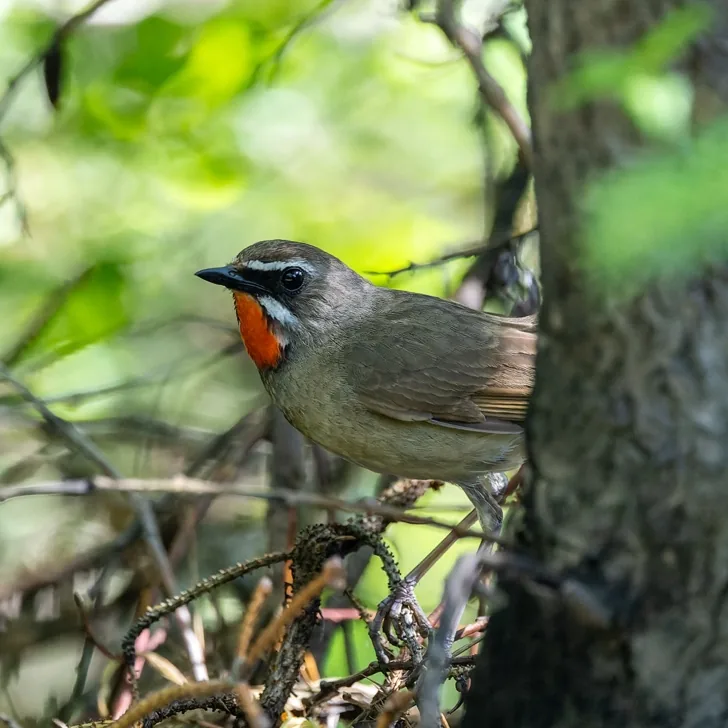
Our final morning we ascended a wooded hilltop park overlooking Xining’s outskirts – not as far afield as usual due to much of outer Xining being strictly off-limits to foreigners following a recent directive from Beijing, ousting our search for Qilian Bluetail. The forested road was alive with morning bird song including abundant Gansu Leaf Warblers, their voices threading through the cool air. Across from us, a Common Pheasant basked regally in the soft morning light and beneath a stone wall, the song of an elusive White-bellied Redstart drew our gaze downward, and we soon spotted our first of many for the day in the forest below. A vocal pair of Willow Tits foraged noisily in the mixed trees, while the chatter of Grey-capped Greenfinches echoed through the canopy. Both Azure-winged Magpies and Oriental Magpies zipped past, busily moving about. The forest echoed with the melodic songs of Chestnut and Chinese Thrushes, both giving great views. Nearby, the sweet song of Grey-headed Bullfinches drew our attention, and a handsome male displayed beautifully overhead. The highlight (for John at least!), was the discovery of a Chinese Nuthatch feeding mere meters above us. It lingered generously, allowing everyone to appreciate its subtle beauty. Overhead, clouds of Pacific Swifts whirled in tight circles, while the enchanting songs of several Siberian Rubythroat drifted from the deciduous canopy revealing themselves and their bright red throats and as we descended the hill, a few Pere David’s Laughingthrushes were noted, marking the end of an eventful morning. With the rising heat of late morning, we returned to Xining for a late lunch. That evening a sumptuous farewell dinner was had in celebration of the journey and the remarkable wildlife witnessed, as we debated the top five species from the 227 recorded—four of which were heard only. It was the perfect conclusion to a trip filled with extraordinary birds, breath-taking landscapes, and unforgettable memories.
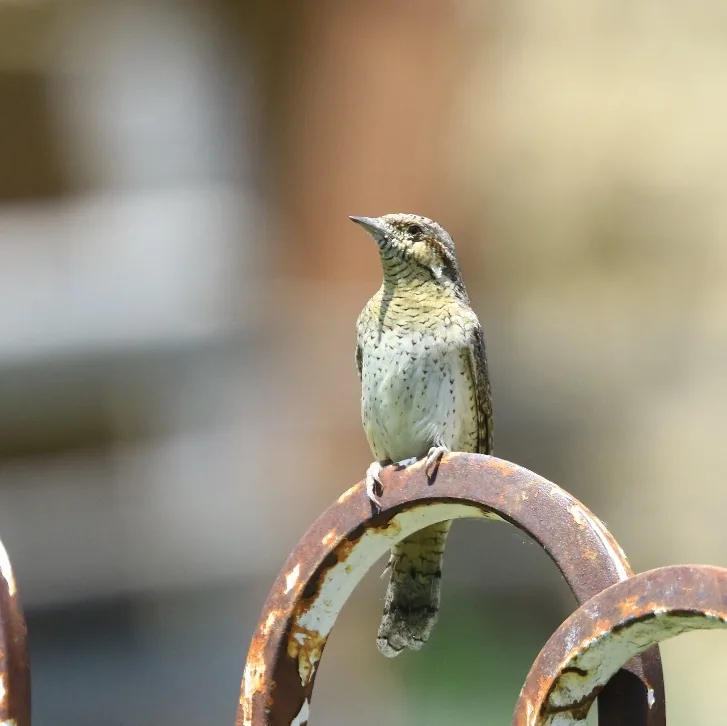
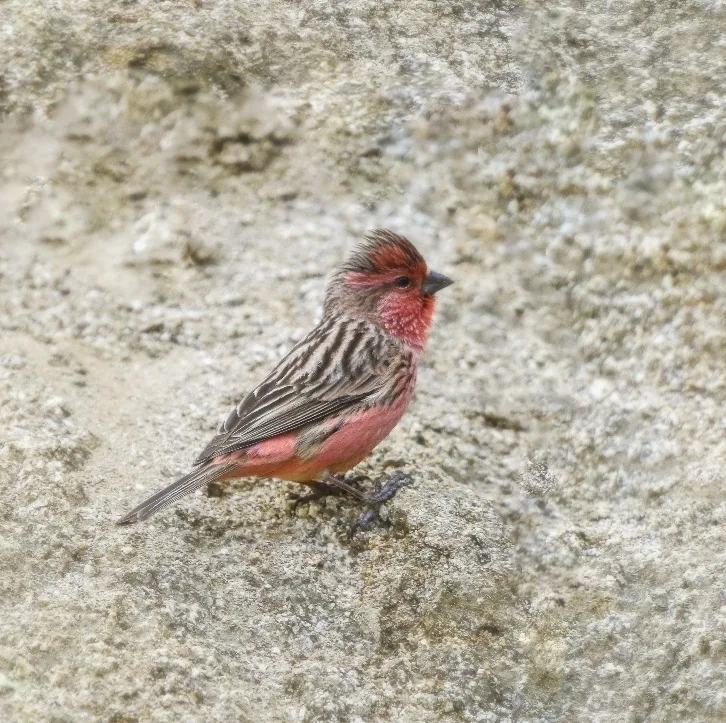
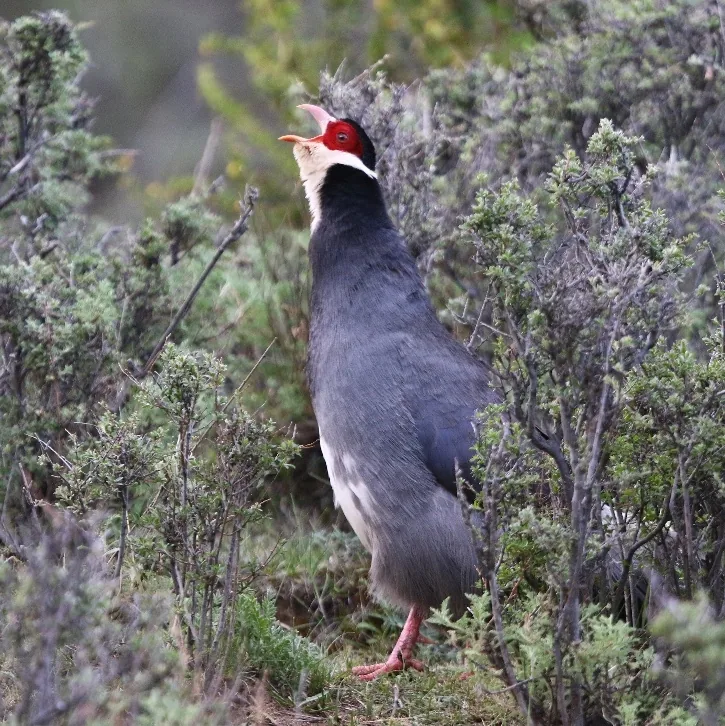
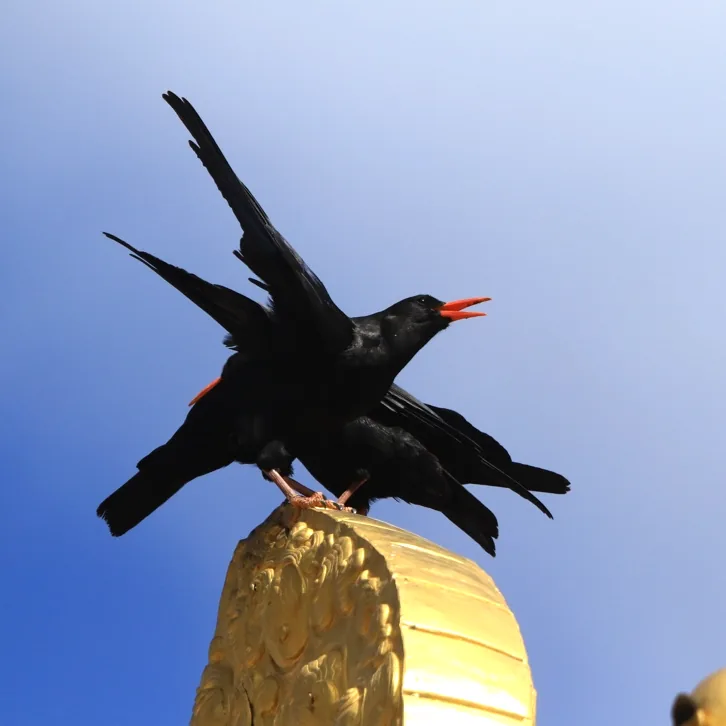
Birds of the trip
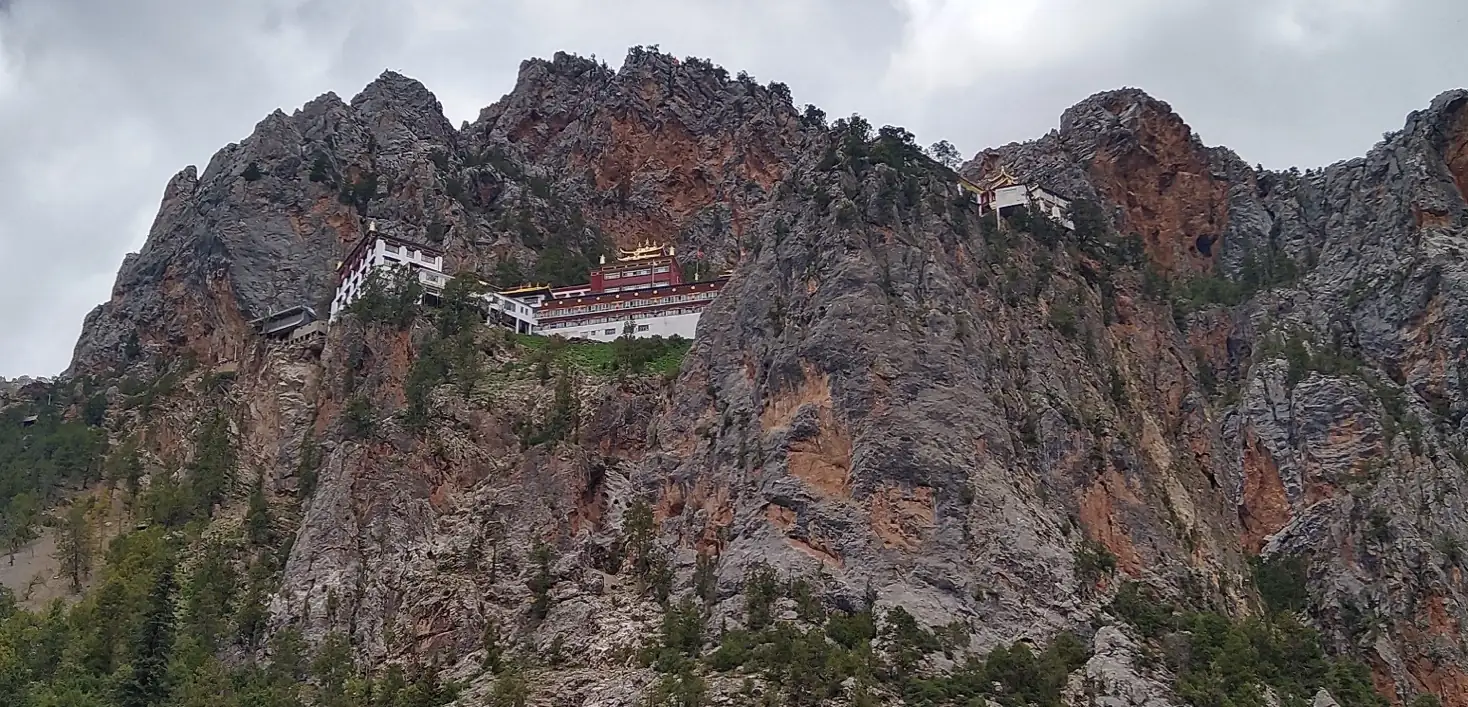
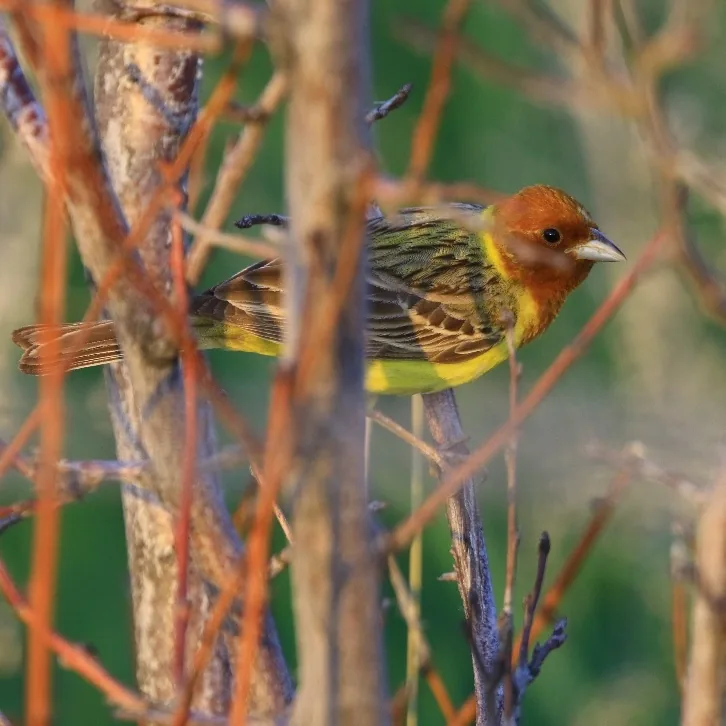
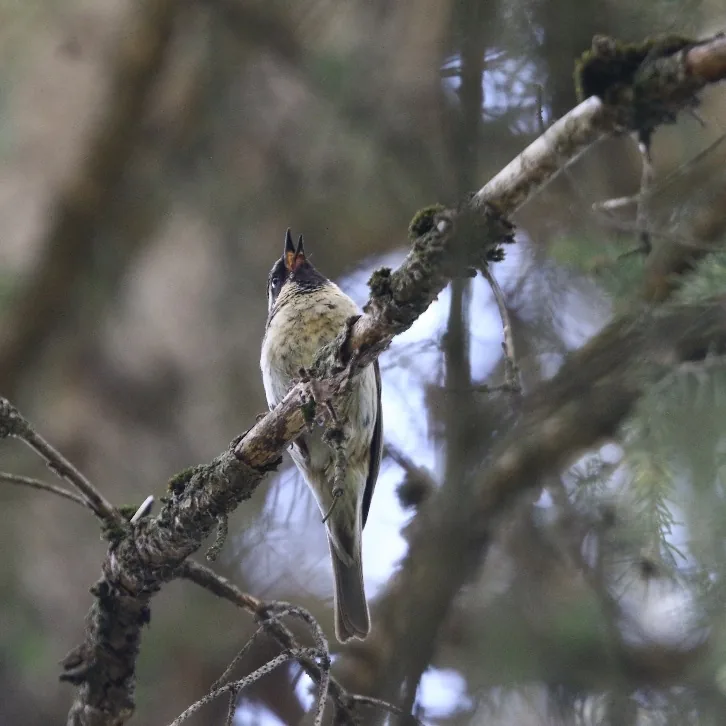
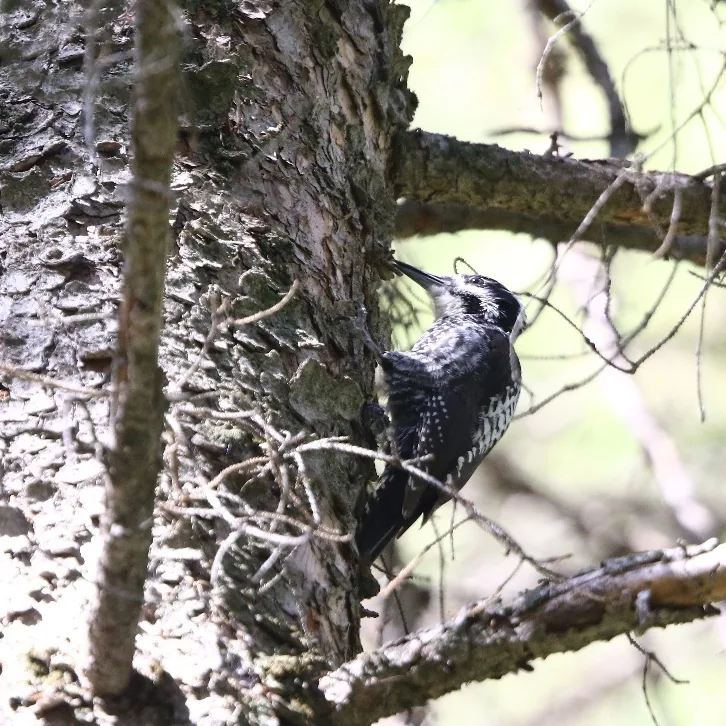
1. Biddulph's Ground Jay 2. Pere David's Snowfinch 3. Alashan Redstart 4. Szechneyi's Monal-Partridge 5. Przewalski's Pinktail
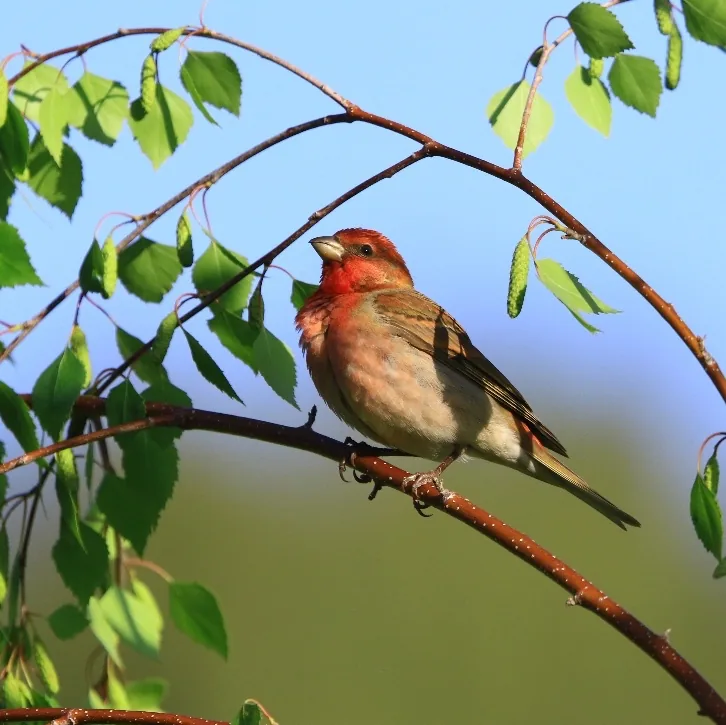
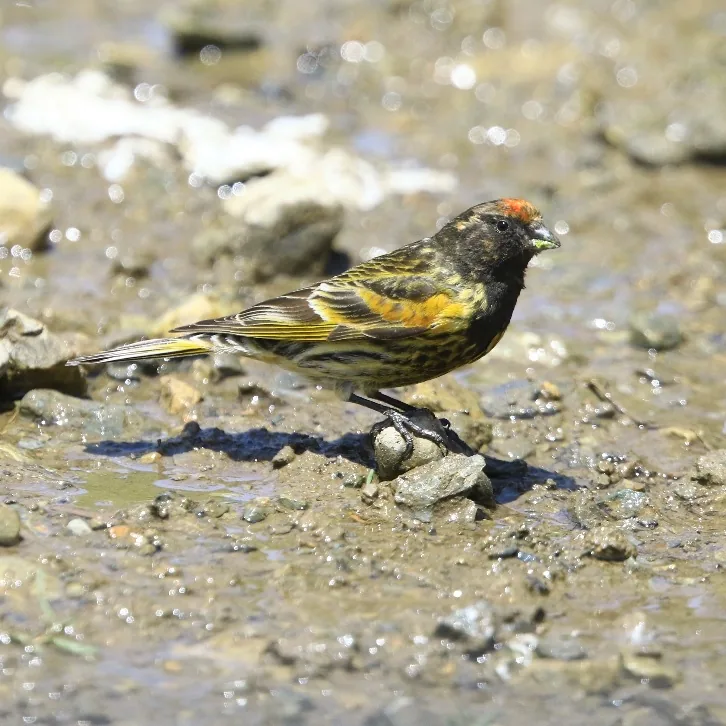
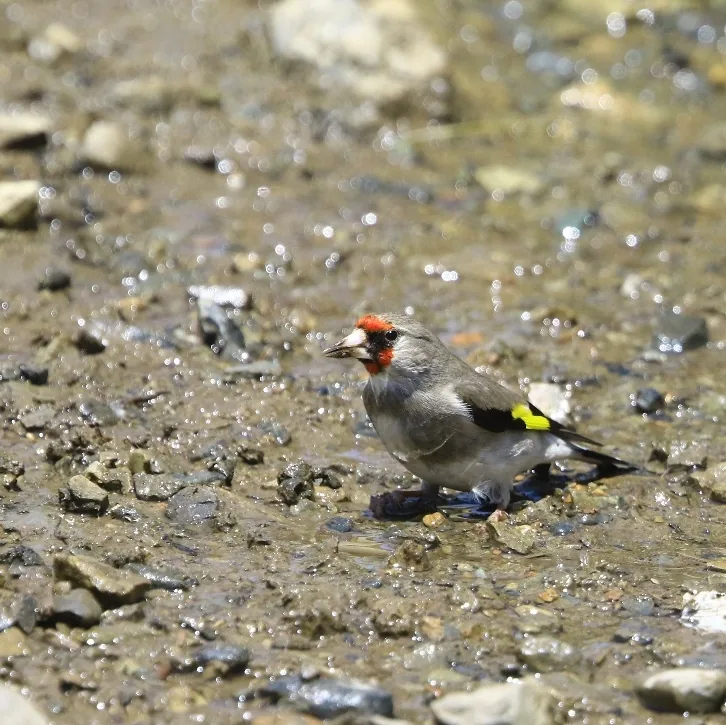
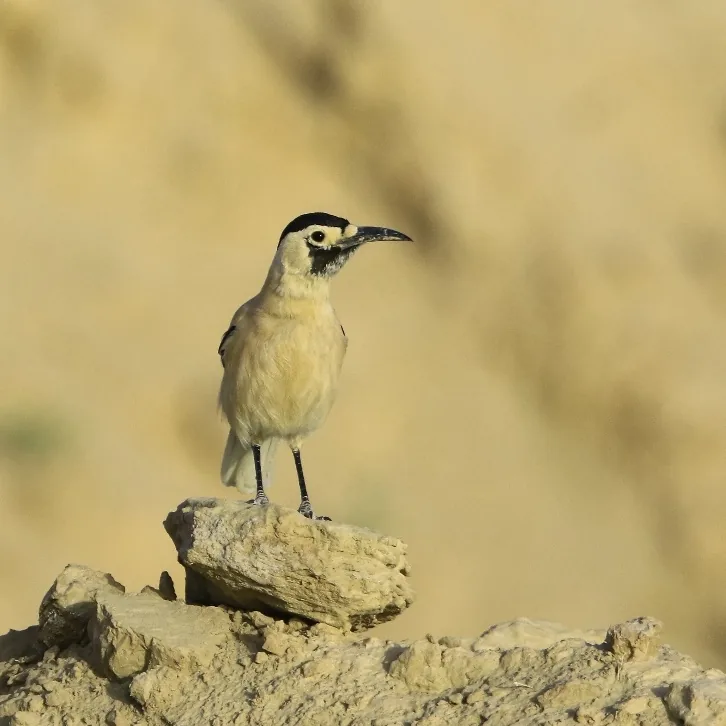
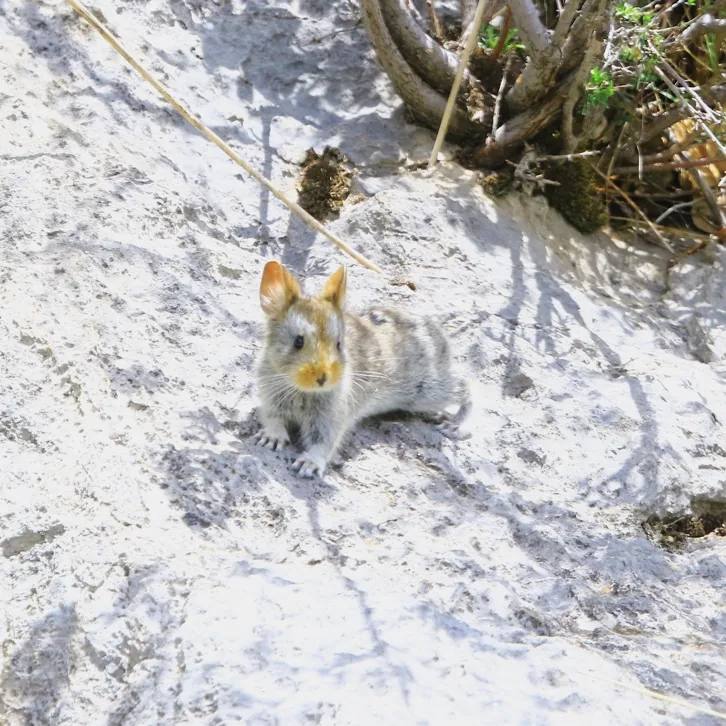
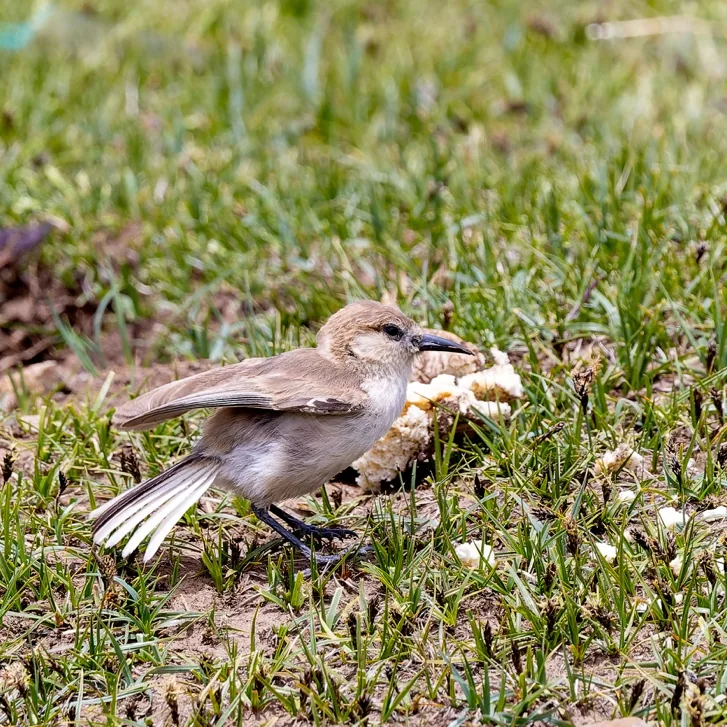
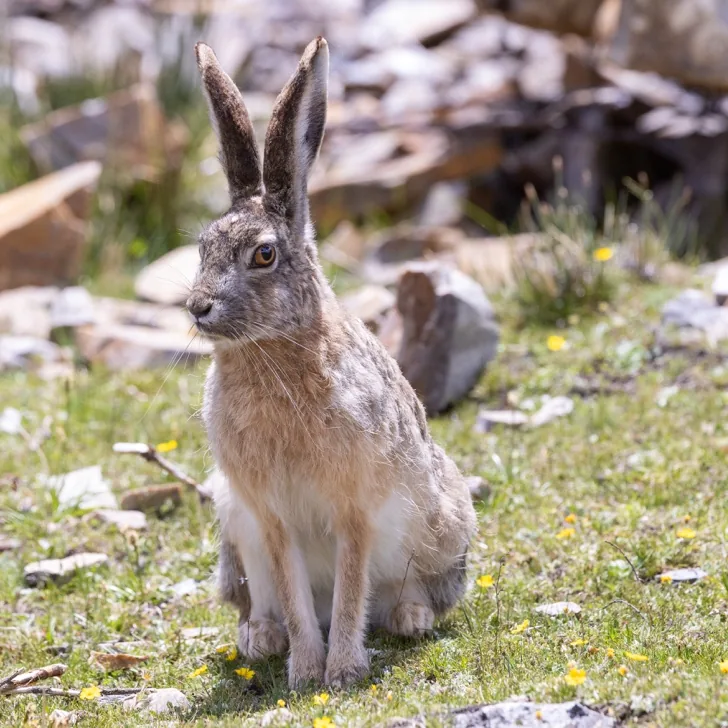
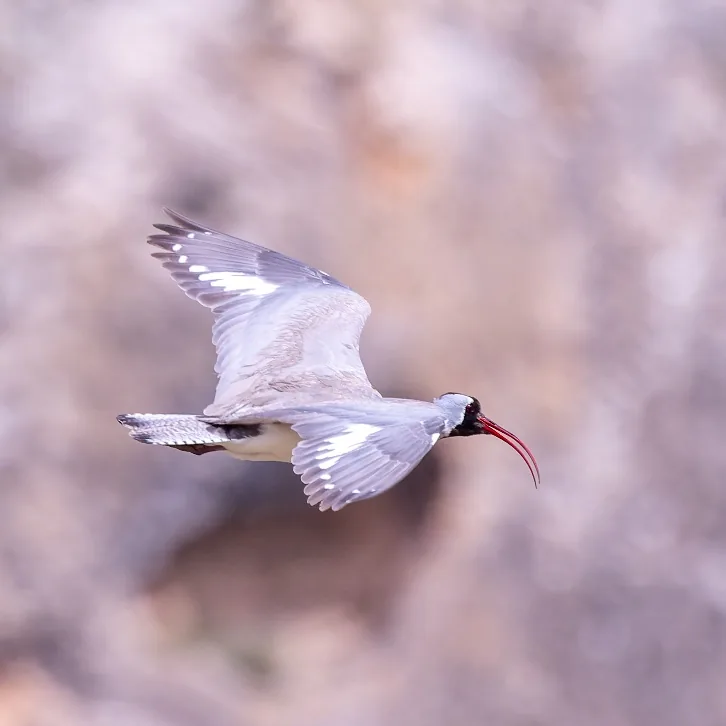
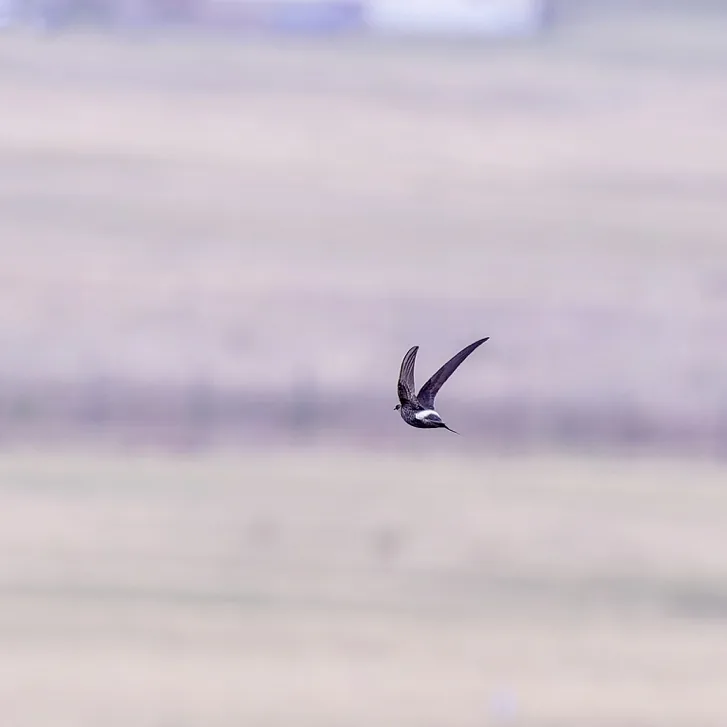
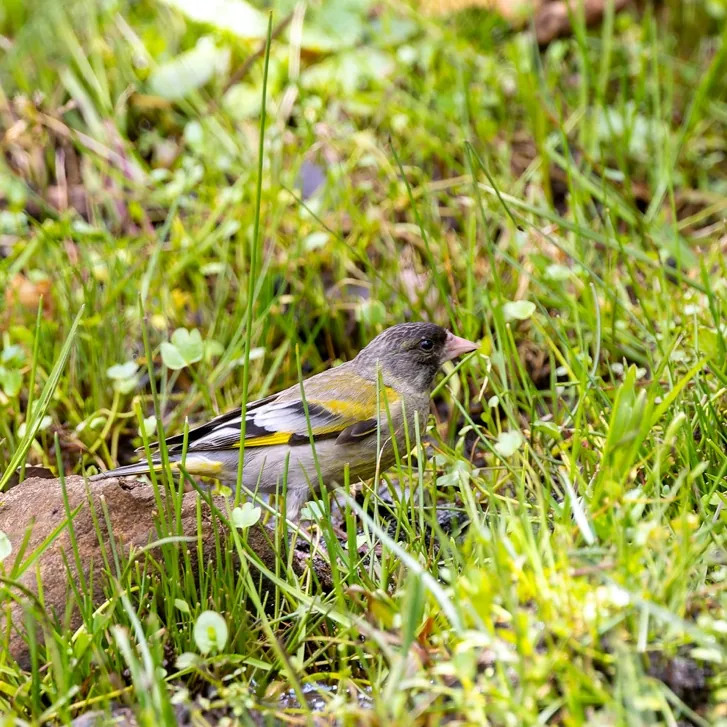
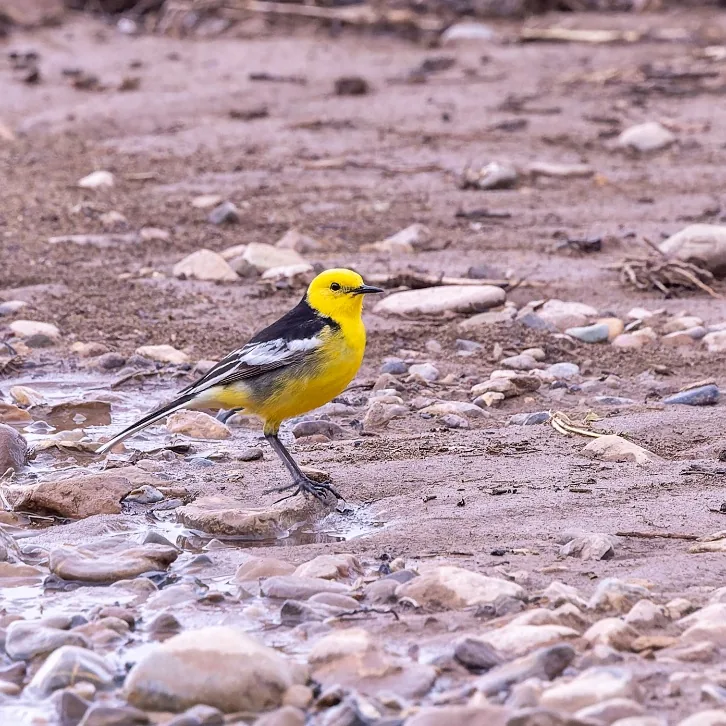
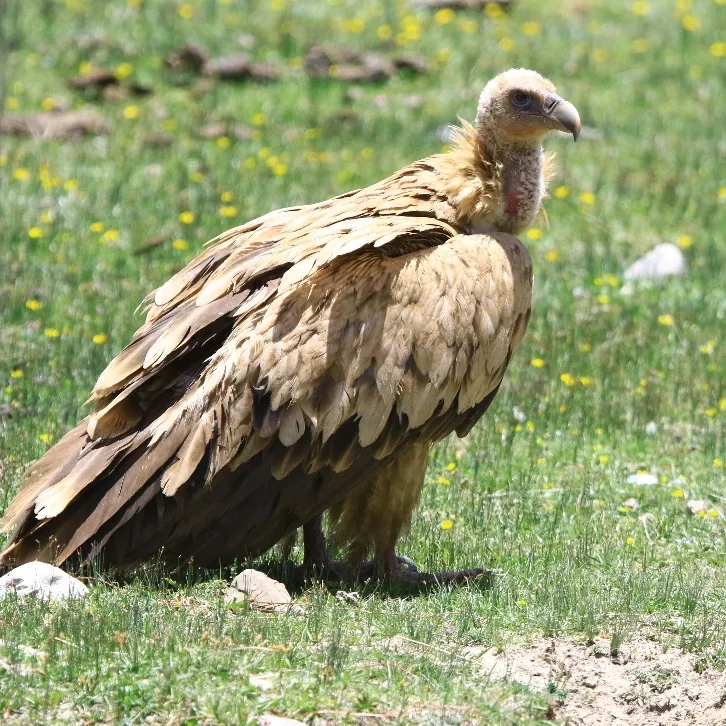
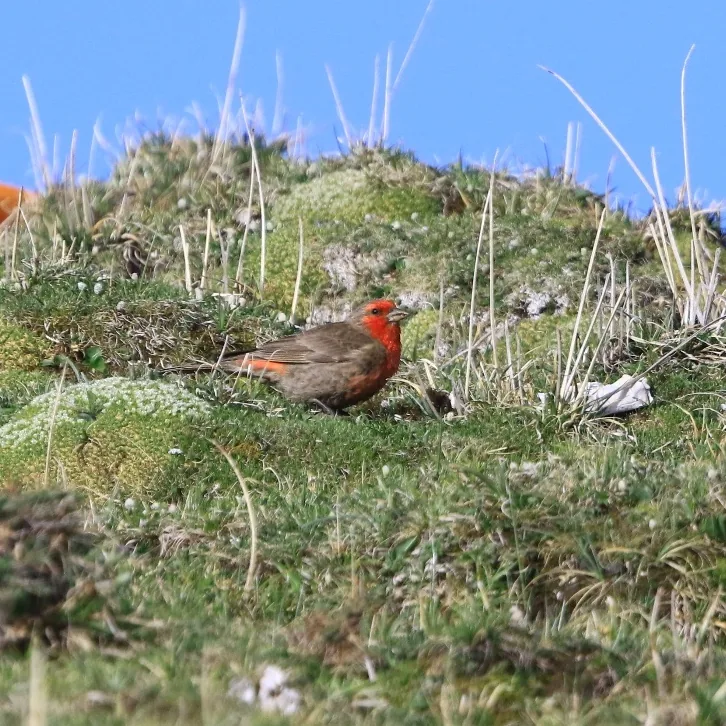
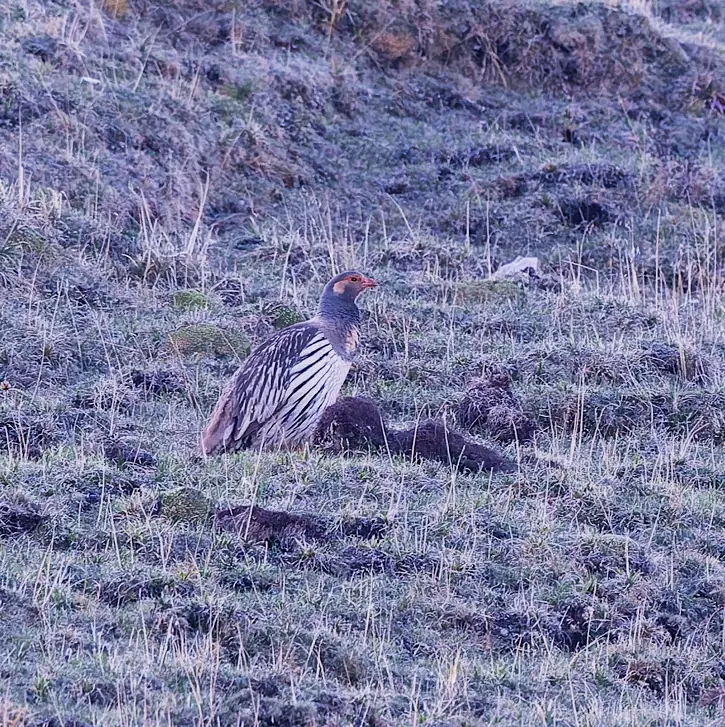
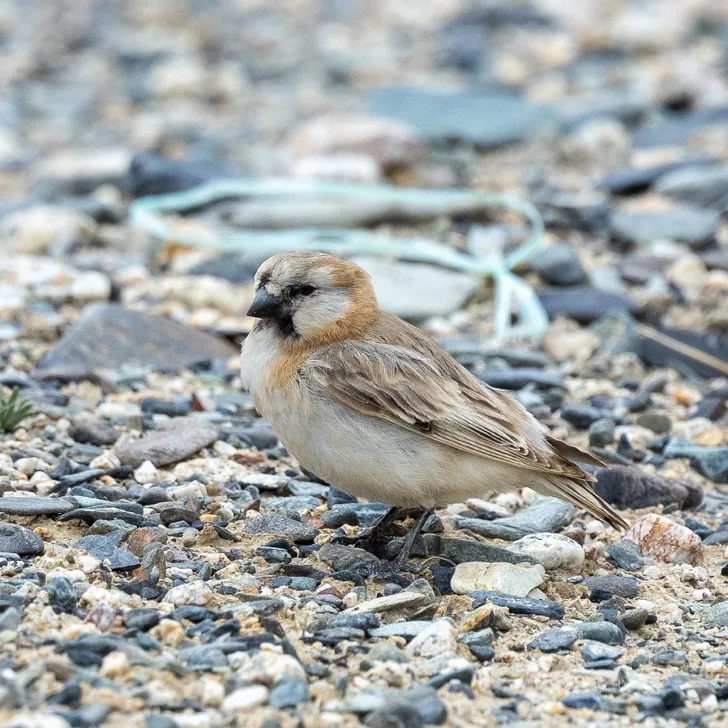
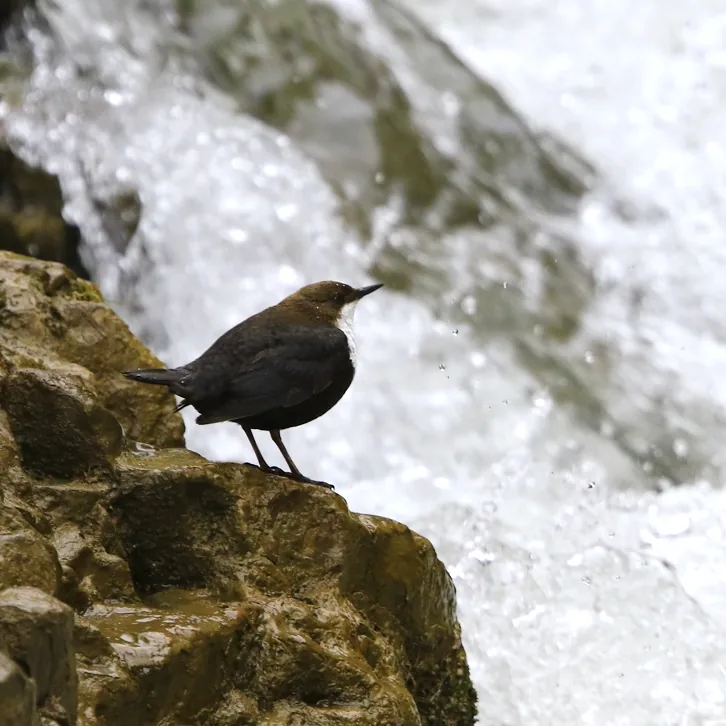
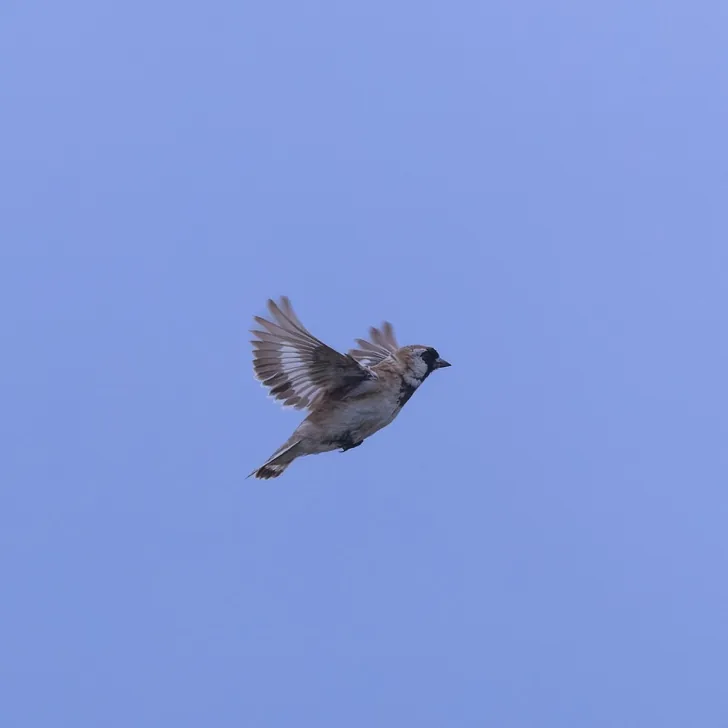
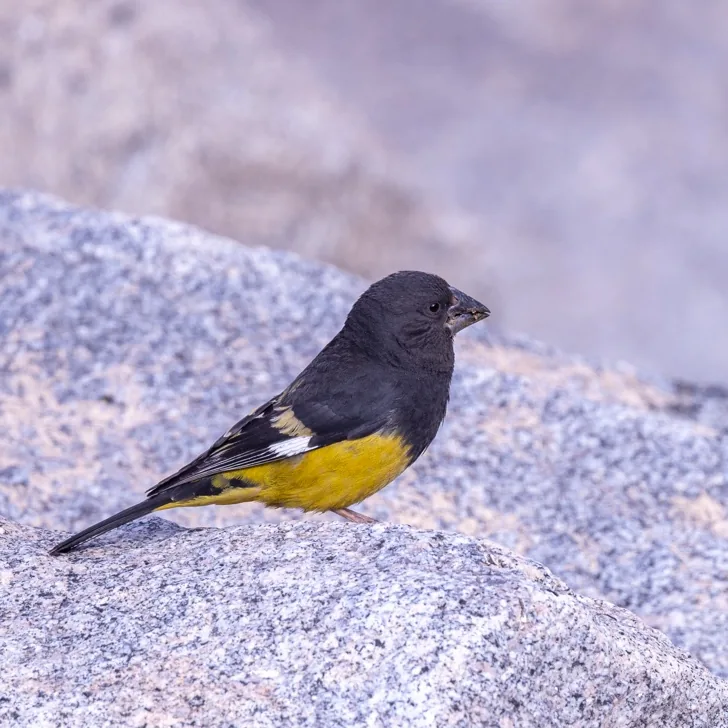
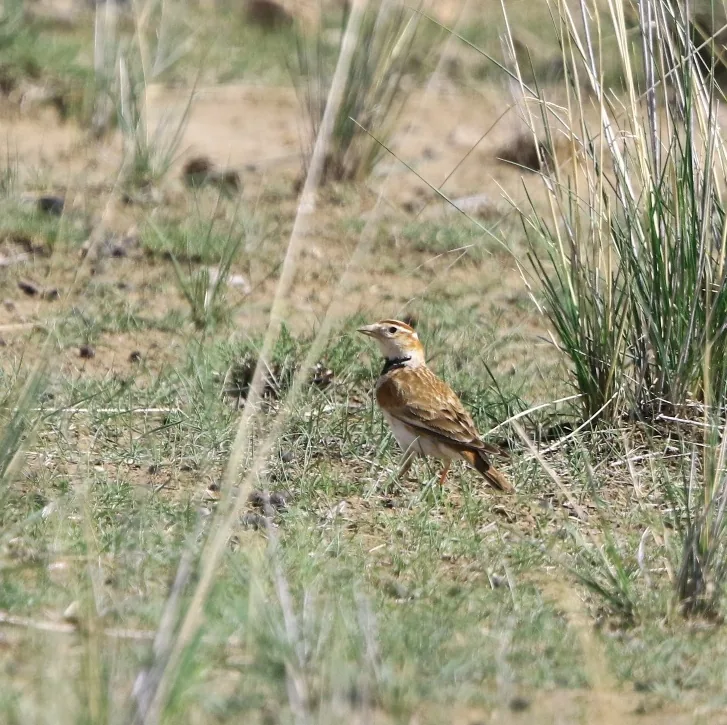
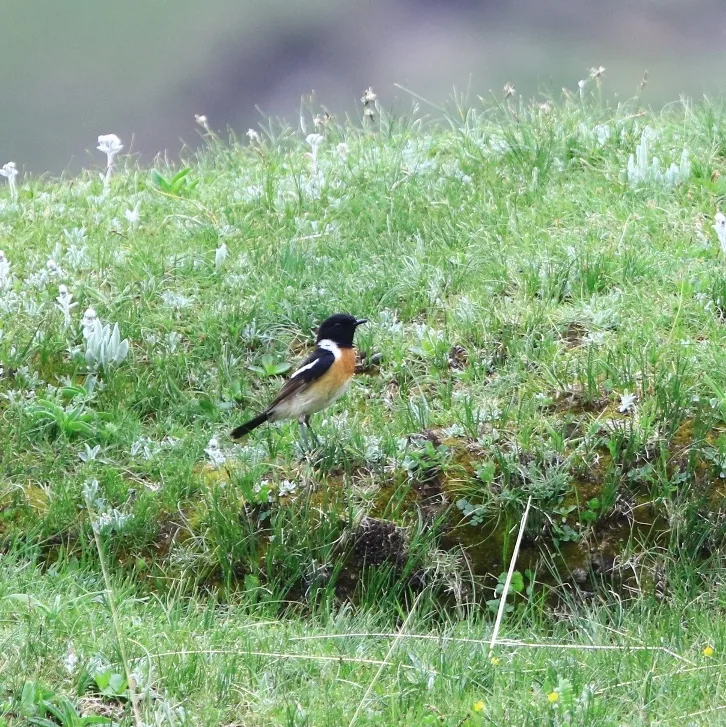
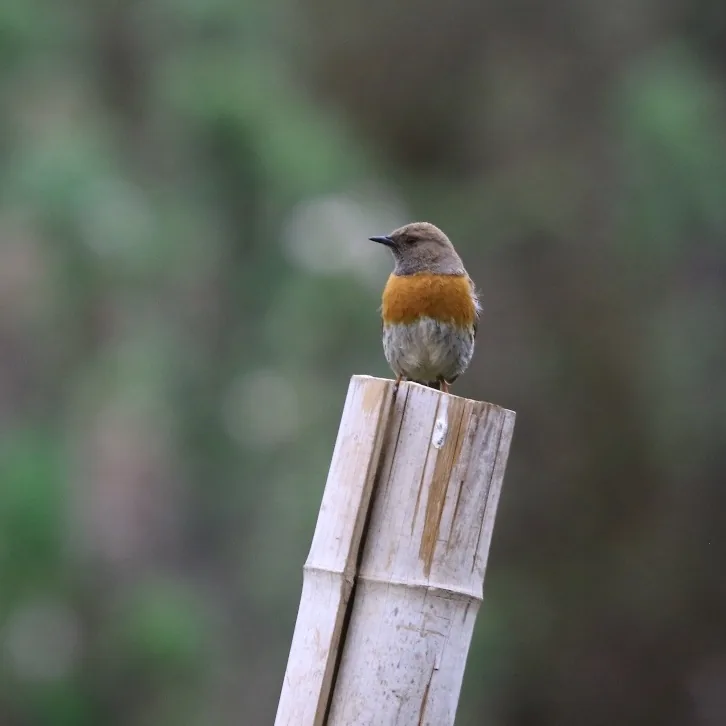
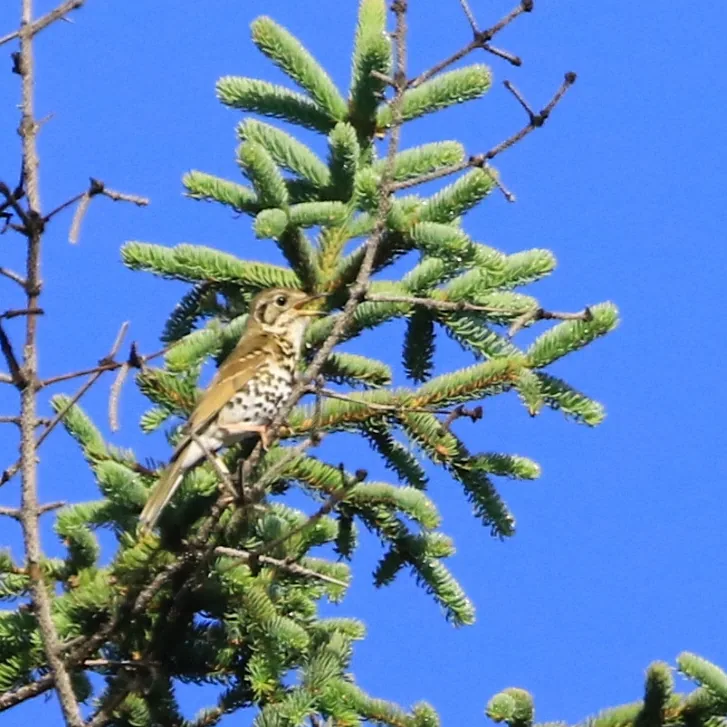
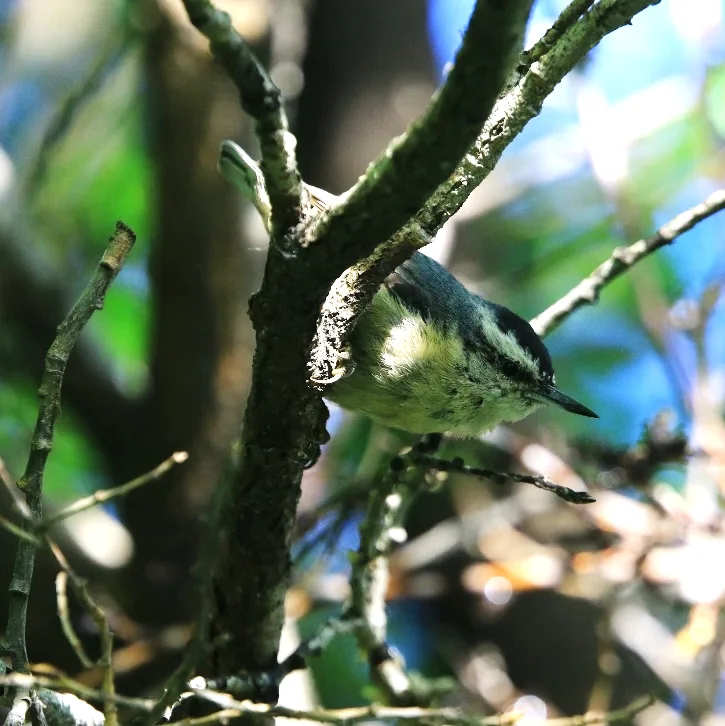
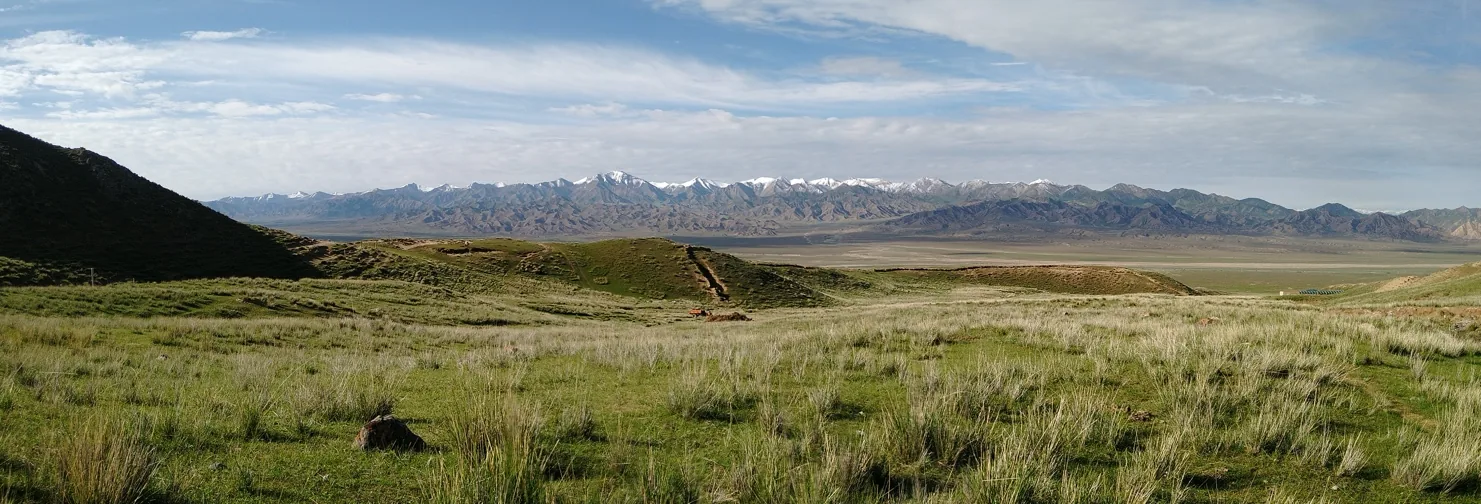
Systematic List
| ANSERIFORMES: Anatidae | |
|---|---|
| Greylag Goose | Anser anser |
| Bar-headed Goose | Anser indicus |
| Ruddy Shelduck | Tadorna ferruginea |
| Gadwall | Anas strepera |
| Mallard | Anas platyrhynchos |
| Red-crested Pochard | Netta rufina |
| Ferruginous Pochard | Aythya nyroca |
| Tufted Duck | Aythya fuligula |
| Goosander | Mergus merganser |
| GALLIFORMES: Phasianidae | |
| Buff-throated Monal Partridge | Tetraophasis szechenyii |
| Tibetan Snowcock | Tetraogallus tibetanus |
| Himalayan Snowcock | Tetraogallus himalayensis koslowi |
| Chukar Partridge | Alectoris chukar |
| Przevalski's Partridge | Alectoris magna |
| Daurian Partridge | Perdix dauurica |
| Tibetan Partridge | Perdix hodgsoniae |
| Blood Pheasant | Ithaginis cruentus geoffroyi |
| White Eared Pheasant | Crossoptilon crossoptilon |
| Tibetan Eared Pheasant | Crossoptilon harmani |
| Common Pheasant | Phasianus colchicus suehschanensis |
| PODICIPEDIFORMES: Podicipedidae | |
| Great Crested Grebe | Podiceps cristatus |
| COLUMBIFORMES: Columbidae | |
| Rock Dove | Columba livia |
| Hill Pigeon | Columba rupestris |
| Stock Dove | Columba oenas yarkandensis |
| Eurasian Collared Dove | Streptopelia decaocto |
| Oriental Turtle Dove | Streptopelia orientalis orientalis Streptopelia orientalis meena |
| CUCULIFORMES: Cuculidae | |
| Common Cuckoo | Cuculus canorus |
| APODIFORMES: Apodidae | |
| Common Swift | Apus apus pekinensis |
| Pacific Swift | Apus pacificus pacificus |
| Salim Ali's Swift | Apus salimali |
| Blyth's Swift | Apus leuconyx |
| CAPRIMULGIFORMES: Caprimulgidae | |
| Grey Nightjar | Caprimulgus jotaka |
| GRUIFORMES: Gruidae | |
| Black-necked Crane | Grus nigricollis |
| GRUIFORMES: Rallidae | |
| Eurasian Coot | Fulica atra atra |
| CHARADRIIFORMES: Ibidorhynchidae | |
| Ibisbill | Ibidorhyncha struthersii |
| CHARADRIIFORMES: Recurvirostridae | |
| Black-winged Stilt | Himantopus himantopus |
| CHARADRIIFORMES: Charadriidae | |
| Tibetan Sand Plover | Anarhynchus atrifrons schaeferi |
| CHARADRIIFORMES: Scolopacidae | |
| Common Redshank | Tringa totanus |
| Common Greenshank | Tringa nebularia |
| CHARADRIIFORMES: Laridae | |
| Pallas's Gull | Ichthyaetus ichthyaetus |
| Brown-headed Gull | Larus brunnicephalus |
| Common Tern | Sterna hirundo tibetanus Sterna hirundo hirundo |
| Caspian Tern | Hydroprogne caspia |
| PTEROCLIDIFORMES: Pteroclididae | |
| Tibetan Sandgrouse | Syrrhaptes tibetanus |
| PELECANIFORMES: Phalacrocoracidae | |
| Great Cormorant | Phalacrocorax carbo |
| CICONIIFORMES: Ardeidae | |
| Great Egret | Ardea alba modesta |
| Eastern Cattle Egret | Ardea (ibis) coromandus |
| Chinese Pond Heron | Ardeola bacchus |
| Black-crowned Night Heron | Nyctocorax nyctocorax |
| ACCIPITRIFORMS: Accipitridae | |
| Black Kite | Milvus milgrans lineatus |
| Lammergeier/Bearded Vulture | Gypaetus barbatus |
| Himalayan Griffon | Gyps himalayensis |
| Eurasian Sparrowhawk | Accipiter nisus melaschistos |
| Common Buzzard | Buteo buteo |
| Himalayan Buzzard Buteo [buteo] refectus | |
| Upland Buzzard | Buteo hemilasius |
| Long-legged Buzzard | Buteo rufinus |
| Golden Eagle | Aquila chrysaetos daphanea |
| Booted Eagle | Aquila pennata |
| STRIGIFORMES: Strigidae | |
| Little Owl | Athene noctua inpasta |
| CORACIIFORMES: Upupidae | |
| Eurasian Hoopoe | Upupa epops |
| PICIFORMES: Picidae | |
| Eurasian Wryneck | Jynx torquilla sarudnyi |
| White-winged Woodpecker | Dendrocopos leucopterus |
| Eurasian Three-toed Woodpecker | Picoides tridactylus funebris Picoides tridactylus tianschanicus |
| Black Woodpecker | Dryocopus martius |
| Grey-faced Woodpecker | Picus canus sordidor |
| FALCONIFORMES: Falconidae | |
| Eurasian Kestrel | Falco tinnunculus |
| Eurasian Hobby | Falco subbuteo |
| Saker Falcon | Falco cherrug milvipes |
| Amur Falcon | Falco amurensis |
| PSITTACIFORMES: Psittacidae | |
| Lord Derby's Parakeet | Psittacula derbiana |
| PASSERIFORMES: Campephagidae | |
| Long-tailed Minivet | Pericrocotus ethologus laetus Pericrocotus ethologus ethologus |
| PASSERIFORMES: Laniidae | |
| Isabelline / Daurian Shrike | Lanius isabellinus tsaidamenis |
| Xinjiang Shrike | Lanius isabellinus arenarius |
| Turkestan Shrike Lanius [isabellinus] phoenicuroides | |
| Grey-backed Shrike | Lanius tephronotus |
| Steppe Grey Shrike | Lanius pallidirostris |
| PASSERIFORMES: Corvidae | |
| Eurasian Jay | Garrulus glandarius kansuensis |
| Azure-winged Magpie | Cyanopica cyanus kansuensis |
| Black-rumped Magpie | Pica pica bottanensis |
| Oriental Magpie | Pica pica sericea |
| Eurasian Magpie | Pica bactriana |
| Biddulph's / Xinjiang Ground Jay | Podoces biddulphi |
| Henderson's/Mongolian Ground Jay | Podoces hendersoni |
| Red-billed Chough | Pyrrhocorax pyrrhocorax himalayanus |
| Yellow-billed Chough | Pyrrhocorax graculus |
| Daurian Jackdaw | Corvus dauuricus insolens |
| Carrion Crow Corvus [corone] orientalis | |
| Large-billed Crow | Corvus japonensis tibetosinensis |
| Common Raven | Corvus corax tibetanus |
| PASSERIFORMES: Paridae | |
| Willow Tit | Poecile montanus affinis |
| Sichuan Tit | Poecile weigoldei |
| White-browed Tit | Poecile superciliosa |
| Rufous-vented Tit | Periparus rubidiventris |
| Azure Tit | Cyanistes cyanus tianschanicus |
| Coal Tit | Parus ater aemodius Parus ater rufipectus |
| Asian Tit | Parus cinereus minor Parus cinereus tibetanus |
| Great Tit | Parus major kapustini Parus major turkestanicus |
| Ground Tit | Pseudopodoces humilis |
| PASSERIFORMES: Alaudidae | |
| Tibetan Lark | Melanocorypha maxima |
| Mongolian Lark | Melanocorypha mongolica |
| Hume's Short-toed Lark | Calandrella acutirostris tibetana |
| Asian Short-toed Lark | Calandrella cheleensis kukunoorensis Calandrella cheleensis seebohmi |
| Crested Lark | Galerida cristata |
| Oriental Skylark | Alauda gulgula inopinata |
| Horned Lark | Eremophila alpestris khamensis Eremophila alpestris nigrifrons Eremophila alpestris przewalskii |
| PASSERIFORMES: Hirundinidae | |
| Pale Martin | Riparia diluta tibetana |
| Eurasian Crag Martin | Ptyonoprogne rupestris |
| Barn Swallow | Hirundo rustica |
| Eastern Red-rumped Swallow | Cecropis daurica daurica |
| Asian House Martin | Delichon dasypus cashmeriense |
| Northern House Martin | Delichon urbicum urbicum |
| PASSERIFORMES: Leiothrichidae | |
| Elliot's Laughingthrush | Garrulax elliotii |
| Prince Henri's Laughingthrush | Garrulax henrici |
| Kozlov's Babax | Ianthocincla koslowi |
| Giant Babax | Ianthocincla waddelli |
| Giant Laughingthrush | Ianthocincla maximus |
| Pere David's Laughingthrush | Pterorhinus davidi |
| PASSERIFORMES: Sylviidae | |
| 'Margelan' Lesser Whitethroat | Curruca curruca margelanica |
| 'Desert' Lesser Whitethroat | Curruca curruca minula |
| Common Whitethroat | Sylvia communis rubicola |
| Tarim Babbler | Rhopophilus albosuperciliarus |
| PASSERIFORMES: Regulidae | |
| Goldcrest | Regulus regulus yunnanensis Regulus regulus tristis |
| PASSERIFORMES: Troglodytidae | |
| Eurasian Wren | Troglodytes troglodytes szetschuanus |
| PASSERIFORMES: Phylloscopidae | |
| Smoky Warbler | Phylloscopus fuligiventer weigoldi |
| Alpine Leaf Warbler | Phylloscopus occisinensis |
| Yellow-streaked Warbler | Phylloscopus armandii armandii |
| Buff-barred Warbler | Phylloscopus pulcher pulcher |
| Gansu Leaf Warbler | Phylloscopus kansuensis |
| Sichuan Leaf Warbler | Phylloscopus forresti |
| Hume's Leaf Warbler | Phylloscopus humei mandellii Phylloscopus humei humei |
| Greenish Warbler | Phylloscopus trochiloides trochiloides Phylloscopus trochiloides obscuratus Phylloscopus trochiloides viridianus |
| Large-billed Leaf Warbler | Phylloscopus magnirostris |
| Blyth's Leaf Warbler | Phylloscopus reguloides reguloides |
| PASSERIFORMES: Aegithalidae | |
| Rusty-fronted Bushtit | Aegithalos iouschistos |
| Silver-throated Bushtit | Aegithalos glaucogularis |
| Severtzov’s Tit Warbler | Leptopoecile sophiae obscura |
| Crested Tit Warbler | Leptopoecile elegans |
| PASSERIFORMES: Sittidae | |
| Eurasian Nuthatch | Sitta europaea seorsa |
| Chinese Nuthatch | Sitta villosa bangsi |
| Przevalski's Nuthatch | Sitta przewalskii |
| PASSERIFORMES: Tichodromidae | |
| Wallcreeper | Tichodroma muraria |
| PASSERIFORMES: Certhiidae | |
| Eurasian Treecreeper | Certhia familiaris tianschanica |
| Hodgson's Treecreeper (heard only) | Certhia hodgsoni khamensis |
| PASSERIFORMES: Sturnidae | |
| Eurasian Starling | Sturnus vulgaris porphyronotus |
| PASSERIFORMES: Turdidae | |
| White-collared Blackbird | Turdus albocinctus |
| Tibetan Blackbird | Turdus maximus |
| Chinese Blackbird (heard only) | Turdus mandarinus |
| Chestnut Thrush | Turdus rubrocanus gouldi |
| Kessler's Thrush | Turdus kessleri |
| Chinese Thrush | Turdus mupinensis |
| Eurasian Blackbird | Turdus merula intermedius |
| Mistle Thrush | Turdus viscivorus |
| PASSERIFORMES: Muscicapidae | |
| Slaty-backed Flycatcher | Ficedula hodgsonii |
| Siberian Rubythroat | Calliope calliope |
| Chinese Rubythroat | Calliope pectoralis tschebaiewi |
| White-bellied Robin/Redstart | Luscinia phaenicuroides |
| Indian Blue Robin (heard only) | Larvivora brunnea |
| Himalayan Bluetail | Tarsiger rufilatus rufilatus |
| Przevalski's / Ala Shan Redstart | Phoenicurus alaschanicus |
| Black Redstart | Phoenicurus ochruros rufiventris |
| Hodgson's Redstart | Phoenicurus hodgsoni |
| White-throated Redstart | Phoenicurus schisticeps |
| Daurian Redstart | Phoenicurus auroreus |
| Güldenstädt's Redstart | Phoenicurus erythrogastrus |
| Blue-fronted Redstart | Phoenicurus frontalis |
| White-capped Redstart | Phoenicurus leucocephalus |
| Plumbeous Redstart | Phoenicurus fuliginosus |
| Blue-capped Redstart | Phoenicurus caeruleocephala |
| Eversmann's Redstart | Phoenicurus erythronotus |
| Siberian Stonechat | Saxicola maura przewalksii Saxicola mauras maurus |
| Isabelline Wheatear | Oenanthe isabellina |
| Pied Wheatear | Oenanthe pleschanka |
| Desert Wheatear | Oenanthe deserti |
| Northern Wheatear | Oenanthe oenanthe libanotica |
| Rufous-tailed Rock-thrush | Monticola saxatilis |
| PASSERIFORMES: Cinclidae | |
| White-throated Dipper | Cinclus cinclus przewalskii |
| Brown Dipper | Cinclus pallasii dorjei |
| PASSERIFORMES: Nectariniidae | |
| Mrs Gould's Sunbird | Aethopyga gouldiae dabryii |
| PASSERIFORMES: Passeridae | |
| Russet Sparrow | Passer cinnamomeus cinnamomeus |
| Eurasian Tree Sparrow | Passer montanus dilutus Passer montanus tibetanus |
| Saxaul Sparrow | Passer ammondendri atolickae |
| Rock Sparrow | Petronia petronia brevirostris |
| Henri's/Tibetan Snowfinch | Montifringilla henrici |
| Black-winged Snowfinch | Montifringilla adamsi |
| Blanford's Snowfinch | Montifringilla blanfordi |
| White-rumped Snowfinch | Onychostruthus taczanowskii |
| Père David's/Small Snowfinch | Pyrgilauda davidiana |
| Rufous-necked Snowfinch | Pyrgilauda ruficollis |
| PASSERIFORMES: Prunellidae | |
| Robin Accentor | Prunella rubeculoides |
| Rufous-breasted Accentor | Prunella strophiata |
| Brown Accentor | Prunella fulvescens |
| Black-throated Accentor | Prunella atrogularis |
| PASSERIFORMES: Motacillidae | |
| White / Pied Wagtail | Motacilla alba leucopsis Motacilla alba personata |
| Citrine Wagtail | Motacilla citreola citreola |
| Tibetan Wagtail | Motacilla citreola calcarata |
| Grey Wagtail | Motacilla cinerea |
| Rosy Pipit | Anthus roseatus |
| PASSERIFORMES: Urocynchramidae | |
| Przevalski's Pinktail | Urocynchramus pylzowi |
| PASSERIFORMES: Fringillidae | |
| Plain Mountain Finch | Leucosticte nemoricola nemoricola |
| Brandt's Mountain Finch | Leucosticte brandti pallidor |
| Mongolian Finch | Bucanetes mongolicus |
| Common Rosefinch | Carpodacus erythrinus roseatus |
| Himalayan Beautiful Rosefinch | Carpodacus pulcherrimus argyrophrys |
| Pink-rumped Rosefinch | Carpodacus eos |
| Pale Rosefinch | Carpodacus stoliczkae beicki |
| Chinese White-browed Rosefinch | Carpodacus dubius |
| Streaked Rosefinch | Carpodacus rubicilloides |
| Great Rosefinch | Carpodacus rubicilla severtzovi |
| Red-mantled Rosefinch | Carpodacus rhodochlamys |
| Red-fronted Rosefinch | Carpodacus puniceus |
| Roborovski's Rosefinch | Carpodacus roborowskii |
| Red Crossbill (heard only) | Loxia curvirostra himalayensis |
| Grey-crowned Goldfinch | Carduelis caniceps paropanisi |
| Oriental/Grey-capped Greenfinch | Carduelis sinica sinica |
| Black-headed Greenfinch | Carduelis ambigua |
| Twite | Carduelis cannabina bella |
| Common Linnet | Linaria cannabina |
| Fire-fronted Serin | Serinus pusillus |
| Grey-headed Bullfinch | Pyrrhula erythaca |
| White-winged Grosbeak | Mycerobas carnipes |
| PASSERIFORMES: Emberizidae | |
| Kozlov's Bunting | Emberiza koslowi |
| Pine Bunting | Emberiza leucocephalos fronto |
| Godlewski's Bunting | Emberiza godlewskii khamensis |
| Red-headed Bunting | Emberiza bruniceps |
| Meadow Bunting | Emberiza cioides cioides |
| MAMMALS | |
| Tibetan Macaque | Macaca thibetana |
| Himalayan Marmot | Marmota himalayana |
| Plateau Pika | Ochotona curzoniae |
| Glover's Pika | Ochotona gloveri |
| Long-eared Pika | Ochotona macrotis |
| Tarim Basin Hare | Lepus yarkandi |
| Woolly Hare | Lepus oiostolus |
| Tolai Hare | Lepus tolai |
| Tibetan Fox | Vulpes ferrilata |
| Wolf | Canis lupes |
| Kiang | Equus hemionus |
| Alpine Musk Deer | Moschus chrysogaster |
| Red Deer | Cervus elaphus |
| White-lipped Deer | Cervus albirostris |
| Tibetan Gazelle | Procapra picticaudata |
| Wild Yak | Bos grunniens |
| Tibetan Antelope | Pantholops hadgsonii |
| Blue Sheep | Pseudois nayaur |
This trip report was written by Bird Tour Asia and is reproduced with their permission, with their photographs. See Bird Tour Asia's China tours for their trips and more reports. To join this trip, see China tours, Bird Tour Asia. Back to resources.