
 Wildlife
of China
Bar-headed Goose
Ducks, Geese & Grebes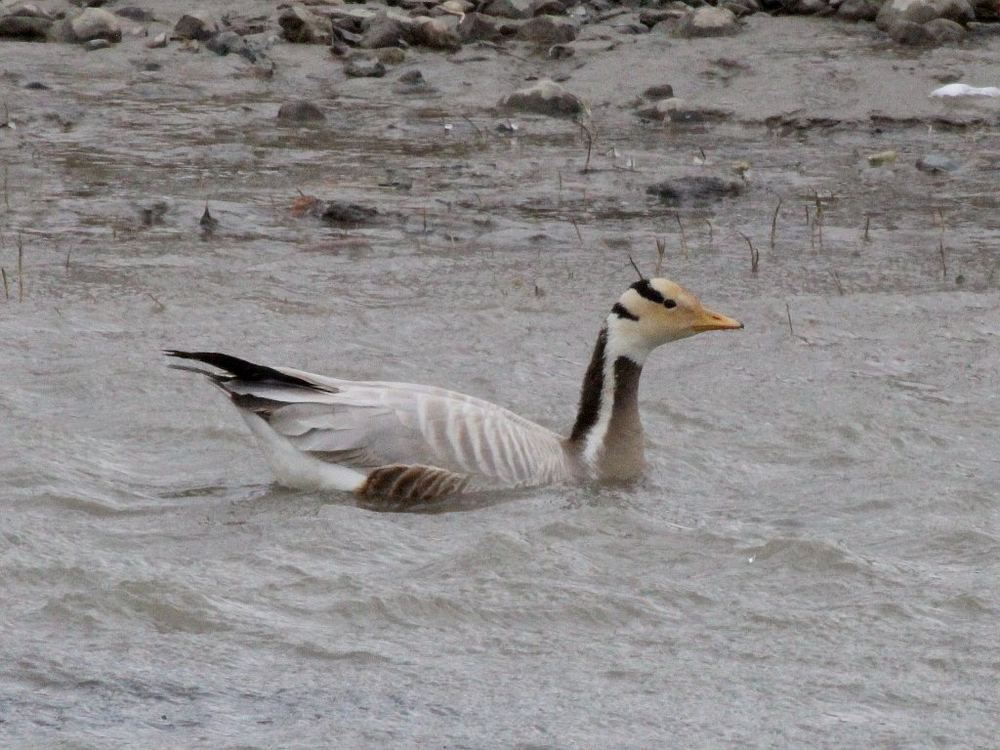
Photo: (c) Andrew Bazdyrev, some rights reserved (CC BY) · CC-BY
Anser indicus
Basic stats
Diet
Highland grasses, roots, seeds, grains, insects, fish, and crops such as corn, wheat, barley, and rice
Habitat
Mountain grasslands, crop fields, freshwater marshes, lakes, and streams
Range
Breeds from Mongolia and Russia through western China and Tibet; winters mainly on the Tibetan-Qinghai Plateau and in South Asia
Clutch size
3–8 eggs
Incubation period
28–30 days
Size
68–78 cm
Wingspan
140–160 cm
Weight
2–3 kg
Bar-headed geese breed from Mongolia south through Russia and western China to Tibet, with their range extending west to Kyrgyzstan. Important wintering areas include the southern Tibetan-Qinghai Plateau, India, and Bangladesh. They inhabit high-elevation mountain grasslands, village crop fields, freshwater marshes, lakes, and streams, often between 4,000 and 6,000 meters. Some cross the Himalayas at altitudes near 9,000 meters. Adults measure 68 to 78 centimeters long, span 140 to 160 centimeters, and weigh 2 to 3 kilograms. (Animal Diversity Web)
These geese graze on highland grasses around nesting lakes and streams and also consume roots, seeds, grains, insects, fish, and agricultural crops such as corn, wheat, barley, and rice. They migrate socially in family groups or large colonies, using V-shaped and related flight formations. Bar-headed geese generally form long-lasting monogamous pairs, although polygyny sometimes occurs. They nest on the ground in highland wetlands, lay three to eight eggs, and incubate them for 28 to 30 days. Both parents protect the goslings. (Animal Diversity Web)
Quick answers
- What does the Bar-headed Goose eat?
- Highland grasses, roots, seeds, grains, insects, fish, and crops such as corn, wheat, barley, and rice
- What habitat does the Bar-headed Goose live in?
- Mountain grasslands, crop fields, freshwater marshes, lakes, and streams
- Where is the Bar-headed Goose found?
- Breeds from Mongolia and Russia through western China and Tibet; winters mainly on the Tibetan-Qinghai Plateau and in South Asia
- How many eggs does the Bar-headed Goose lay?
- 3–8 eggs
- How long are the eggs of the Bar-headed Goose incubated?
- 28–30 days
- How big is the Bar-headed Goose?
- 68–78 cm
- What is the wingspan of the Bar-headed Goose?
- 140–160 cm
- How much does the Bar-headed Goose weigh?
- 2–3 kg