
 Wildlife
of China
Barn Swallow
Swallows & Martins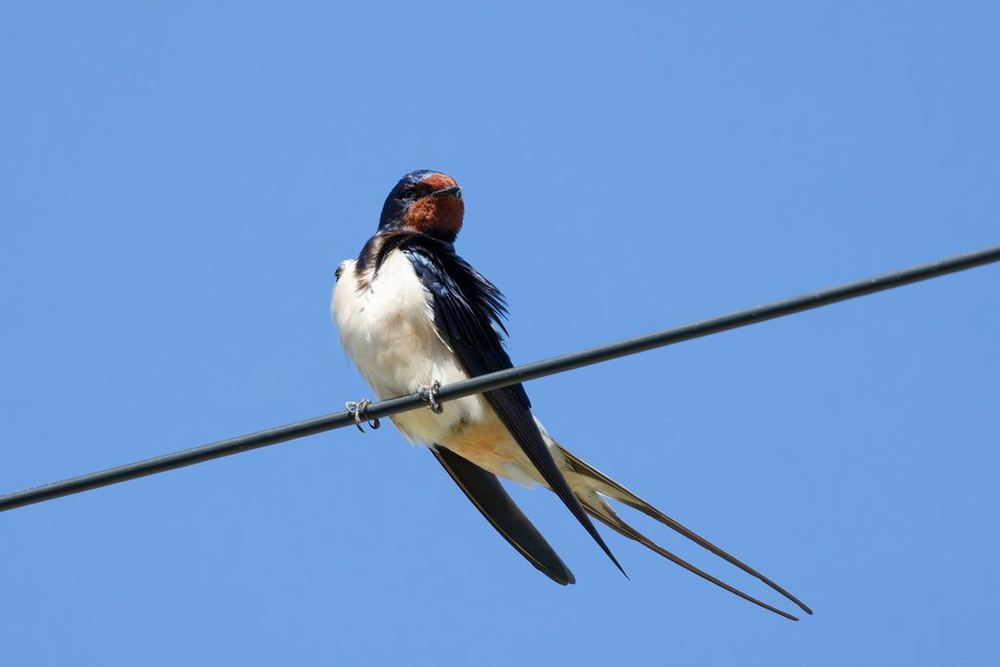
Photo: Donald Davesne · CC BY 4.0
Hirundo rustica
Basic stats
Diet
Flying insects, including flies, beetles, moths, grasshoppers, crickets, and dragonflies
Habitat
Open country, farmland, settlements, riparian areas, and other places with sheltered nesting ledges
Range
Breeds across North America, Europe, Asia, northern Africa, the Middle East, southern China, and Japan; winters farther south
Clutch size
Average 4 eggs
Incubation period
13–15 days
Size
14.6–19.9 cm
Wingspan
31.8–34.3 cm
Weight
17–20 g
Barn swallows breed across much of the Northern Hemisphere, including north-central Asia, southern China, Japan, Europe, northern Africa, the Middle East, and North America. Many populations migrate to South America, southern Asia, Indonesia, or Micronesia for winter. They favor open feeding areas near water and readily use agricultural and developed landscapes. Nests are placed on sheltered ledges in barns, outbuildings, bridges, house eaves, docks, caves, and occasionally other moving or artificial structures (Animal Diversity Web).
Nearly all of a barn swallow's diet consists of flying insects, including flies, beetles, moths, grasshoppers, crickets, and dragonflies. The birds capture prey in agile flight and can deliver food to nestlings without landing. Adults measure 14.6–19.9 centimetres, span 31.8–34.3 centimetres across the wings, and weigh 17–20 grams. An average clutch contains four eggs, which hatch after approximately 13–15 days. Both parents provision and protect the young through fledging and early independence (Animal Diversity Web).
Quick answers
- What does the Barn Swallow eat?
- Flying insects, including flies, beetles, moths, grasshoppers, crickets, and dragonflies
- What habitat does the Barn Swallow live in?
- Open country, farmland, settlements, riparian areas, and other places with sheltered nesting ledges
- Where is the Barn Swallow found?
- Breeds across North America, Europe, Asia, northern Africa, the Middle East, southern China, and Japan; winters farther south
- How many eggs does the Barn Swallow lay?
- Average 4 eggs
- How long are the eggs of the Barn Swallow incubated?
- 13–15 days
- How big is the Barn Swallow?
- 14.6–19.9 cm
- What is the wingspan of the Barn Swallow?
- 31.8–34.3 cm
- How much does the Barn Swallow weigh?
- 17–20 g