
 Wildlife
of China
Black-crowned Night Heron
Storks, Herons, Ibises & Pelicans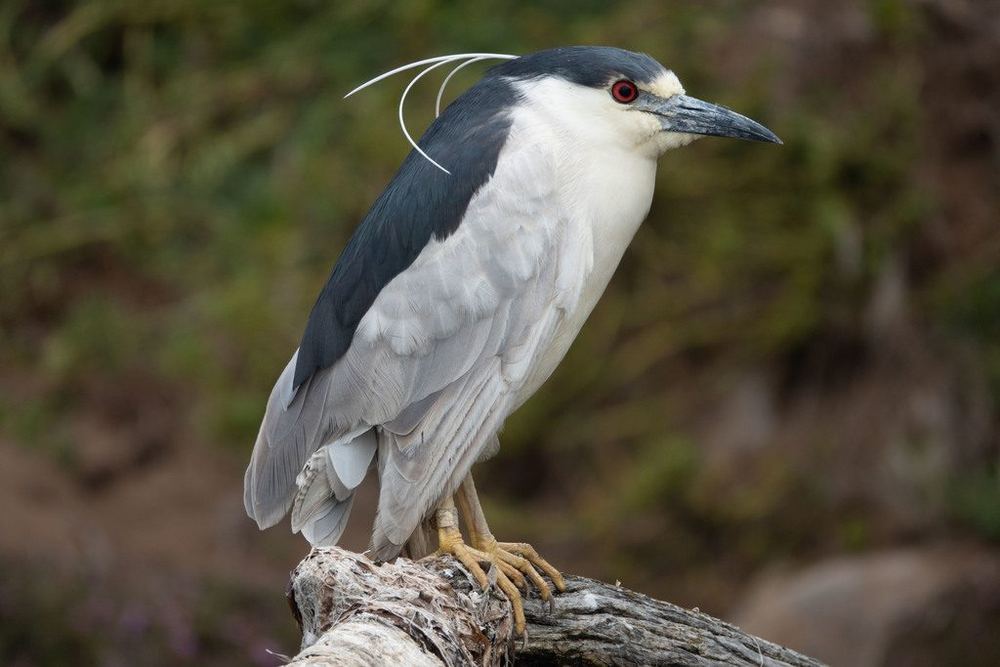
Photo: Kyle Nessen · CC0 1.0
Nycticorax nycticorax
Basic stats
Diet
Primarily fish, plus aquatic invertebrates, amphibians, reptiles, rodents, birds, eggs, carrion, and plant material
Habitat
Swamps, rivers, streams, marshes, mudflats, and densely vegetated lake margins
Range
North and Central America, the Caribbean, Europe, Africa, India, and eastward to Japan
Size
58–72 cm
Weight
About 800 g
Black-crowned night herons have an extensive distribution that includes the Americas and an Old World range stretching from Europe and Africa through India to Japan. Their colonies are generally associated with large wetlands, particularly swamps, marshes, streams, rivers, mudflats, and lake margins thick with rushes or cattails. Adults have a compact, stocky body and relatively short neck and legs. They average 58–72 centimetres long and about 800 grams, with a black crown and back, gray wings, pale underparts, and red eyes (Animal Diversity Web).
These herons are opportunistic predators whose diet centers on fish but can include leeches, worms, insects, crayfish, mussels, squid, amphibians, reptiles, rodents, birds, eggs, carrion, vegetation, and refuse. Individuals usually forage alone and defend their feeding places. During courtship, males use snapping, crouching, neck-stretching, head-bobbing, and vocal displays to attract females. Pairs are presumed to be monogamous, while synchronized displays within nesting colonies may provide social stimulation that helps initiate successful breeding (Animal Diversity Web).
Quick answers
- What does the Black-crowned Night Heron eat?
- Primarily fish, plus aquatic invertebrates, amphibians, reptiles, rodents, birds, eggs, carrion, and plant material
- What habitat does the Black-crowned Night Heron live in?
- Swamps, rivers, streams, marshes, mudflats, and densely vegetated lake margins
- Where is the Black-crowned Night Heron found?
- North and Central America, the Caribbean, Europe, Africa, India, and eastward to Japan
- How big is the Black-crowned Night Heron?
- 58–72 cm
- How much does the Black-crowned Night Heron weigh?
- About 800 g