
 Wildlife
of China
Blue Sheep
Wild Cattle & Serow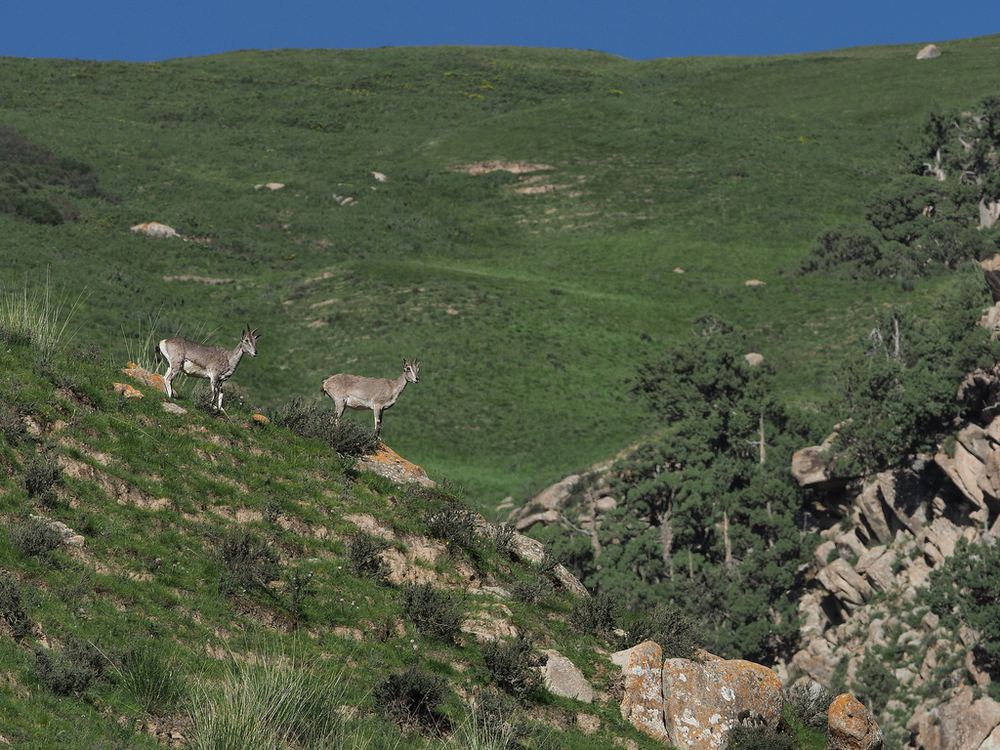
Photo: no rights reserved · CC0
Pseudois nayaur
Basic stats
Diet
Grasses, shrubs, forbs, and occasional twigs
Habitat
Open mountain slopes, desert mountains, and cliffs
Range
Tibetan Plateau and adjoining mountains of China, Pakistan, Nepal, and India; 1,200–6,000 m elevation
Litter size
1–2 offspring
Gestation period
4–5.33 months
Size
120–140 cm long
Weight
35–75 kg
The blue sheep, or bharal, is a stocky mountain ungulate with stout legs, robust shoulders, and a broad chest. Its short coat varies from gray-brown to slate blue, blending effectively with blue-gray rock. A dark lateral stripe separates the upper body from the white flanks. Both sexes have horns, but those of males are longer and sweep outward, backward, and upward; females have shorter horns and a gray rather than black body stripe. (Animal Diversity Web)
Blue sheep occupy open mountains, desert slopes, and cliff country across the Tibetan Plateau and neighboring highlands, generally avoiding forests. They occur from about 1,200 to 6,000 m and use cliffs as escape terrain. Gregarious herds may contain from five to several hundred animals. Their diet changes seasonally: dry grasses dominate in winter, while alpine grasses, shrubs, forbs, and occasional twigs are eaten during warmer months. (Animal Diversity Web)
Quick answers
- What does the Blue Sheep eat?
- Grasses, shrubs, forbs, and occasional twigs
- What habitat does the Blue Sheep live in?
- Open mountain slopes, desert mountains, and cliffs
- Where is the Blue Sheep found?
- Tibetan Plateau and adjoining mountains of China, Pakistan, Nepal, and India; 1,200–6,000 m elevation
- What is the litter size of the Blue Sheep?
- 1–2 offspring
- How long is the gestation period of the Blue Sheep?
- 4–5.33 months
- How big is the Blue Sheep?
- 120–140 cm long
- How much does the Blue Sheep weigh?
- 35–75 kg