
 Wildlife
of China
Carrion Crow
Crows, Drongos, Orioles & Shrikes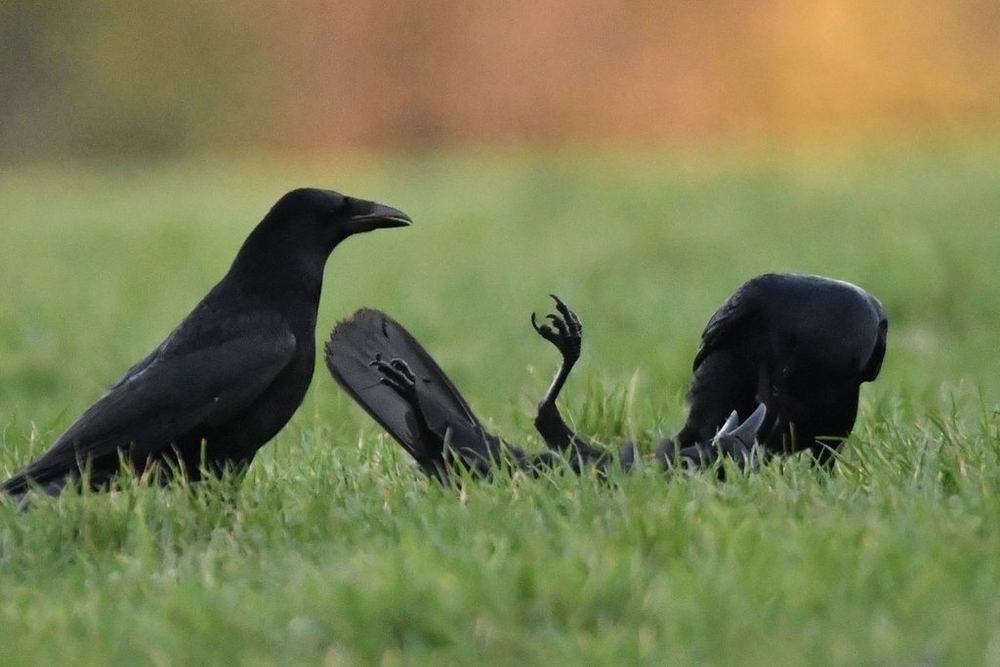
Photo: (c) Priya Sandhu, some rights reserved (CC BY) · CC BY 4.0
Corvus corone
Basic stats
Diet
Carrion, invertebrates, seeds, nuts, crops, and other opportunistically obtained foods
Habitat
Farmland, grassland, woodland edges, settlements, and other open or mixed landscapes
Range
Europe and much of temperate Asia, including northern China and Japan
Size
Average 47 cm
Weight
300–450 g
Carrion crows occur across Europe and a broad belt of temperate Asia. Their Asian range includes northern China, Japan, and much of Russia, extending southwest through Afghanistan, Iran, and Iraq. Adults are uniformly black, although their feathers can appear glossy in strong light. Males and females look alike. A typical bird is about 47 centimetres long and weighs approximately 300–450 grams. The species occupies open and mixed landscapes, including agricultural country, woodland edges, and areas influenced by people (Animal Diversity Web).
Carrion crows are highly adaptable omnivores that consume carrion, living invertebrates, seeds, nuts, and crops such as corn. Their problem-solving abilities allow elaborate foraging methods, including pulling baited fishing lines ashore and using passing vehicles to crack hard nuts. Mated pairs defend nesting territories throughout the year. Both birds build the nest, while the female incubates and the male supplies her with food. After hatching, both parents feed and protect the young, sometimes assisted by offspring from earlier broods (Animal Diversity Web).
Quick answers
- What does the Carrion Crow eat?
- Carrion, invertebrates, seeds, nuts, crops, and other opportunistically obtained foods
- What habitat does the Carrion Crow live in?
- Farmland, grassland, woodland edges, settlements, and other open or mixed landscapes
- Where is the Carrion Crow found?
- Europe and much of temperate Asia, including northern China and Japan
- How big is the Carrion Crow?
- Average 47 cm
- How much does the Carrion Crow weigh?
- 300–450 g