
 Wildlife
of China
Common Hill Myna
Starlings & Mynas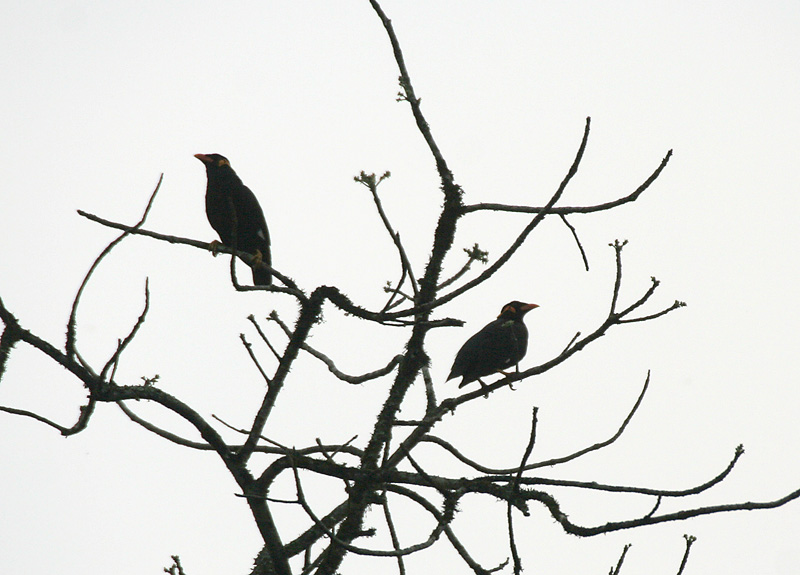
Photo: J.M.Garg · CC BY-SA 3.0
Gracula religiosa
Basic stats
Diet
Primarily figs, berries, and other fruits; also nectar, seeds, insects, and small lizards
Habitat
Humid jungle, rainforest, evergreen and wet deciduous forest, forest edges, clearings, and plantations
Range
Eastern India and southern China through Indochina and Malaysia to the Philippines; introduced elsewhere
Clutch size
Usually 2–3 eggs
Incubation period
Approximately 13–17 days
Size
27–30 cm
Wingspan
Not reported by ADW
Weight
Not reported by ADW
The common hill myna is native from eastern India and southern China through Indochina, Thailand, and Malaysia to the Philippines. Introduced populations have become established in places such as Florida, Hawaii, Japan, and Puerto Rico. It favors humid jungle, rainforest, evergreen and wet deciduous forest, but also uses forest edges, clearings, thinned woodland, and coffee plantations from sea level to about 2,000 metres. Adults measure 27–30 cm and have glossy black plumage, white wing patches, orange-yellow wattles, and a red-and-yellow bill. (Animal Diversity Web)
Hill mynas are mainly arboreal fruit-eaters, consuming figs most frequently along with berries, seeds, and nectar. Insects and small lizards supplement the diet, and flying termites may be captured in the air. Their remarkable vocal flexibility includes whistles, clicks, gurgles, and imitations. Monogamous pairs nest in natural tree cavities, often high above the ground. A typical clutch contains two or three eggs. Both adults participate in nest attendance and chick provisioning, while incubation lasts approximately thirteen to seventeen days. (Animal Diversity Web)
Quick answers
- What does the Common Hill Myna eat?
- Primarily figs, berries, and other fruits; also nectar, seeds, insects, and small lizards
- What habitat does the Common Hill Myna live in?
- Humid jungle, rainforest, evergreen and wet deciduous forest, forest edges, clearings, and plantations
- Where is the Common Hill Myna found?
- Eastern India and southern China through Indochina and Malaysia to the Philippines; introduced elsewhere
- How many eggs does the Common Hill Myna lay?
- Usually 2–3 eggs
- How long are the eggs of the Common Hill Myna incubated?
- Approximately 13–17 days
- How big is the Common Hill Myna?
- 27–30 cm
- What is the wingspan of the Common Hill Myna?
- Not reported by ADW
- How much does the Common Hill Myna weigh?
- Not reported by ADW