
 Wildlife
of China
Crested Ibis
Storks, Herons, Ibises & Pelicans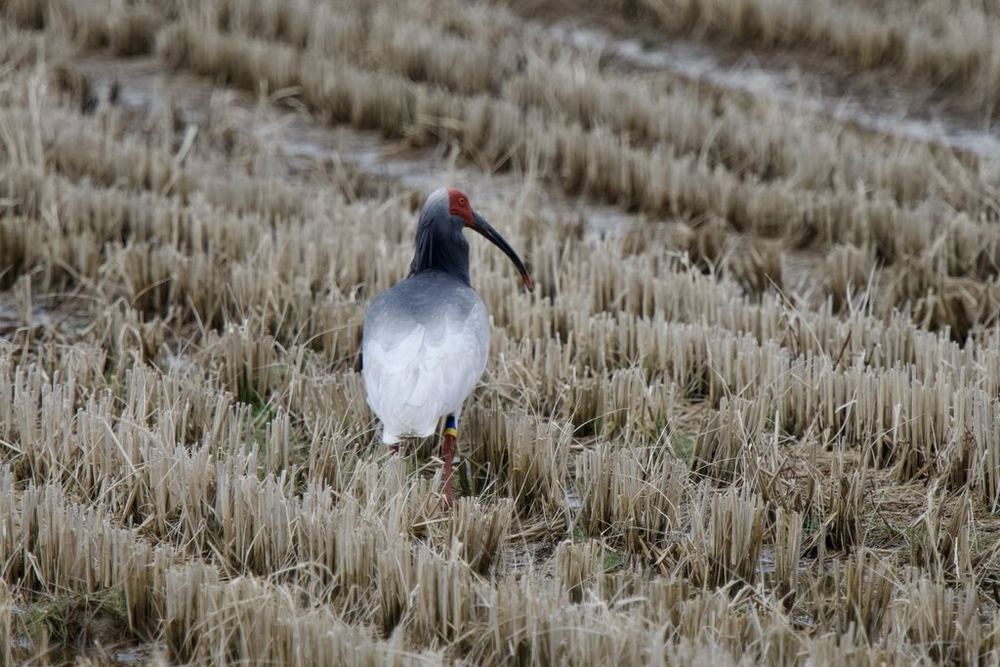
Photo: (c) Jiro Iguchi, some rights reserved (CC BY) · CC BY 4.0
Nipponia nippon
Basic stats
Diet
Fish, amphibians, insects, other arthropods, mollusks, worms, crustaceans, and some seeds
Habitat
Mountain forests near marshes, swamps, rice fields, and other shallow feeding wetlands
Range
Historically temperate East Asia; the surviving wild populations described by ADW are in China
Clutch size
1–5 eggs
Incubation period
26–30 days
Size
Average 75 cm
Wingspan
Average 140 cm
Weight
Average 1,000 g
The crested ibis historically ranged across temperate East Asia from central China to Hokkaido and from southeastern Siberia to Taiwan. ADW describes the remaining wild populations as restricted to China. Birds use mountain forest for nesting and nearby marshes, swamps, rice fields, and other shallow wetlands for feeding, generally at elevations of 500–1,000 metres. Adults average 75 cm long, span about 140 cm, and weigh around one kilogram. The sexes resemble one another, forming year-round monogamous pairs. (Animal Diversity Web)
Crested ibises probe wet ground and shallow water for fish, amphibians, insects, other arthropods, mollusks, earthworms, and aquatic crustaceans; seeds and grains are also recorded. Courtship begins in January and includes head bobbing and the presentation of nesting material. Annual breeding occurs from March through August. A pair produces one to five eggs, which hatch following 26–30 days of incubation. Both parents invest in the offspring, and the young remain in the nest until fledging at approximately 45 days old. (Animal Diversity Web)
Quick answers
- What does the Crested Ibis eat?
- Fish, amphibians, insects, other arthropods, mollusks, worms, crustaceans, and some seeds
- What habitat does the Crested Ibis live in?
- Mountain forests near marshes, swamps, rice fields, and other shallow feeding wetlands
- Where is the Crested Ibis found?
- Historically temperate East Asia; the surviving wild populations described by ADW are in China
- How many eggs does the Crested Ibis lay?
- 1–5 eggs
- How long are the eggs of the Crested Ibis incubated?
- 26–30 days
- How big is the Crested Ibis?
- Average 75 cm
- What is the wingspan of the Crested Ibis?
- Average 140 cm
- How much does the Crested Ibis weigh?
- Average 1,000 g