
 Wildlife
of China
Eurasian Kestrel
Birds of Prey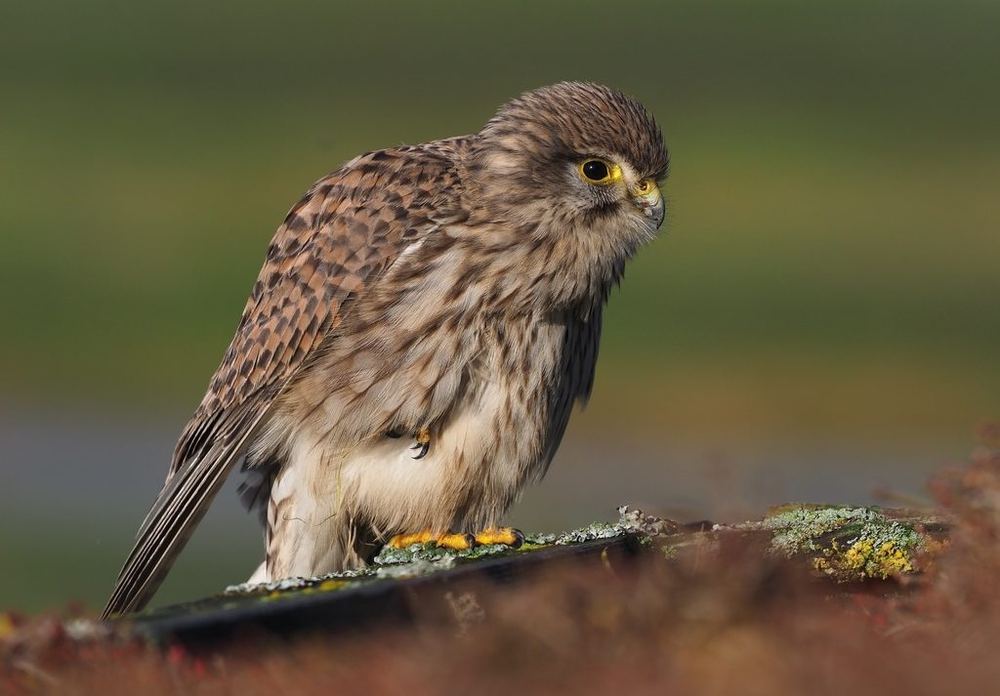
Photo: Frank Vassen · CC BY 4.0
Falco tinnunculus
Basic stats
Diet
Primarily voles, mice, and other small mammals; also birds, reptiles, amphibians, and insects
Habitat
Grassland, scrub, woodland, marshes, farmland, and urban or suburban landscapes
Range
Europe, Asia, and Africa, from Great Britain east to China and south to South Africa
Size
30–36 cm
Wingspan
70–80 cm
Weight
150–190 g
Eurasian kestrels range widely across Europe, Asia, and Africa, from Great Britain eastward to China and south to South Africa. Some populations migrate, while others remain resident. They occupy an unusually broad selection of environments, including grasslands, scrub, forests, marshes, farms, cities, and suburbs, from sea level to about 5,000 metres. Adults are small raptors measuring 30–36 centimetres, with 70–80-centimetre wingspans and weights of 150–190 grams. Females generally exceed males in size (Animal Diversity Web).
Small mammals, particularly voles and mice, dominate the kestrel's diet, although amphibians, reptiles, birds, beetles, grasshoppers, and other insects are also taken. A hunting bird may soar or hover 10–20 metres above the ground before dropping quickly onto prey, and it sometimes hunts on foot. Courtship involves increased calling and a distinctive shallow, rapidly beating display flight performed by both sexes. Their relatively long wings and tail distinguish them from many related falcons and provide maneuverability during aerial hunting (Animal Diversity Web).
Quick answers
- What does the Eurasian Kestrel eat?
- Primarily voles, mice, and other small mammals; also birds, reptiles, amphibians, and insects
- What habitat does the Eurasian Kestrel live in?
- Grassland, scrub, woodland, marshes, farmland, and urban or suburban landscapes
- Where is the Eurasian Kestrel found?
- Europe, Asia, and Africa, from Great Britain east to China and south to South Africa
- How big is the Eurasian Kestrel?
- 30–36 cm
- What is the wingspan of the Eurasian Kestrel?
- 70–80 cm
- How much does the Eurasian Kestrel weigh?
- 150–190 g