
 Wildlife
of China
Eurasian Treecreeper
Tits, Nuthatches & Treecreepers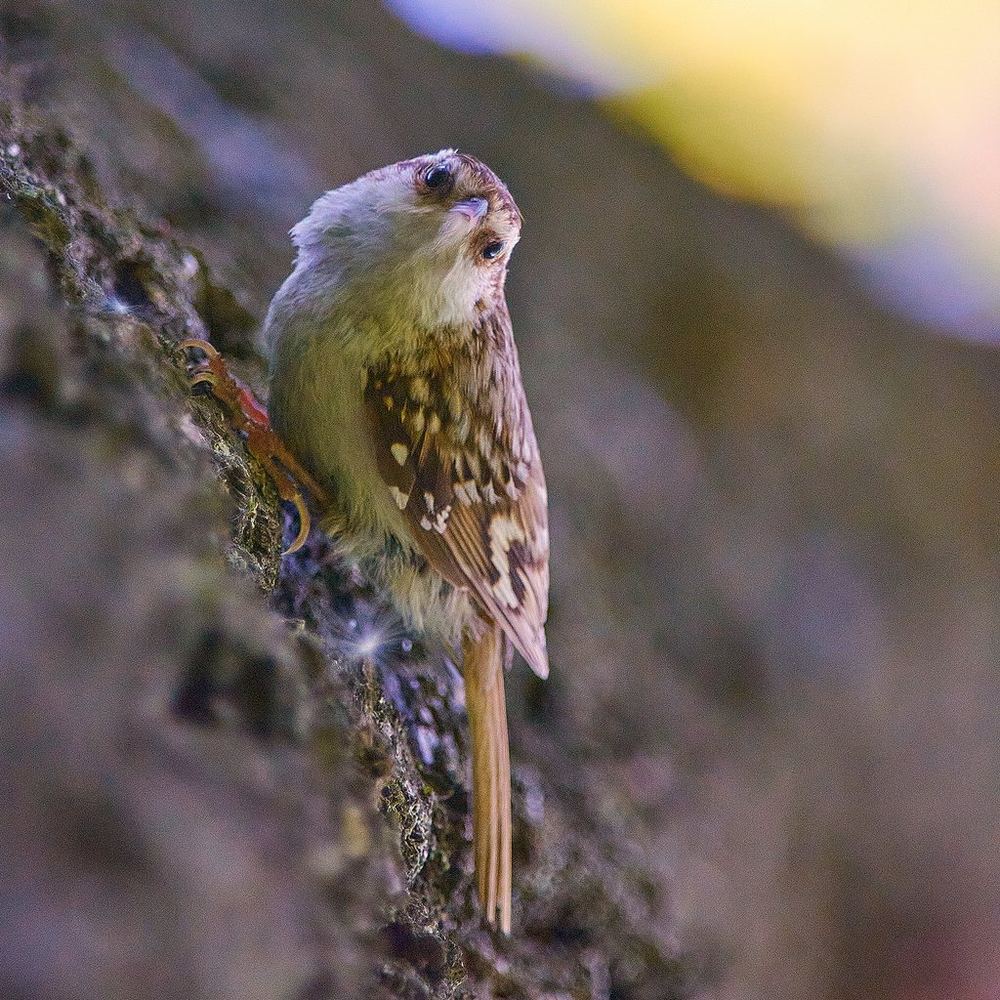
Photo: (c) Сергей Неклюдов, some rights reserved (CC BY) · CC BY 4.0
Certhia familiaris
Basic stats
Diet
Primarily insects and spiders gleaned from trunks and bark crevices; seeds may also be eaten
Habitat
Temperate forest, generally from 400 to 2,135 m elevation
Range
Palearctic from Europe and Britain east to Pacific Russia, Korea, and Japan; south to Turkey and Iran
Clutch size
1–6 eggs; ADW summary also reports 5–6
Incubation period
13–17 days
Size
12–15 cm
Wingspan
Average 19 cm
Weight
7.6–12.9 g; average 10 g
The Eurasian treecreeper inhabits the Palearctic from Europe and Britain eastward to Pacific Russia, Korea, and Japan, with southern populations reaching Turkey and Iran. It is closely associated with temperate forest, occurring from about 400 to 2,135 metres. Mottled brown, black, tan, and white upperparts camouflage it against bark, while its underparts are clean white. A slender decurved bill extracts prey from crevices, and stiff tail feathers brace the body while climbing. Adults measure 12–15 cm and average 10 g. (Animal Diversity Web)
Treecreepers spiral upward over trunks while searching bark and crevices for insects and spiders, and they may also consume seeds. They are monogamous, with males using high, shrill songs to attract partners. Nests are concealed behind loose bark or inside tree crevices and are assembled from twigs, fibres, leaves, moss, feathers, and arthropod silk. The species can produce two broods in a season. Females incubate clutches reported as one to six eggs for thirteen to seventeen days before hatching. (Animal Diversity Web)
Quick answers
- What does the Eurasian Treecreeper eat?
- Primarily insects and spiders gleaned from trunks and bark crevices; seeds may also be eaten
- What habitat does the Eurasian Treecreeper live in?
- Temperate forest, generally from 400 to 2,135 m elevation
- Where is the Eurasian Treecreeper found?
- Palearctic from Europe and Britain east to Pacific Russia, Korea, and Japan; south to Turkey and Iran
- How many eggs does the Eurasian Treecreeper lay?
- 1–6 eggs; ADW summary also reports 5–6
- How long are the eggs of the Eurasian Treecreeper incubated?
- 13–17 days
- How big is the Eurasian Treecreeper?
- 12–15 cm
- What is the wingspan of the Eurasian Treecreeper?
- Average 19 cm
- How much does the Eurasian Treecreeper weigh?
- 7.6–12.9 g; average 10 g