
 Wildlife
of China
Great Egret
Storks, Herons, Ibises & Pelicans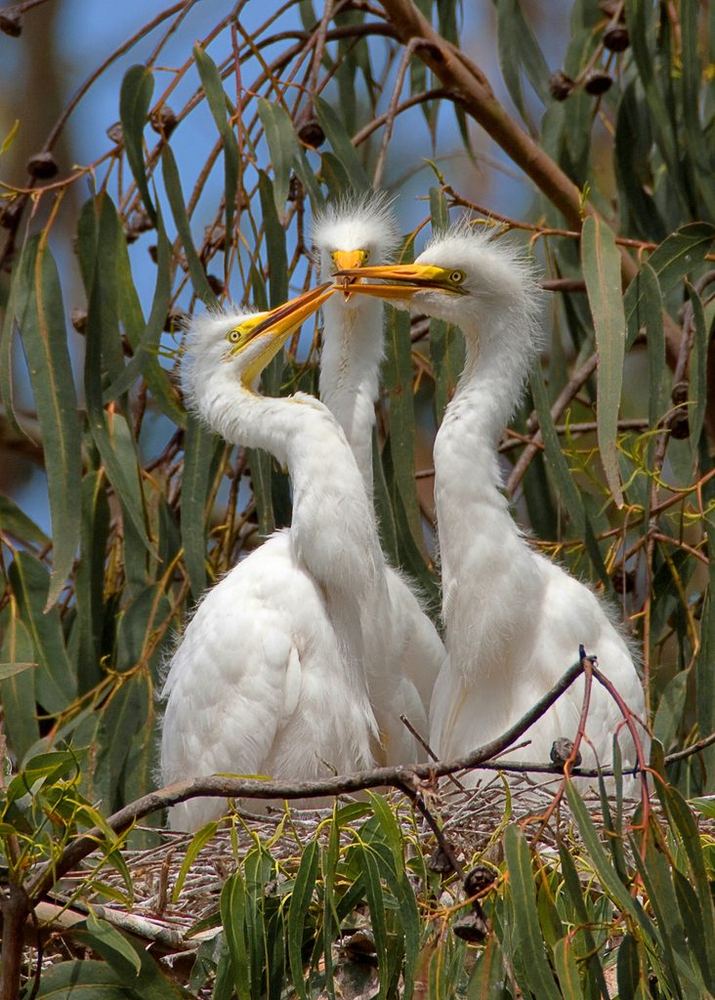
Photo: Mike Baird · CC BY 4.0
Ardea alba
Basic stats
Diet
Fish, frogs, snakes, crayfish, mice, crickets, grasshoppers, and aquatic insects
Habitat
Shallow wetlands and other aquatic feeding areas
Range
The verified account describes populations across much of North America
Clutch size
3–4 eggs
Incubation period
23–24 days
Size
Less than 1 m long and about 1 m tall
Wingspan
About 1.5 m
Weight
912–1,140 g
Great egrets are tall, entirely white wading birds with long yellow bills and dark gray legs. Adults stand about one metre high, measure slightly less than one metre from bill to tail, span roughly 1.5 metres across the wings, and weigh approximately 912–1,140 grams. Males average somewhat larger than females. During flight, the long neck is normally retracted into a characteristic S-shaped curve. The verified account describes their North American range from the Gulf Coast and Florida northward into southern Canada (Animal Diversity Web).
These egrets hunt fish, frogs, snakes, crayfish, mice, crickets, grasshoppers, aquatic insects, and other small animals. They typically wade slowly or stand motionless before striking rapidly, with stationary hunting sometimes yielding higher-quality prey. Breeding pairs are seasonally monogamous. Males select territories and perform courtship rituals before mating occurs within the chosen territory. Breeding begins around mid-April, and a typical annual clutch contains three to four eggs. Incubation lasts approximately 23–24 days (Animal Diversity Web).
Quick answers
- What does the Great Egret eat?
- Fish, frogs, snakes, crayfish, mice, crickets, grasshoppers, and aquatic insects
- What habitat does the Great Egret live in?
- Shallow wetlands and other aquatic feeding areas
- Where is the Great Egret found?
- The verified account describes populations across much of North America
- How many eggs does the Great Egret lay?
- 3–4 eggs
- How long are the eggs of the Great Egret incubated?
- 23–24 days
- How big is the Great Egret?
- Less than 1 m long and about 1 m tall
- What is the wingspan of the Great Egret?
- About 1.5 m
- How much does the Great Egret weigh?
- 912–1,140 g