
 Wildlife
of China
Greater Coucal
Cuckoos & Coucals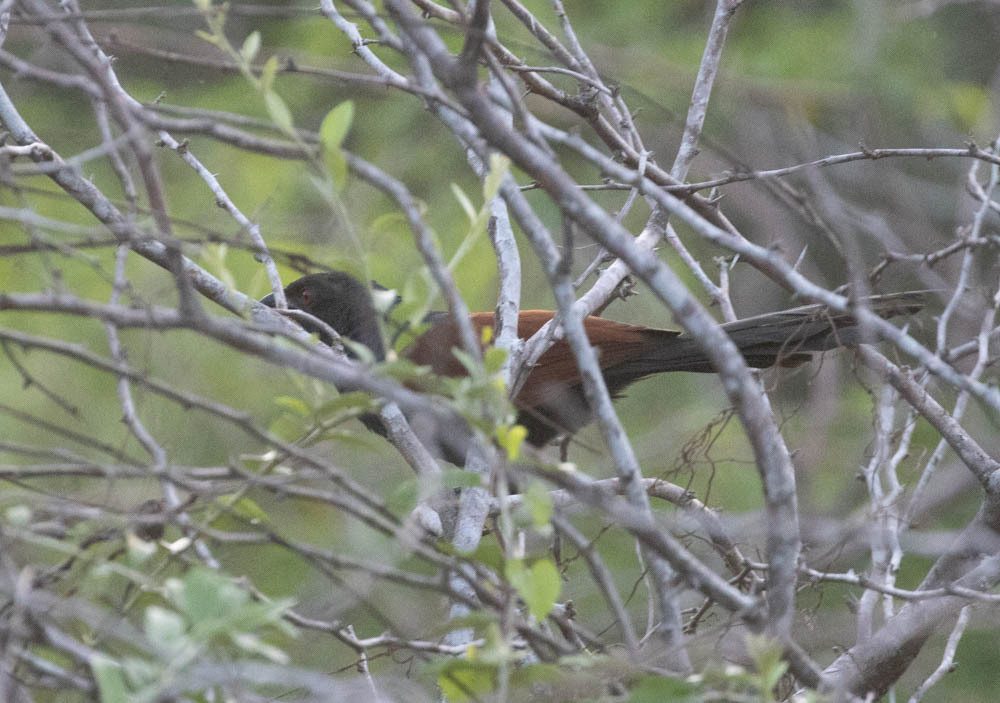
Photo: avocat · CC BY 4.0
Centropus sinensis
Basic stats
Diet
Arthropods, fruit, seeds, and small vertebrates
Habitat
Scrub, grassland, woodland edges, wetlands, farmland, and gardens
Range
Indian subcontinent through Southeast Asia to southern China and the Philippines
Greater coucals occur from the Indian subcontinent across Southeast Asia, including Bangladesh, Thailand, Vietnam, southern China, and the Philippines. They inhabit dense scrub, grasslands, woodland margins, wetlands, agricultural land, and gardens. These large cuckoo relatives have chestnut upper wings, black underwings and bills, dark gray legs, deep reddish-brown eyes, and glossy purple-black plumage across the head and breast. Their long tails show a coppery-green sheen, while juveniles have buff barring on the crown (Animal Diversity Web).
Greater coucals are omnivores that consume arthropods, fruit, seeds, and occasional small vertebrates. Beetles, moths, caterpillars, and dragonflies are important, with seasonal changes affecting which insects dominate the diet. Unlike many cuckoos, coucals raise their own offspring. They breed seasonally, lay eggs, and provide care through both parents. Adults are generally resident and territorial rather than long-distance migrants. Pairs communicate with deep calls and may perform coordinated vocal duets within their territories (Animal Diversity Web).
Quick answers
- What does the Greater Coucal eat?
- Arthropods, fruit, seeds, and small vertebrates
- What habitat does the Greater Coucal live in?
- Scrub, grassland, woodland edges, wetlands, farmland, and gardens
- Where is the Greater Coucal found?
- Indian subcontinent through Southeast Asia to southern China and the Philippines