
 Wildlife
of China
Greater White-fronted Goose
Ducks, Geese & Grebes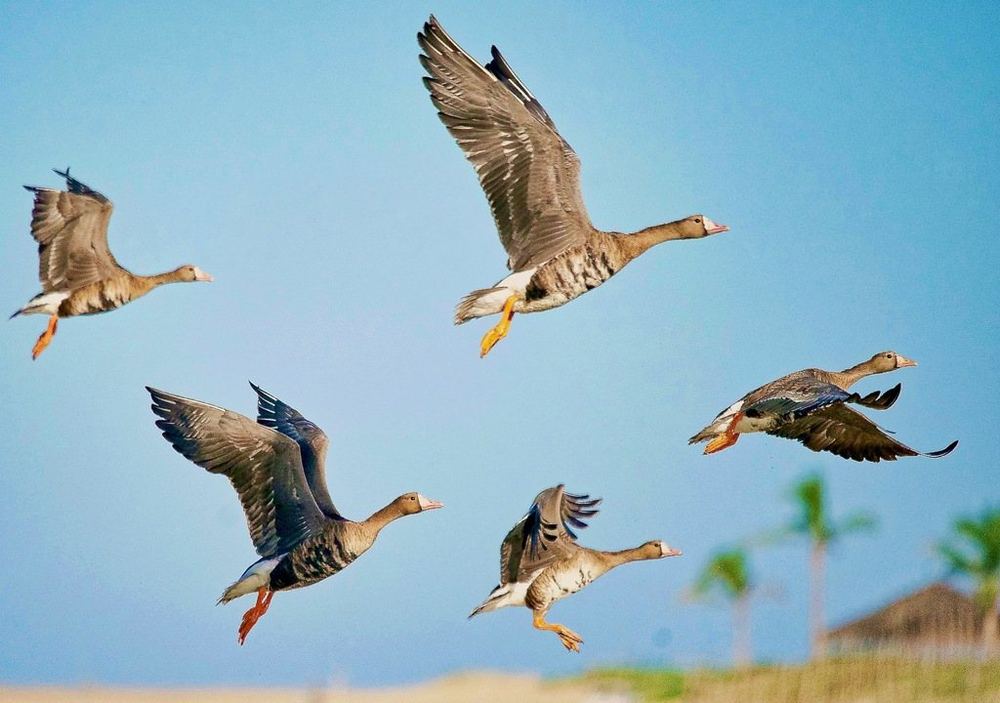
Photo: (c) Bill Levine, some rights reserved (CC BY) · CC-BY
Anser albifrons
Basic stats
Diet
Grasses, grains, berries, crops, aquatic insects, and mollusks
Habitat
Tundra, riparian areas, lakeshores, rivers, marshes, shallow flooded farmland, and grassland
Range
Holarctic, with breeding populations in northern Nearctic and Palearctic regions and southern wintering grounds
Clutch size
4–7 eggs, averaging 5
Incubation period
26–28 days
Size
64–81 cm
Wingspan
Not used because the ADW value appears erroneous
Weight
1.93–3.31 kg
Greater white-fronted geese occupy both the Nearctic and Palearctic. North American birds summer in northern Alaska and northwestern Canada and winter near the Gulf Coast, while other populations occur across the Old World; Greenland birds winter in the United Kingdom. During breeding they inhabit riparian areas and the margins of lakes, streams, rivers, and marshes, nesting on the ground near water. Wintering flocks favor agricultural land with shallow standing water or freshwater marshes. Adults measure 64 to 81 centimeters and weigh 1.93 to 3.31 kilograms. (Animal Diversity Web)
These geese feed mainly on grasses, grains, berries, and other plant material. During breeding they also consume mollusks and aquatic insects, whereas wintering birds become exclusively herbivorous and use waste rice, soybeans, grains, new grasses, and forbs. Lifelong monogamous pairs breed once annually. A clutch contains four to seven eggs, averaging five, and incubation lasts 26 to 28 days. Young remain with their parents for at least a year and may assist with nest defense during the following breeding season. (Animal Diversity Web)
Quick answers
- What does the Greater White-fronted Goose eat?
- Grasses, grains, berries, crops, aquatic insects, and mollusks
- What habitat does the Greater White-fronted Goose live in?
- Tundra, riparian areas, lakeshores, rivers, marshes, shallow flooded farmland, and grassland
- Where is the Greater White-fronted Goose found?
- Holarctic, with breeding populations in northern Nearctic and Palearctic regions and southern wintering grounds
- How many eggs does the Greater White-fronted Goose lay?
- 4–7 eggs, averaging 5
- How long are the eggs of the Greater White-fronted Goose incubated?
- 26–28 days
- How big is the Greater White-fronted Goose?
- 64–81 cm
- What is the wingspan of the Greater White-fronted Goose?
- Not used because the ADW value appears erroneous
- How much does the Greater White-fronted Goose weigh?
- 1.93–3.31 kg