
 Wildlife
of China
Himalayan Marmot
Squirrels & Flying Squirrels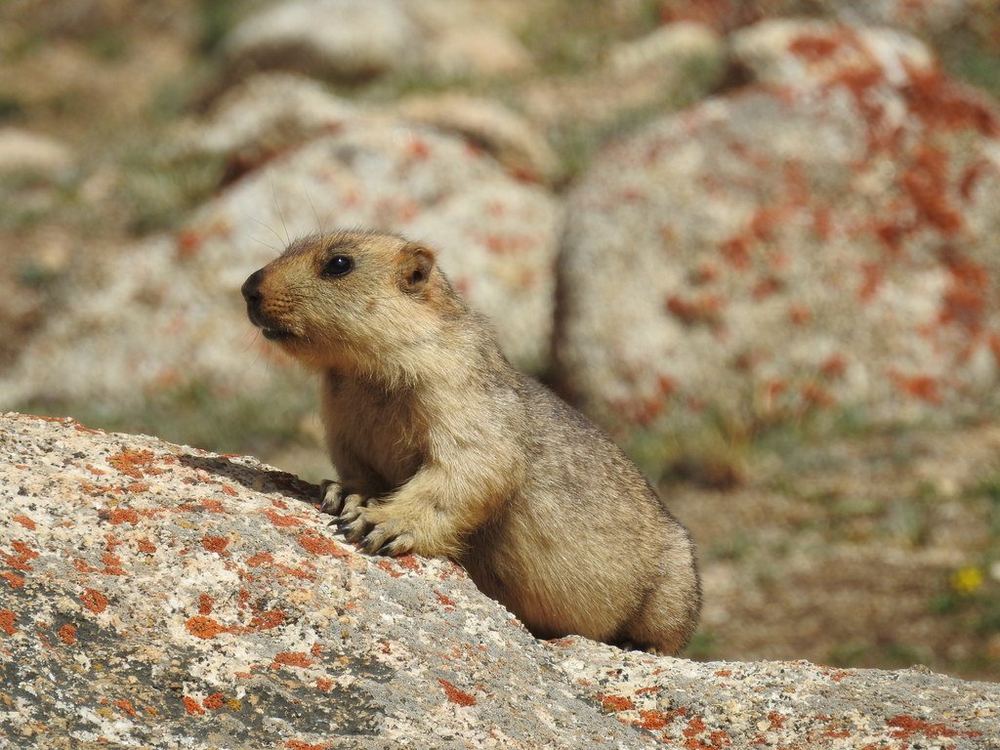
Photo: Ashwin Viswanathan · CC-BY
Marmota himalayana
Basic stats
Habitat
Dry alpine meadows, grasslands, and high-elevation deserts
Range
Himalayan and Tibetan highlands at approximately 3,500–5,200 m elevation
Litter size
2–11 offspring
Gestation period
Up to about 1 month
Size
475–670 mm long
Weight
4–9.2 kg
The Himalayan marmot is a large, heavy-bodied burrowing rodent with a body length of 475–670 mm and a mass of 4–9.2 kg. Its yellow-to-brown dorsal coat often carries irregular black or dark-brown markings, especially around the face and muzzle, while the underside ranges from buff-yellow to russet. It has a large skull, powerful hind feet, long digging claws on the forefeet, short ears, and a relatively short tail measuring 125–150 mm. (Animal Diversity Web)
Himalayan marmots inhabit dry, open country between the timberline and snowline, most often at elevations of 3,500–5,200 m. Typical environments include alpine meadow, grassland, and high-elevation desert. They excavate burrows and live socially in family groups or colonies. Annual mating occurs during February and March, and births follow in late spring or early summer after gestation lasting up to about one month. Litters contain two to eleven young. (Animal Diversity Web)
Quick answers
- What habitat does the Himalayan Marmot live in?
- Dry alpine meadows, grasslands, and high-elevation deserts
- Where is the Himalayan Marmot found?
- Himalayan and Tibetan highlands at approximately 3,500–5,200 m elevation
- What is the litter size of the Himalayan Marmot?
- 2–11 offspring
- How long is the gestation period of the Himalayan Marmot?
- Up to about 1 month
- How big is the Himalayan Marmot?
- 475–670 mm long
- How much does the Himalayan Marmot weigh?
- 4–9.2 kg