
 Wildlife
of China
Horned Grebe
Ducks, Geese & Grebes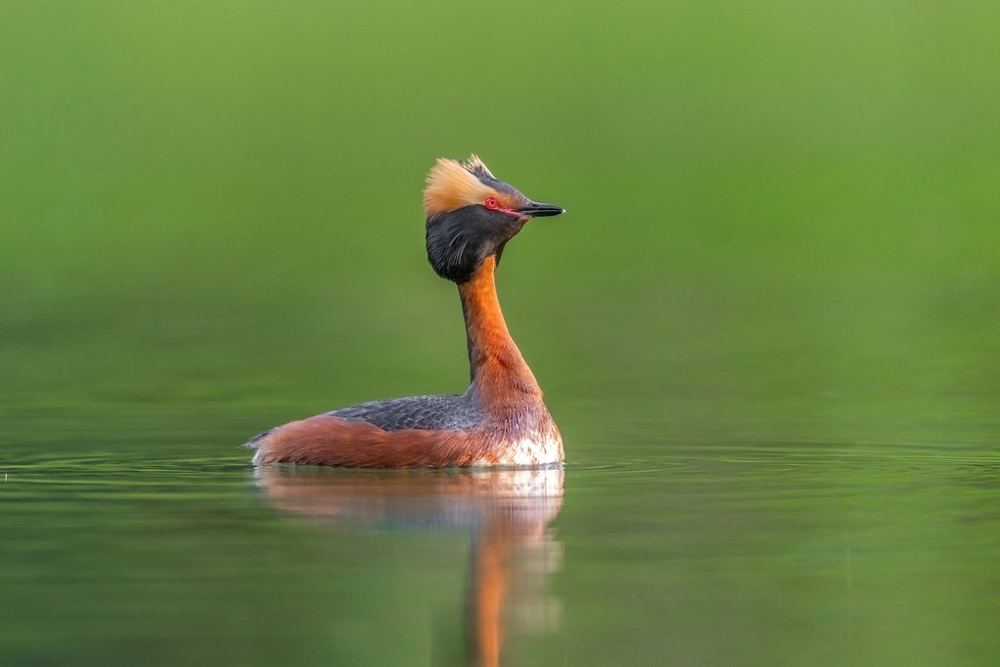
Photo: (c) egorbirder, some rights reserved (CC BY) · CC BY 4.0
Podiceps auritus
Basic stats
Diet
Aquatic arthropods in summer; fish and crustaceans in winter; also mollusks, leeches, tadpoles, and salamanders
Habitat
Freshwater lakes, ponds, rivers, marshes, and coastal marine waters
Range
Nearctic and Palearctic; breeds across northern North America and Eurasia and winters on coasts and large lakes
Clutch size
3–8 eggs; usually 5–7
Incubation period
23–24 days
Size
31–38 cm
Wingspan
Not reported by ADW
Weight
300–570 g
The horned grebe occurs in both the Nearctic and Palearctic. North American populations breed from Alaska and northern Canada into the northern United States, then winter along Pacific and Atlantic coasts or on large inland lakes. Eurasian populations follow comparable seasonal movements. The species uses freshwater lakes, ponds, rivers, and marshes during breeding and more frequently occupies coastal water in winter. Adults are compact, short-billed diving birds measuring 31–38 cm and weighing 300–570 g. (Animal Diversity Web)
Summer diets consist mainly of aquatic arthropods, whereas wintering birds consume more fish, crustaceans, and mollusks. Leeches, amphibian larvae, salamanders, and limited plant material are also eaten. Prey is captured underwater; small items are swallowed while diving and large ones are handled at the surface. Monogamous pairs build a floating nest anchored among marsh plants. Females lay three to eight eggs, usually five to seven, and both parents incubate them for 23–24 days before the precocial chicks hatch. (Animal Diversity Web)
Quick answers
- What does the Horned Grebe eat?
- Aquatic arthropods in summer; fish and crustaceans in winter; also mollusks, leeches, tadpoles, and salamanders
- What habitat does the Horned Grebe live in?
- Freshwater lakes, ponds, rivers, marshes, and coastal marine waters
- Where is the Horned Grebe found?
- Nearctic and Palearctic; breeds across northern North America and Eurasia and winters on coasts and large lakes
- How many eggs does the Horned Grebe lay?
- 3–8 eggs; usually 5–7
- How long are the eggs of the Horned Grebe incubated?
- 23–24 days
- How big is the Horned Grebe?
- 31–38 cm
- What is the wingspan of the Horned Grebe?
- Not reported by ADW
- How much does the Horned Grebe weigh?
- 300–570 g