
 Wildlife
of China
Northern Pintail
Ducks, Geese & Grebes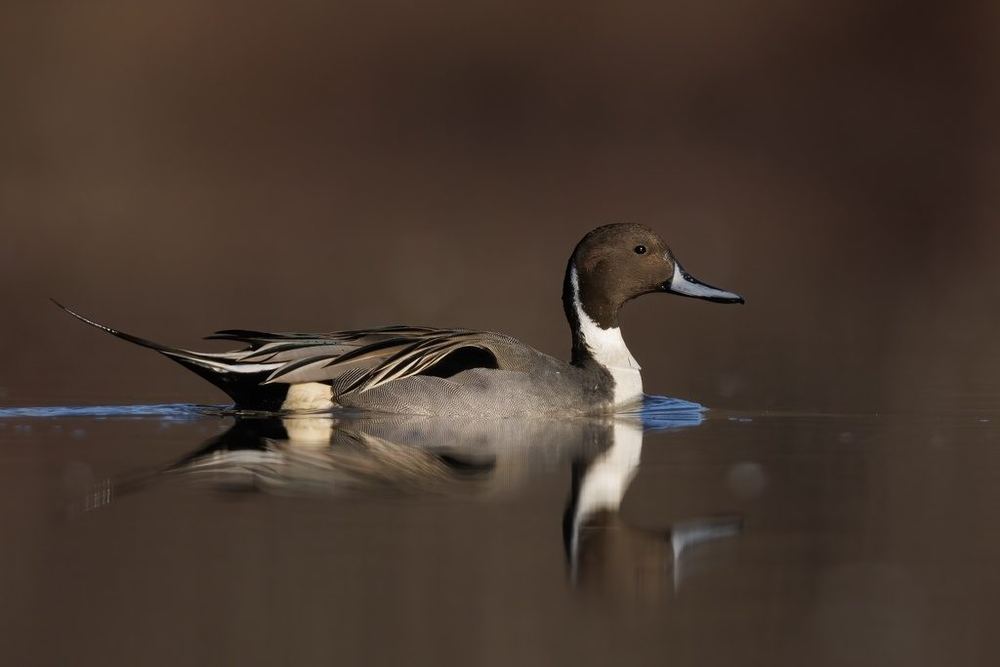
Photo: Matt Felperin · CC BY 4.0
Anas acuta
Basic stats
Diet
Aquatic plants, bulrush and grass seeds, grain, insects, and small aquatic invertebrates
Habitat
Marshes, ponds, lakes, rivers, canals, riparian areas, and grain fields
Range
Breeds widely across the Northern Hemisphere and migrates south for winter
Clutch size
7–9 eggs
Incubation period
22–24 days
Size
Females 51–63.5 cm; males 58.5–76 cm
Weight
454–1,362 g
Northern pintails breed widely across the Northern Hemisphere and migrate considerable distances to warmer wintering regions. They inhabit marshes, ponds, lakes, rivers, canals, riparian zones, and grain fields. Males measure 58.5–76 centimetres and possess a dark-brown head, white breast and neck stripe, and elongated pointed central tail feathers. Females are 51–63.5 centimetres, more cryptically gray-brown, and have much shorter tails. Recorded adult weights range from approximately 454 to 1,362 grams (Animal Diversity Web).
Pintails feed by tipping forward in water, leaving the tail raised while reaching aquatic plants, snails, insects, and other invertebrates. Seeds, pondweeds, bulrushes, and agricultural grains including rice, wheat, barley, and oats are also eaten. Pairs are seasonally monogamous. Females lay seven to nine eggs and incubate them alone for 22–24 days. After hatching, the female leads the precocial ducklings to water, where they begin collecting insects and other food from the surface (Animal Diversity Web).
Quick answers
- What does the Northern Pintail eat?
- Aquatic plants, bulrush and grass seeds, grain, insects, and small aquatic invertebrates
- What habitat does the Northern Pintail live in?
- Marshes, ponds, lakes, rivers, canals, riparian areas, and grain fields
- Where is the Northern Pintail found?
- Breeds widely across the Northern Hemisphere and migrates south for winter
- How many eggs does the Northern Pintail lay?
- 7–9 eggs
- How long are the eggs of the Northern Pintail incubated?
- 22–24 days
- How big is the Northern Pintail?
- Females 51–63.5 cm; males 58.5–76 cm
- How much does the Northern Pintail weigh?
- 454–1,362 g