
 Wildlife
of China
Red Junglefowl
Pheasants, Partridges & Quails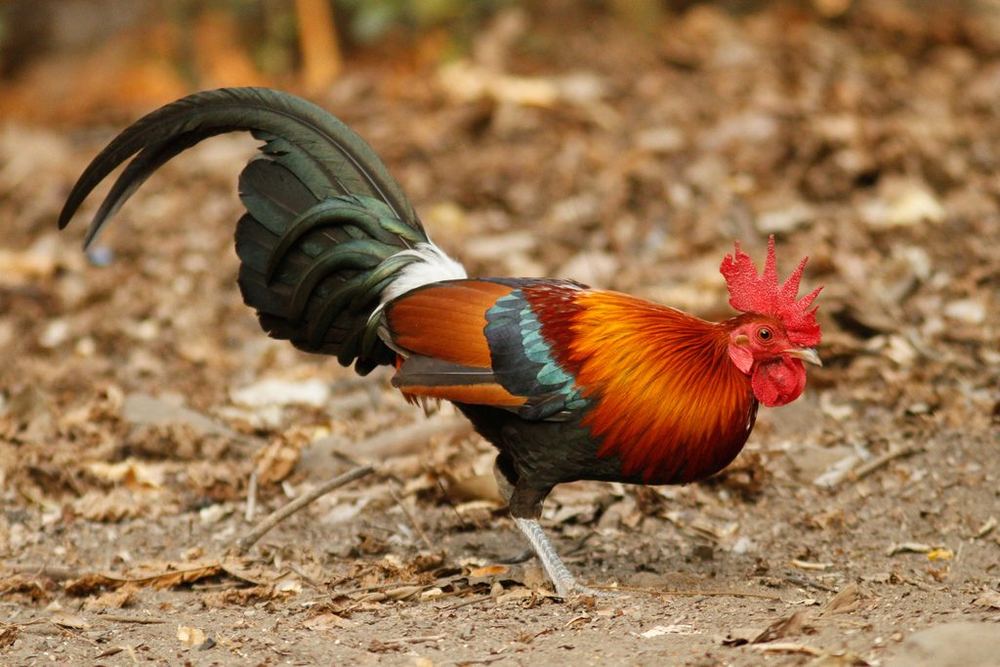
Photo: Julien Renoult · CC BY 4.0
Gallus gallus
Basic stats
Diet
Grains, corn, soybean, grass, worms, and insects
Habitat
Dense secondary forest, scrubby belukar, clearings, earthen tracks, and some oil-palm estates
Range
Native to southern Asia
Clutch size
Not reported
Incubation period
About 21 days
Size
Up to 70 cm
Wingspan
Not reported
Weight
About 2.58 kg
Red junglefowl are native to southern Asia, with the ADW account especially identifying the forests of India. Wild birds inhabit dense secondary forest and lush belukar vegetation but emerge into clearings and along broad earthen tracks during morning and evening feeding periods. They may also enter oil-palm estates. Their domesticated descendants have been transported worldwide, but the account distinguishes the wild species from domestic chickens. Red junglefowl can reach approximately 70 centimeters in length, and ADW reports an average mass of about 2.58 kilograms. (Animal Diversity Web)
These ground-foraging birds eat both plant and animal material, including grains, corn, soybeans, grass, worms, and insects. They live within structured social groups governed by separate male and female dominance hierarchies, commonly called pecking orders. Dominant males protect feeding females, and chicks begin establishing rank when only about a week old. Breeding takes place during spring and summer, allowing chicks to develop during warm weather. Females generally lay one egg each day, and embryonic development continues for approximately 21 days before hatching. (Animal Diversity Web)
Quick answers
- What does the Red Junglefowl eat?
- Grains, corn, soybean, grass, worms, and insects
- What habitat does the Red Junglefowl live in?
- Dense secondary forest, scrubby belukar, clearings, earthen tracks, and some oil-palm estates
- Where is the Red Junglefowl found?
- Native to southern Asia
- How many eggs does the Red Junglefowl lay?
- Not reported
- How long are the eggs of the Red Junglefowl incubated?
- About 21 days
- How big is the Red Junglefowl?
- Up to 70 cm
- What is the wingspan of the Red Junglefowl?
- Not reported
- How much does the Red Junglefowl weigh?
- About 2.58 kg