
 Wildlife
of China
Red-crested Pochard
Ducks, Geese & Grebes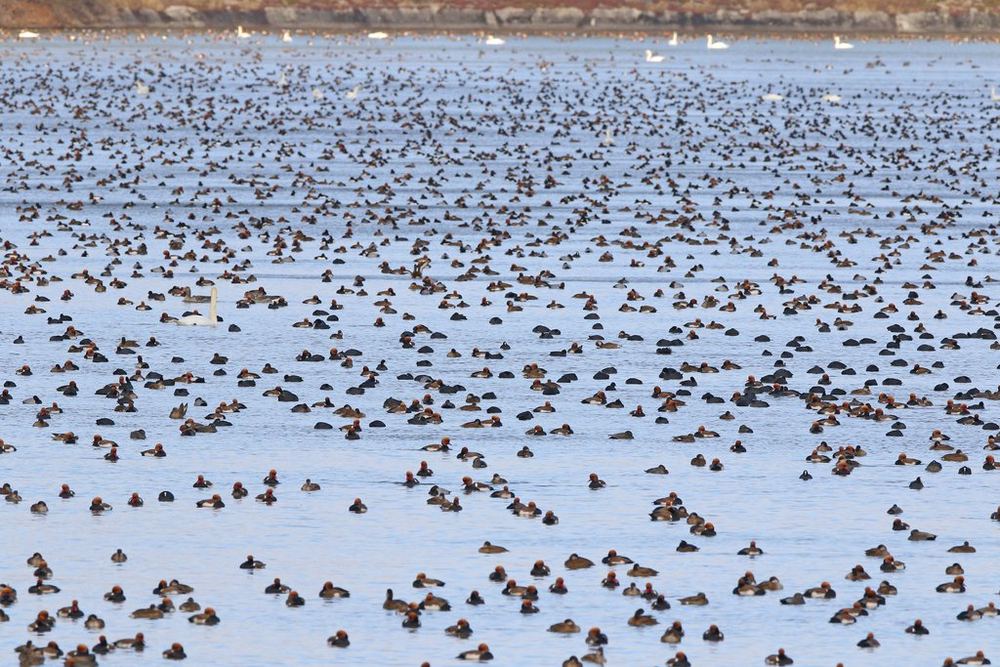
Photo: (c) Christoph Moning, some rights reserved (CC BY) · CC-BY
Netta rufina
Basic stats
Diet
Aquatic plants, algae, sedges, tape-grasses, rice, seeds, and some fungi
Habitat
Eutrophic ponds, lakes, slow rivers, lagoons, and wetlands with emergent vegetation
Range
Breeding distribution extends from the British Isles across Eurasia to China
Clutch size
6–14 eggs
Incubation period
26–28 days
Size
50–65 cm
Wingspan
85–90 cm
Weight
1–1.4 kg
Red-crested pochards have a broad Palearctic distribution, with breeding populations extending from the British Isles eastward to China. They prefer nutrient-rich ponds and lakes bordered by emergent salt-tolerant plants and beds of aquatic vegetation. They also breed beside slow-flowing rivers containing open-water clearings and around islands covered with shrubs and grasses. Adults are relatively large ducks, measuring 50 to 65 centimeters long, weighing 1 to 1.4 kilograms, and carrying a wingspan of approximately 85 to 90 centimeters. (Animal Diversity Web)
These pochards are primarily herbivorous. During breeding they feed on aquatic plants and algae, while outside the breeding season they also consume sedges, tape-grasses, rice, seeds, and some fungi. Birds form monogamous pairs during winter, with bonds developing through spring migration, and they nest either as isolated pairs or in loose colonies. Females provide parental care. Clutches contain six to fourteen eggs, incubation lasts 26 to 28 days, and the young generally fledge after approximately 35 to 40 days. (Animal Diversity Web)
Quick answers
- What does the Red-crested Pochard eat?
- Aquatic plants, algae, sedges, tape-grasses, rice, seeds, and some fungi
- What habitat does the Red-crested Pochard live in?
- Eutrophic ponds, lakes, slow rivers, lagoons, and wetlands with emergent vegetation
- Where is the Red-crested Pochard found?
- Breeding distribution extends from the British Isles across Eurasia to China
- How many eggs does the Red-crested Pochard lay?
- 6–14 eggs
- How long are the eggs of the Red-crested Pochard incubated?
- 26–28 days
- How big is the Red-crested Pochard?
- 50–65 cm
- What is the wingspan of the Red-crested Pochard?
- 85–90 cm
- How much does the Red-crested Pochard weigh?
- 1–1.4 kg