
 Wildlife
of China
Rock Pigeon
Pigeons, Doves & Sandgrouse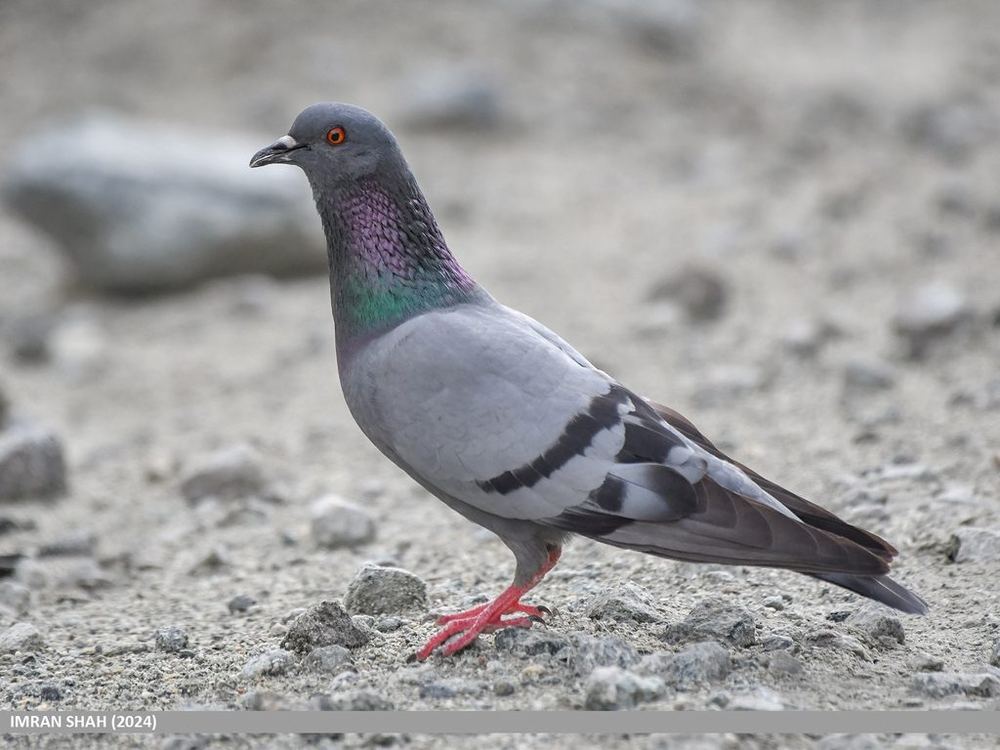
Photo: Birds of Gilgit-Baltistan · CC BY-SA 4.0
Columba livia
Basic stats
Diet
Primarily seeds and grain, supplemented by fruit and discarded human food
Habitat
Rocky cliffs, farms, towns, cities, bridges, and buildings
Range
Native to Europe, North Africa, and southwestern Asia; feral populations occur worldwide
Incubation period
About 19 days
Wild rock pigeons are native to Europe, North Africa, and southwestern Asia, while domesticated and feral descendants now occur worldwide. Their natural cliff habitat is readily replaced by buildings, bridges, and other urban structures. Typical birds have a bluish-gray head and body, glossy green, yellowish, and reddish-purple iridescence on the neck, two dark wing bars, and a dark tail band. Feral populations display many additional colors and patterns produced through domestication and subsequent interbreeding (Animal Diversity Web).
Rock pigeons feed mainly on seeds and grains gathered from open ground during morning and afternoon. Urban birds also consume bread, peanuts, popcorn, cake, fruit, and other discarded foods. Pairs can form at any time of year and normally remain together for life. The male constructs the nest, after which both parents share incubation. Eggs hatch after approximately 19 days. The pair cooperates closely in rearing its young, allowing pigeons to reproduce successfully across varied natural and human-created environments (Animal Diversity Web).
Quick answers
- What does the Rock Pigeon eat?
- Primarily seeds and grain, supplemented by fruit and discarded human food
- What habitat does the Rock Pigeon live in?
- Rocky cliffs, farms, towns, cities, bridges, and buildings
- Where is the Rock Pigeon found?
- Native to Europe, North Africa, and southwestern Asia; feral populations occur worldwide
- How long are the eggs of the Rock Pigeon incubated?
- About 19 days