
 Wildlife
of China
Western Cattle Egret
Storks, Herons, Ibises & Pelicans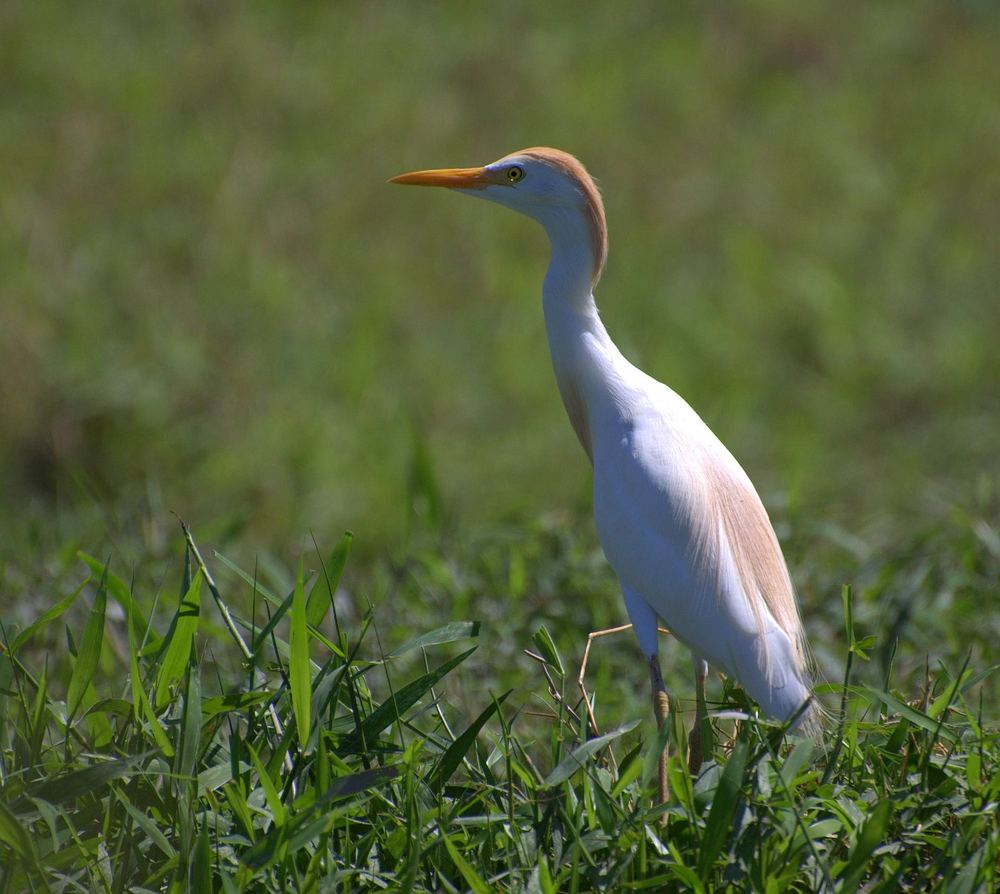
Photo: Dario Sanches from São Paulo, Brasil · CC BY-SA 2.0
Bubulcus ibis
Basic stats
Diet
Mostly insects, spiders and frogs
Habitat
Grasslands, pastures, wetlands and urban areas
Range
Native to Africa and southern Spain; now widespread across most continents
Clutch size
Usually 3–4 eggs
Incubation period
About 24 days
Size
46–56 cm
Wingspan
88–96 cm
Weight
Average 220 g
Cattle egrets are compact, short-legged herons whose white plumage becomes buff-colored on the head, neck and back during breeding. Unlike many herons, they spend much of their time in terrestrial habitats. They commonly walk beside cattle and other large grazing animals, capturing insects disturbed by their movement. Their adaptable habits have helped them occupy grasslands, farms, wetlands and even developed areas across an exceptionally broad geographic range. (Animal Diversity Web)
These highly social birds forage and roost in flocks and breed in colonies, often alongside other waterbirds. Both parents construct or maintain the bulky vegetation nest, incubate the eggs and care for the chicks. A normal clutch contains three or four pale-blue eggs, although larger and smaller clutches occur. Grasshoppers, crickets, flies, moths and spiders dominate their food, supplemented by frogs and other small animals. (Animal Diversity Web)
Quick answers
- What does the Western Cattle Egret eat?
- Mostly insects, spiders and frogs
- What habitat does the Western Cattle Egret live in?
- Grasslands, pastures, wetlands and urban areas
- Where is the Western Cattle Egret found?
- Native to Africa and southern Spain; now widespread across most continents
- How many eggs does the Western Cattle Egret lay?
- Usually 3–4 eggs
- How long are the eggs of the Western Cattle Egret incubated?
- About 24 days
- How big is the Western Cattle Egret?
- 46–56 cm
- What is the wingspan of the Western Cattle Egret?
- 88–96 cm
- How much does the Western Cattle Egret weigh?
- Average 220 g