
 Wildlife
of China
Wood Sandpiper
Shorebirds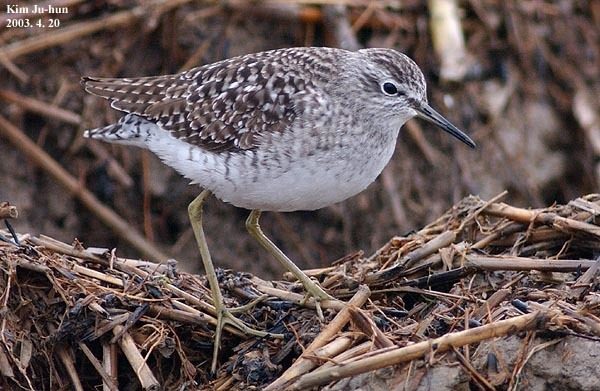
Photo: Kim, Hyun-tae · CC BY 4.0
Tringa glareola
Basic stats
Diet
Molluscs, earthworms, arthropods, crustaceans, fish, spiders, frogs, midge larvae, seeds, and algae
Habitat
Taiga wetlands, marshes, swamps, ponds, streams, temporary pools, and brackish waters
Range
Breeds across northern Eurasia and migrates through Africa, Asia, and Australia
Size
19–21 cm
Weight
Average 159 g
Wood sandpipers are far-ranging migrants native across the Palearctic, Oriental, African, and Australian regions. Their breeding distribution extends across northern Eurasia from Siberia toward Scotland. They inhabit taiga wetlands, marshes, swamps, wet heath, streams, ponds, temporary pools, and brackish waters. The upperparts are spotted, while the pale breast and neck carry brown streaks. A prominent white eyebrow extends behind the eye. Adults measure approximately 19–21 centimetres and average about 159 grams (Animal Diversity Web).
These sandpipers eat molluscs, earthworms, arthropods, crustaceans, small fish, spiders, frogs, midge larvae, seeds, grain, nuts, and algae. Breeding occurs from May to mid-July, although birds may occupy nesting habitat by late April. Pairs are monogamous and territorial, dispersing across boreal forests, marshes, heathlands, and scrub rather than forming dense colonies. Males use their plumage and display behavior to attract females, after which each pair occupies and defends its own breeding area (Animal Diversity Web).
Quick answers
- What does the Wood Sandpiper eat?
- Molluscs, earthworms, arthropods, crustaceans, fish, spiders, frogs, midge larvae, seeds, and algae
- What habitat does the Wood Sandpiper live in?
- Taiga wetlands, marshes, swamps, ponds, streams, temporary pools, and brackish waters
- Where is the Wood Sandpiper found?
- Breeds across northern Eurasia and migrates through Africa, Asia, and Australia
- How big is the Wood Sandpiper?
- 19–21 cm
- How much does the Wood Sandpiper weigh?
- Average 159 g